

Reference
Peptide Glossary
An A–Z reference for the language of peptide research, from assay and analytics terminology to pathway biology, catalog compounds, and regulatory vocabulary.
A
Actin
The structural protein that helps cells move and change shape. TB500 research often focuses on actin dynamics because cell migration depends on actin polymerization.
See also: TB500 · Understanding Growth Factor Signaling
Agonist
A molecule that activates a receptor. GLP agonists, melanocortin agonists, and GHRH analogs all fall into this category.
Allosteric Modulation
A way of changing receptor behavior by binding somewhere other than the primary active site. It often changes receptor sensitivity rather than acting like a direct on-switch.
Alpha-MSH
Alpha-melanocyte-stimulating hormone, a melanocortin peptide involved in pigmentation and inflammatory signaling. KPV is a short fragment derived from alpha-MSH.
See also: KPV · Understanding the Melanocortin System
Amino Acid
The building block of peptides and proteins. Different amino-acid sequences create molecules with very different biological functions.
AMPK
AMP-activated protein kinase, the cell’s major energy sensor. It is activated when energy is low and is one of the central pathways in MOTS-C research.
See also: MOTS-C · Understanding the AMPK Pathway
Angiogenesis
The formation of new blood vessels. It matters in repair models because healing tissue needs oxygen and nutrient delivery.
B
Batch Number
The identifier tying a specific vial back to a specific production lot and certificate of analysis. It is what makes documentation traceable.
BDNF
Brain-derived neurotrophic factor, a protein associated with neuronal growth, survival, and synaptic plasticity. Semax research often focuses on BDNF upregulation.
See also: Semax · Semax Research
Bioavailability
A measure of how much of a compound reaches the system or compartment being studied. It is often used when comparing analogs, fragments, and modified peptides.
Biomarker
A measurable biological signal used to track a process, pathway, or response. In peptide work, biomarkers can include cytokines, receptor activity, hormone levels, or gene-expression changes.
BPC-157
Body Protection Compound 157, a synthetic pentadecapeptide studied in tissue-repair, vascular, and GI models. It is one of the most widely discussed recovery compounds in the catalog.
See also: BPC-157 · BPC-157 Research
C
Certificate of Analysis (COA)
A document reporting analytical test results for a specific batch, usually including HPLC purity, LC-MS identity confirmation, and batch information.
See also: How to Read a Certificate of Analysis
cAMP
Cyclic AMP, a second messenger used inside cells to transmit receptor signals. It is especially important in melanocortin and incretin biology.
Chromatogram
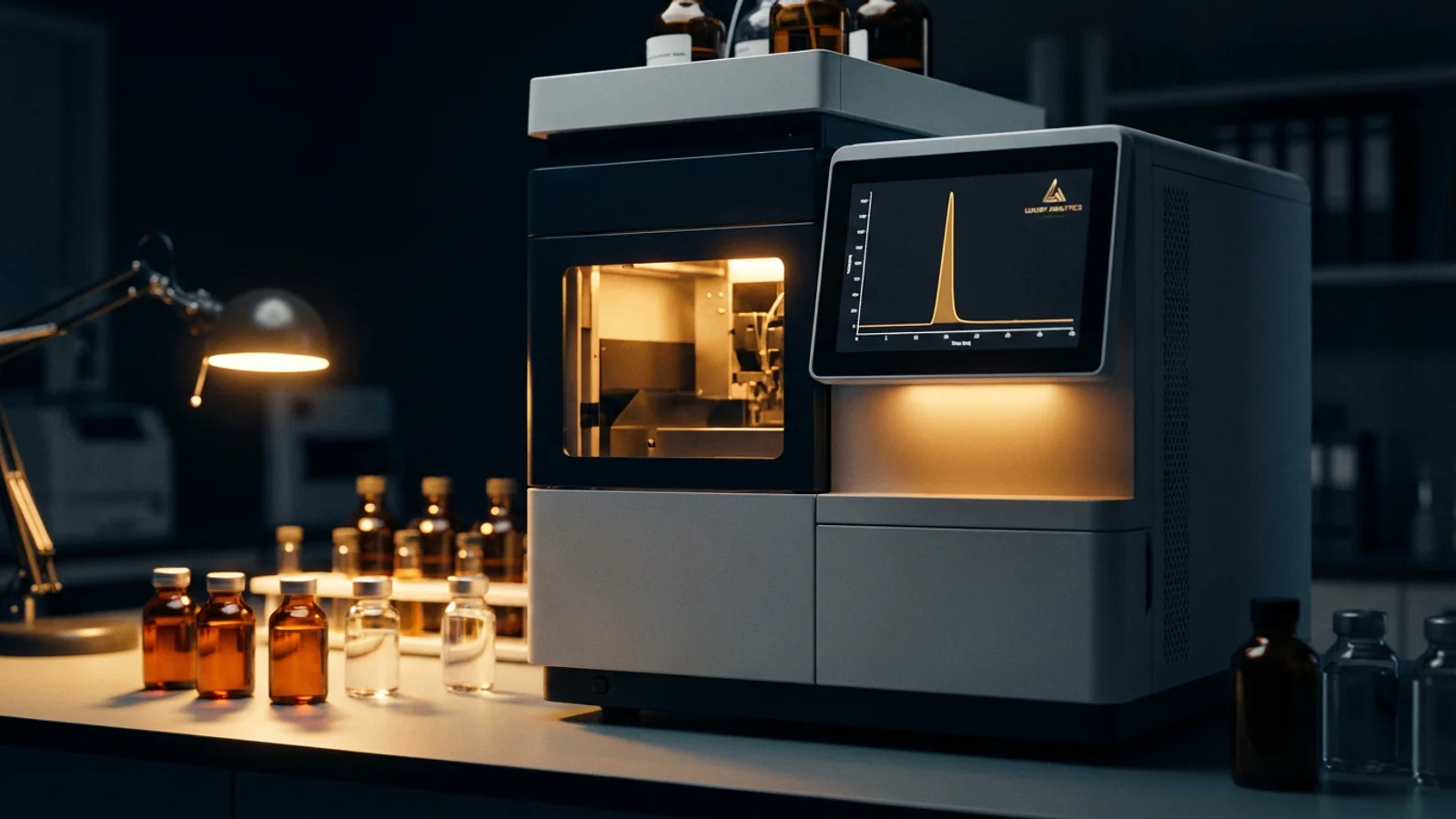
The graphical output of an HPLC run. A dominant target peak usually indicates a cleaner sample, while extra peaks suggest impurities or related species.
See also: Understanding Peptide Purity Testing
Collagen
The major structural protein in skin, tendon, ligament, and other connective tissues. GHK-Cu and recovery compounds are often studied for how they affect collagen biology.
Copper Peptide
A peptide complexed with copper, often discussed in skin and remodeling research. In the OSYRIS catalog, this usually refers to GHK-Cu.
See also: GHK-Cu
Cytokine
A small signaling protein used by immune cells and other tissues to coordinate inflammation, repair, and defense responses.
D
Deamidation
A degradation reaction where certain amino-acid residues spontaneously convert into different forms over time. Heat and moisture can accelerate it.
See also: Peptide Storage and Handling
Deletion Product
An incomplete peptide sequence produced during synthesis when one or more amino acids fail to couple correctly.
DPP-IV
Dipeptidyl peptidase IV, an enzyme that cleaves certain peptide hormones and analogs. Modification strategies often aim to make compounds more resistant to it.
See also: Tesamorelin
Dose Response
The relationship between the amount of a compound used in a study and the magnitude of the observed biological effect.
DSIP
Delta sleep-inducing peptide, a short peptide studied for sleep architecture and neuroendocrine signaling.
See also: DSIP · DSIP Research
Dual Agonist
A molecule that activates two different receptors. GLP-2 (T) is studied as a dual agonist in incretin biology.
See also: GLP-2 (T) · GLP Comparison
E
EGF
Epidermal growth factor, a signaling protein that promotes epithelial proliferation. It is one of the growth-factor families often mentioned in recovery research.
Endocrine Signaling
Long-range hormone signaling in which one tissue releases a factor that travels to distant targets. The growth-hormone axis is a classic endocrine system.
Endocytosis
The process by which cells internalize receptors, ligands, or extracellular material. It shapes how receptor signaling is sustained or terminated.
Epigenetics
Heritable changes in gene regulation that do not alter the DNA sequence itself. Longevity research often discusses epigenetic drift as part of aging biology.
Epithalon
A synthetic tetrapeptide studied in aging models for telomerase-related effects and broader longevity questions.
See also: Epithalon · Epithalon Research
ERR
Estrogen-related receptors, a family of nuclear receptors involved in energy and metabolic gene regulation. SLU-PP-32 is studied as a pan-ERR agonist.
See also: SLU-PP-32
Extracellular Matrix (ECM)
The meshwork of structural proteins and other molecules surrounding cells. Repair and skin-biology research often focuses on ECM remodeling.
F
FAK
Focal adhesion kinase, a signaling protein involved in adhesion and migration. It often appears in tissue-repair pathway discussions.
See also: Understanding Growth Factor Signaling
FGF
Fibroblast growth factor, a family of signals involved in cell proliferation, angiogenesis, and tissue remodeling.
Fibroblast
A connective-tissue cell that helps build and remodel extracellular matrix, especially collagen-rich tissue.
Freeze-Thaw Cycle
One round of freezing and then thawing a sample. Repeated cycles can destabilize many peptides once reconstituted.
Full-Length Product
The correctly synthesized target peptide sequence, distinguished from truncated or modified byproducts.
G
GABA
Gamma-aminobutyric acid, the brain’s primary inhibitory neurotransmitter. Selank research often discusses GABAergic tone.
See also: Selank · Understanding GABAergic Neurotransmission
Gene Expression
The process by which genes are turned into RNA and proteins. Many peptide pages discuss whether a compound upregulates or downregulates specific pathways.
GHK-Cu
A copper-binding peptide studied in skin biology, collagen signaling, antioxidant defense, and tissue remodeling.
See also: GHK-Cu · GHK-Cu Research
GIP
Glucose-dependent insulinotropic polypeptide, one of the main incretin hormones. It is part of the receptor story for dual and triple incretin agonists.
GLP-1
Glucagon-like peptide-1, an incretin hormone involved in appetite regulation, insulin secretion, and gastric emptying.
See also: GLP-1 (S) · Understanding Incretin Receptor Biology
GLP-2
In the OSYRIS catalog context, a shorthand label for the dual incretin-agonist tier represented by GLP-2 (T).
See also: GLP-2 (T)
GLP-3
In the OSYRIS catalog context, a shorthand label for the triple-agonist tier represented by GLP-3 (R).
See also: GLP-3 (R)
GMP
Good Manufacturing Practice, a framework for controlled production and documentation. It is related to pharmaceutical and high-quality manufacturing standards.
GHSR
The growth-hormone secretagogue receptor, also known as the ghrelin receptor. Ipamorelin works through this pathway.
See also: Ipamorelin
GPCR
G-protein-coupled receptor, a large receptor family involved in many peptide pathways, including melanocortin and VIP signaling.
Growth Factor
A signaling protein that directs cells to proliferate, migrate, differentiate, or survive. Growth-factor biology is central to recovery research.
See also: Understanding Growth Factor Signaling
Growth Hormone (GH)
A pituitary hormone involved in growth, metabolism, and body-composition signaling. It sits at the center of the somatotropic axis.
See also: Growth Hormone Peptides Guide
GSH/GSSG Ratio
The ratio of reduced to oxidized glutathione, often used as a marker of cellular redox state.
See also: Glutathione
H
Half-life
The time it takes for the amount of a compound to decrease by half. It helps explain why some analogs last longer than others in research models.
Hallmarks of Aging
A framework describing the major biological processes that drive aging, including telomere attrition, mitochondrial dysfunction, and epigenetic changes.
See also: Longevity Peptides Guide
Homeostasis
The maintenance of internal biological balance. Many peptide pathways are easiest to understand as attempts to restore or shift homeostatic set points.
HPLC
High-performance liquid chromatography, the standard method used to separate components and estimate peptide purity.
See also: Understanding Peptide Purity Testing
Hydrolysis
A degradation process in which water breaks chemical bonds. Moisture is one reason peptide storage conditions matter so much.
I
Identity Testing
Testing designed to confirm that the compound in the vial is actually the molecule named on the label. LC-MS is the usual identity method on peptide COAs.
IGF-1
Insulin-like growth factor 1, a downstream mediator of many growth-hormone-axis effects.
See also: IGF1-LR3
Immunomodulation
The shifting of immune activity rather than simply turning it on or off. Thymosin Alpha 1 and VIP are often discussed in this context.
Incretin
A gut hormone that amplifies insulin secretion after eating. GLP-1 and GIP are the key incretins in metabolic peptide research.
See also: Understanding Incretin Receptor Biology
In Vitro
Research performed outside a living organism, usually in dishes, tubes, or controlled experimental systems.
In Vivo
Research performed in living organisms, often in animal models.
Ipamorelin
A selective growth-hormone secretagogue studied for GH-axis signaling without the broader hormone spillover associated with older GHRPs.
See also: Ipamorelin · Ipamorelin Research
Ischemia
A state of restricted blood supply that deprives tissue of oxygen and nutrients. Repair and vascular research often uses ischemic models.
J
JAK/STAT Pathway
A signaling cascade used by many cytokines and immune mediators to alter gene expression.
Journal Article
A peer-reviewed paper published in a scientific journal. The strongest OSYRIS content pages always map their claims back to journal literature or clearly state when only preclinical evidence exists.
K
Kinase
An enzyme that adds phosphate groups to proteins or other molecules. Many signaling pathways are organized around kinase activation cascades.
KLOW
An OSYRIS stack combining KPV with additional support compounds for broader recovery and anti-inflammatory research framing.
See also: KLOW
KPV
A tripeptide derived from alpha-MSH that is studied for anti-inflammatory effects, especially through NF-κB-related signaling.
See also: KPV · KPV Research
L
LC-MS
Liquid chromatography-mass spectrometry, the method commonly used to confirm peptide identity by molecular weight after chromatographic separation.
See also: Understanding Peptide Purity Testing
Ligand
A molecule that binds to a receptor. Peptides can act as ligands, and some synthetic analogs are designed to bind longer or more selectively than natural ligands.
Lipolysis
The breakdown of stored fat into usable components. It is one of the processes studied in metabolic and GH-fragment research.
Longevity
In research terms, the study of the biological processes that influence aging, resilience, and functional decline over time.
Lyophilization
Freeze-drying. This is the most common storage form for peptides because removing water improves stability.
M
MAPK
Mitogen-activated protein kinase, a major signaling pathway downstream of many receptors and growth factors.
Mass Spectrometry
An analytical technique that measures molecular mass. In peptide QC it is paired with liquid chromatography to verify identity.
MC1R-MC5R
The five melanocortin receptor subtypes involved in pigmentation, appetite, endocrine signaling, and related behavioral pathways.
See also: Understanding the Melanocortin System
Melanocortin System
The network of receptors and peptides built around melanocortin biology, including MC receptors, alpha-MSH fragments, PT-141, and Melanotan 2.
Melanogenesis
The biochemical pathway that produces melanin pigment. Melanocortin signaling and tyrosinase activity are central to it.
See also: Melanotan 2
Mitochondria
Cellular organelles that generate energy and coordinate key metabolic and stress pathways. They are central to NAD+ and MOTS-C discussions.
MOTS-C
A mitochondrial-derived peptide studied for AMPK activation, exercise-mimetic signaling, and aging-related metabolism.
See also: MOTS-C · MOTS-C Research
Multi-Agonist
A compound that activates more than one receptor, often used to describe dual and triple incretin agonists.
N
NAD+
Nicotinamide adenine dinucleotide, a coenzyme involved in energy metabolism, DNA repair, and sirtuin activity.
See also: NAD+ · NAD+ Research
NF-κB
A transcription factor that controls large parts of the inflammatory gene program and is a major focus of KPV-related research.
NGF
Nerve growth factor, a neurotrophic signal often discussed alongside BDNF in Semax literature.
Nitric Oxide
A signaling molecule involved in vasodilation, blood flow regulation, and multiple repair-related pathways.
Neuroplasticity
The ability of the nervous system to change synaptic connections and functional patterns over time.
Nuclear Receptor
A receptor that acts in or near the nucleus to regulate gene transcription, often in response to hormones or metabolic signals.
O
Off-Target Effect
A biological effect produced outside the intended receptor or pathway being studied. Selectivity matters because off-target activity changes how a result should be interpreted.
Oxidation
A chemical process that can degrade peptides or alter redox-sensitive pathways. It is one reason storage conditions matter.
Oxidative Stress
A state in which reactive species overwhelm antioxidant defenses. Glutathione research often centers on this balance.
See also: Glutathione
Orphan Receptor
A receptor whose endogenous ligand is unknown or poorly defined. Some metabolic pathways are studied through receptor families that were historically called orphan receptors.
P
PARP
Poly-ADP-ribose polymerase, a family of enzymes that consumes NAD+ during DNA-repair processes.
Peptide Bond
The covalent bond that links amino acids together into a peptide chain.
Peptide Stack
A multi-compound research setup using more than one peptide at a time. OSYRIS also sells pre-built stacks for common mechanism pairings.
Pharmacodynamics
What a compound does to the biological system, including receptor activation, signaling changes, and downstream effects.
Pharmacokinetics
What the system does to a compound over time, including absorption, distribution, metabolism, and clearance.
Phosphorylation
The addition of a phosphate group to a molecule, commonly used as an on/off or regulatory switch in signaling pathways.
PI3K/Akt
A major intracellular signaling pathway linked to survival, metabolism, and growth-factor signaling.
Pituitary
The endocrine gland that releases growth hormone and other hormones in response to hypothalamic signaling.
Potency
A measure of how much compound is needed to produce an effect. Potency is not the same as purity or overall research value.
Preclinical
Research performed before large human clinical validation, usually in vitro or in animal models.
Purity
The percentage of the sample that is the target compound rather than impurities, byproducts, or residual material.
Pulsatile Release
Hormone secretion in bursts rather than as a constant stream. The growth-hormone axis is normally pulsatile.
Q
qPCR
Quantitative polymerase chain reaction, a method used to measure gene-expression changes by tracking RNA-derived templates.
Quality Control
The set of analytical and procedural checks used to verify that a batch matches its expected identity and specifications.
R
Receptor
A protein that detects a ligand and triggers a biological response. Much of peptide research is really receptor biology in applied form.
Reconstitution
The process of dissolving a lyophilized peptide back into solution for experimental use.
Redox
Short for reduction-oxidation balance, the chemical framework used to discuss oxidative stress and antioxidant systems.
Recombinant Protein
A protein produced through engineered expression systems rather than small-molecule chemical synthesis. Some adjacent biologics are recombinant rather than synthetic peptides.
Research Grade
A designation for compounds made and tested for laboratory use, rather than released as pharmaceuticals for human administration.
See also: Research-Grade vs Pharmaceutical-Grade
Research Use Only (RUO)
A labeling and intended-use framework stating that the product is sold for laboratory research rather than human, veterinary, or diagnostic use.
See also: Research Use Only Explained
Receptor Tyrosine Kinase (RTK)
A cell-surface receptor class that activates phosphorylation cascades after ligand binding. Growth-factor signaling often runs through RTKs.
See also: Understanding Growth Factor Signaling
S
Secretagogue
A compound that stimulates a gland to release a hormone rather than replacing the hormone directly.
Semax
A synthetic heptapeptide studied for neurotrophic signaling, especially BDNF- and NGF-related effects.
See also: Semax · Semax Research
Selank
A synthetic heptapeptide studied for inhibitory neurotransmission and anxiolytic signaling, especially around GABA-related pathways.
See also: Selank · Selank Research
Senescence
A durable growth-arrest state in which a cell remains alive but stops dividing and often develops a pro-inflammatory phenotype.
Sequence
The exact amino-acid order of a peptide. Sequence determines structure, receptor binding, and biological function.
Signal Transduction
The conversion of an outside signal, such as ligand binding, into an internal cellular response.
Sirtuin
A family of NAD+-dependent enzymes involved in metabolism, stress responses, and chromatin regulation.
SLU-PP-32
A research compound studied as a pan-ERR agonist in metabolism and exercise-mimetic work.
See also: SLU-PP-32
SNAP-8
A short peptide studied in aesthetics and cosmeceutical research for neuromuscular signaling related to expression lines.
See also: SNAP-8
Somatotropic Axis
The linked hypothalamus-pituitary-liver signaling system that governs growth hormone and IGF-1 biology.
See also: Understanding the Somatotropic Axis
SPPS
Solid-phase peptide synthesis, the standard laboratory method used to build synthetic peptides one residue at a time.
Stability
How well a compound resists degradation over time under defined conditions such as temperature, moisture, light, and solvent exposure.
Stack
A shorthand term for combining multiple compounds in one protocol or one product format.
T
TB500
A synthetic fragment of Thymosin Beta 4 studied for actin dynamics, cell migration, and repair-related tissue responses.
See also: TB500 · TB500 Research
Telomerase
An enzyme that adds telomeric repeats back to chromosome ends, helping maintain telomere length.
Telomere
A repetitive DNA cap at the end of a chromosome. Telomeres shorten over repeated cell division and are a key topic in aging research.
Tesamorelin
A stabilized GHRH analog with strong clinical context relative to many other peptides in the catalog.
See also: Tesamorelin · Tesamorelin Research
Thymosin Alpha 1
A 28-amino-acid immune-modulating peptide associated with adaptive immune quality and T-cell biology.
See also: Thymosin Alpha 1
Tight Junction
A protein complex that seals neighboring cells together, especially in epithelial barriers like the gut lining.
Tissue Repair
The multi-step biological process of responding to damage through inflammation, proliferation, angiogenesis, matrix remodeling, and maturation.
Transcription Factor
A protein that binds DNA and influences whether genes are turned on or off.
Triple Agonist
A molecule that activates three receptors rather than one or two. GLP-3 (R) is the triple-agonist tier in the OSYRIS metabolic category.
Tyrosinase
The rate-limiting enzyme in melanin synthesis. Pigmentation research often tracks tyrosinase activity.
U
UPLC
Ultra-performance liquid chromatography, a higher-pressure analytical technique related to HPLC.
Upregulation
An increase in the activity, abundance, or expression of a molecule, receptor, or gene set.
V
VEGF
Vascular endothelial growth factor, a key angiogenic signal discussed frequently in tissue-repair research.
VIP
Vasoactive intestinal peptide, a neuroimmune signaling peptide with activity across neuronal and immune contexts.
See also: VIP · VIP Research
Vial
The sealed container holding a peptide batch. The label, batch number, and storage history tied to the vial are part of the documentation chain.
VPAC1/VPAC2
The principal receptors for VIP. They help explain how VIP can affect both immune and neural systems.
Vascular Signaling
The set of pathways that regulate blood-vessel tone, endothelial behavior, angiogenesis, and tissue perfusion.
W
Water Solubility
How readily a peptide dissolves in water-based solvents. Solubility can shape reconstitution and handling choices.
Western Blot
A protein-detection method used to measure expression or phosphorylation changes in research samples.
Wound Healing
A commonly studied repair model that integrates inflammation, angiogenesis, migration, and matrix remodeling endpoints.
X
X-ray Crystallography
A structure-determination technique used to resolve molecular architecture, especially for proteins and complexes.
Y
Yield
The amount of desired full-length product recovered from a synthesis or purification workflow.
Z
Zwitterion
A molecule carrying both positive and negative charges at the same time. Amino acids commonly behave as zwitterions around physiological pH.
Featured Links
Use the pillar guide when you want the full map of categories, evidence, product families, and internal research links.
Read → Guide What Are Research Peptides?Start with the plain-language primer if you want the fundamentals before diving into individual terms.
Read → Practical Guide Understanding Peptide Purity TestingJump into the lab-quality vocabulary behind HPLC, LC-MS, chromatograms, purity, and batch documentation.
Read → Journal Research LibraryUse the full article library to move from definitions into longer compound, mechanism, and comparison pages.
Open →