

Metabolic
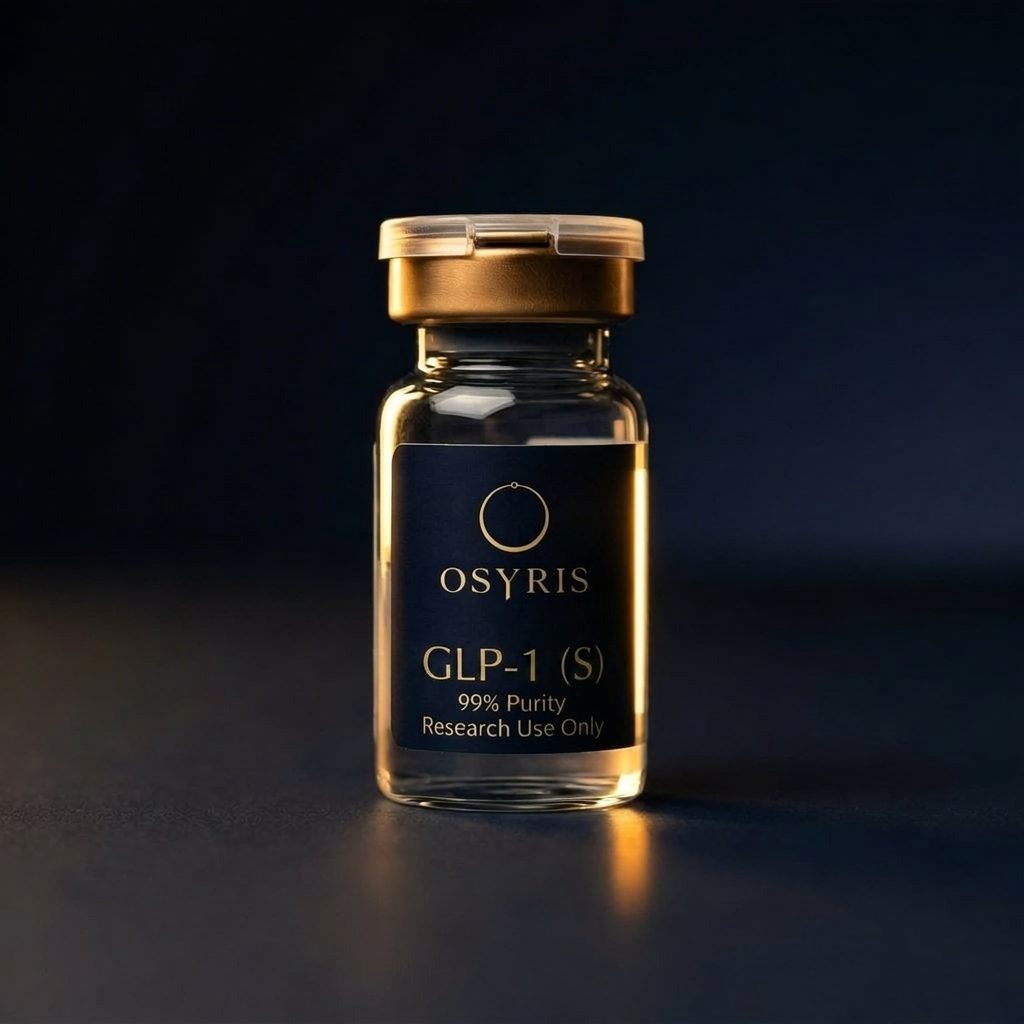
GLP – 1 (S)
GLP – 1 (S) is a synthetic GLP-1 receptor agonist peptide developed for the investigation of glucose regulation, insulin signaling, and appetite pathways. It is structurally modified to resist enzymatic degradation and prolong half-life. GLP – 1 (S) is supplied for controlled laboratory research and is not intended for human or veterinary use.
- Quantity
- 5mg
- Formula
- C187H291N45O59
- Mol. Weight
- ~4113.58 g/mol
- Purity
- See COA
Standard $9.99 | Expedited $12.99 | Free standard over $200
Download Certificate of AnalysisResearch overview
Product Overview:
Product Name: GLP – 1 (S)
Quantity: 5mg
Molecular Formula: C187H291N45O59
Molecular Weight: ~4113.58 g/mol
Research Use Only. Not for Human Consumption.
Research Applications:
-
GLP-1 Receptor Agonism and Insulin Signaling
GLP – 1 (S) functions as a potent and selective glucagon-like peptide-1 receptor (GLP-1R) agonist. GLP-1 is an incretin hormone released postprandially to enhance insulin secretion. In research models, GLP – 1 (S) enhances insulin release in a glucose-dependent manner, reduces glucagon secretion, and delays gastric emptying—all relevant in the study of glucose homeostasis and beta-cell function [1].
Due to its structural modification (substitution at position 8 and attachment of a fatty acid chain), GLP – 1 (S) resists degradation by dipeptidyl peptidase-4 (DPP-4), allowing extended half-life in vivo [2].
-
Appetite Regulation and Energy Balance Studies
GLP-1 receptors are expressed in regions of the hypothalamus that control food intake. GLP – 1 (S) has been shown in animal models to reduce food consumption and body weight via central nervous system pathways. It is commonly used in research involving appetite signaling, feeding behavior, and body weight regulation [3].
GLP – 1 (S)’s effects on satiety hormones and central melanocortin pathways make it a key compound for studying hypothalamic neuroendocrine control.
-
Pharmacokinetics and Stability
The fatty acid side chain of GLP – 1 (S) allows it to bind albumin, prolonging circulation time and enabling once-weekly administration in animal models. Researchers use this long-acting profile to assess chronic GLP-1R stimulation and downstream effects on insulin sensitivity, pancreatic islet cell signaling, and hepatic glucose production [4].
This pharmacokinetic behavior is valuable in experimental designs requiring consistent GLP-1 activation over extended periods.
-
Cardiovascular and Inflammatory Pathway Models
GLP-1R agonists like GLP – 1 (S) have also been studied for their effect on cardiovascular biomarkers, endothelial function, and systemic inflammation. In rodent models, GLP – 1 (S) has shown reductions in C-reactive protein (CRP), improved endothelial nitric oxide synthase (eNOS) activity, and modulation of inflammatory cytokines [5].
Such findings support its use in research focused on cardiometabolic risk factors and chronic inflammatory pathways.
Related products
-

-

-

-
Metabolic
GLP – 3 (R)
Multiple sizes · C222H340N60O68 · MW 5100 Da
Price range: $94.99 through $229.99Add to cart This product has multiple variants. The options may be chosen on the product page