
Aesthetics
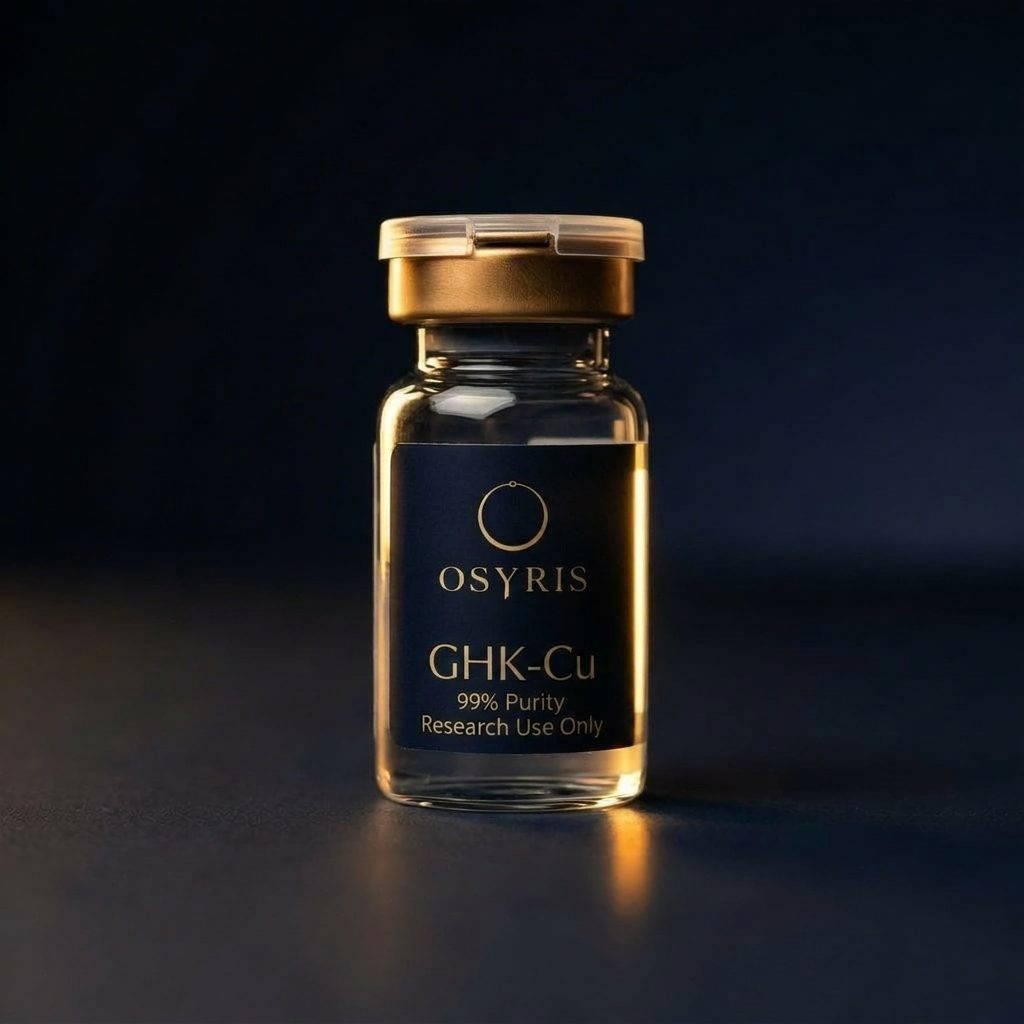
GHK-Cu
GHK-Cu is the copper(II) complex of glycyl-L-histidyl-L-lysine. It is widely used in vitro to study copper transport, redox balance, extracellular matrix regulation, and gene expression signatures related to tissue remodeling and cellular stress responses.
- Quantity
- 100MG
- Purity
- See COA
Standard $9.99 | Expedited $12.99 | Free standard over $200
Research overview
Research Overview
GHK is an endogenous tripeptide that forms a stable high-affinity complex with Cu(II), yielding GHK-Cu, a well-characterized ligand-metal pair.[1,2] In research settings, GHK-Cu serves as a model for copper delivery and signaling, enabling investigation of matrix protein synthesis, metalloproteinase regulation, antioxidant responses, and transcriptional reprogramming under standardized conditions.[3,4] Its versatility has made it a reference tool in dermatologic, regenerative, and oxidative stress research.
Molecular Structure & Copper Coordination
GHK (C₁₄H₂₄N₆O₄) coordinates Cu(II) through the histidine imidazole, terminal amine, and amide nitrogens to form a compact complex with defined geometry.[1] This allows precise analysis of binding constants, redox cycling, and competition with other copper ligands in biochemical systems.
Extracellular Matrix & Dermal Research
In skin- and fibroblast-derived models, GHK-Cu is used to assess effects on collagen, elastin, proteoglycans, and matrix metalloproteinases, as well as integrin and TGF-β associated pathways.[3] These experiments map gene and protein expression patterns associated with matrix maintenance and controlled remodeling.
Oxidative Stress & Gene Expression Studies
Studies utilizing GHK-Cu report modulation of antioxidant defenses, DNA repair-related transcripts, and cell viability under toxic or oxidative challenge.[4] These data are interpreted as mechanistic evidence for copper-peptide–dependent signaling, not as clinical outcomes.