
AboutStandards
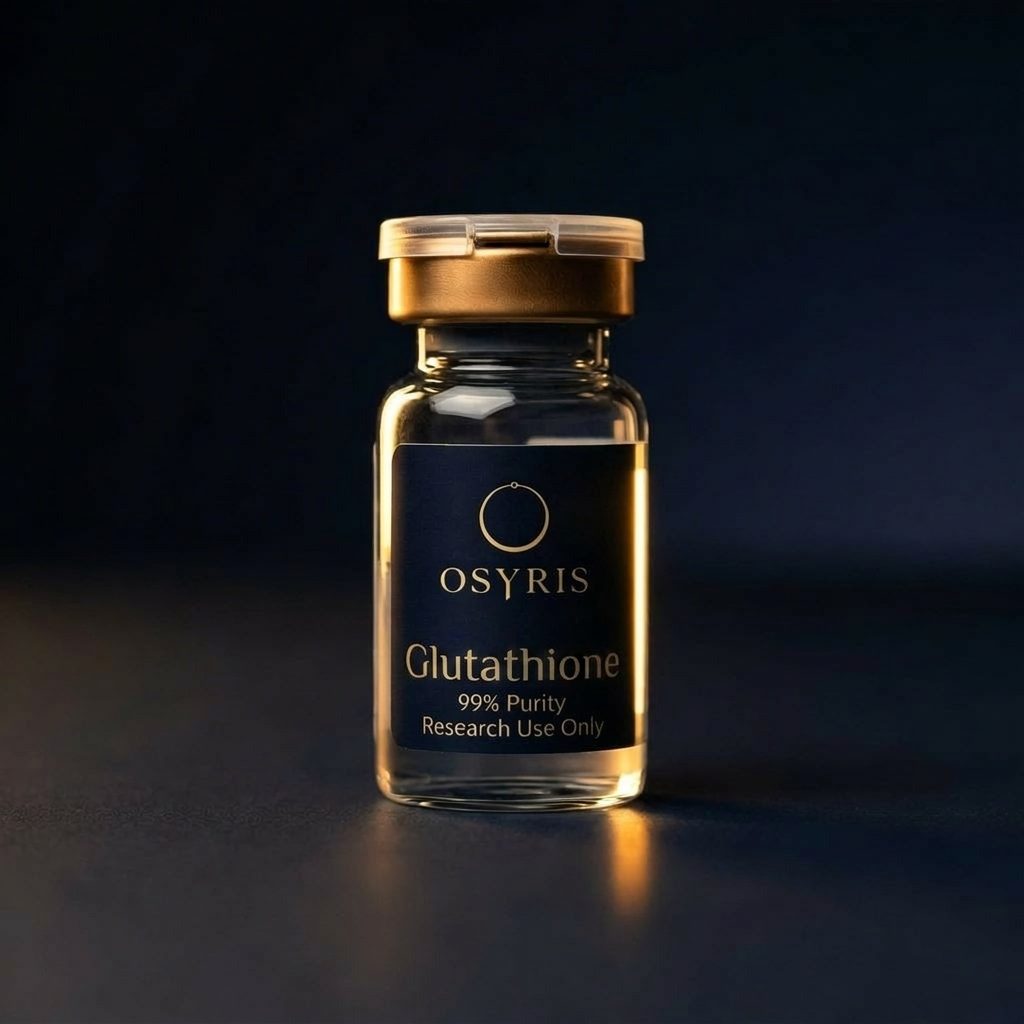
Glutathione research peptide vial — OSYRIS Health
AESTHETICS

Glutathione

$59.99

Glutathione (GSH) is an endogenous γ-glutamyl-cysteinyl-glycine tripeptide supplied as a research-grade standard. It is central to models of redox homeostasis, detoxification, antioxidant defense, and thiol-based signaling.

QuantityStandard research vial
PurityPending COA
Free shipping on orders over $200
Download Certificate of Analysis
About This Compound

Product Overview

Glutathione (GSH) is a tripeptide composed of glutamate, cysteine, and glycine. It is the most abundant intracellular antioxidant in human cells — present at millimolar concentrations in virtually every tissue. Glutathione functions as the cell's primary defense against oxidative stress through its ability to donate electrons to reactive oxygen species, converting them to harmless water and oxygen.

Beyond its antioxidant role, glutathione serves as a cofactor for glutathione peroxidase and glutathione S-transferase enzymes, which are involved in detoxification of xenobiotics (foreign chemicals), metabolism of prostaglandins and leukotrienes, and regulation of the cellular redox state. The ratio of reduced glutathione (GSH) to oxidized glutathione (GSSG) is used by researchers as a key indicator of cellular oxidative stress status.

Glutathione is included in the OSYRIS Aesthetics category because its antioxidant and skin-brightening properties are active areas of dermatological research, while its broader biological functions make it relevant to immune function and longevity research as well.

Glutathione antioxidant defense research visualization — OSYRIS Health
Research Applications

Mechanism and Experimental Context

Glutathione is the cell's first line of defense against oxidative stress. It directly scavenges reactive oxygen species (ROS) and serves as a substrate for glutathione peroxidase, which converts hydrogen peroxide to water. The GSH/GSSG ratio is one of the most widely used biomarkers of cellular redox status in research.1

Glutathione depletion in cell and animal models consistently leads to increased oxidative damage, mitochondrial dysfunction, and cell death — demonstrating its essential role in cellular protection. Research investigates how glutathione levels are maintained, what causes their decline, and whether supplementation can restore protective capacity.

Glutathione has been studied in dermatological research for its effects on melanogenesis — the biochemical pathway that produces melanin (skin pigment). In vitro studies have shown that glutathione inhibits tyrosinase, the rate-limiting enzyme in melanin synthesis, and shifts melanin production from eumelanin (dark pigment) toward pheomelanin (lighter pigment).2

This research has generated interest in glutathione's potential role in skin biology, though the mechanisms and clinical significance of these findings remain active areas of investigation.

Glutathione S-transferase enzymes use glutathione to conjugate and detoxify a wide range of compounds, including environmental toxins, drug metabolites, and endogenous oxidative byproducts. This "Phase II" detoxification pathway is critical for cellular maintenance and is studied in toxicology and pharmacology research.3

Immune cells — particularly lymphocytes and macrophages — are highly dependent on adequate glutathione levels for optimal function. Research has shown that glutathione depletion impairs T-cell proliferation, natural killer cell activity, and cytokine production. The immune research connects glutathione to both the Aesthetics and Immune cross-listing in the OSYRIS catalog.4

Referenced Studies

Source Literature

[1]

Forman HJ, et al. "Glutathione: overview of its protective roles, measurement, and biosynthesis." Molecular Aspects of Medicine, 2009. PubMed: PMID 18926850

[2]

Villarama CD, Maibach HI. "Glutathione as a depigmenting agent: an overview." International Journal of Cosmetic Science, 2005. PubMed: PMID 18492135

[3]

Hayes JD, et al. "Glutathione S-transferases." Annual Review of Pharmacology and Toxicology, 2005. PubMed: PMID 15822171

[4]

Droge W, Breitkreutz R. "Glutathione and immune function." Proceedings of the Nutrition Society, 2000. PubMed: PMID 11209280

Certificate of Analysis

Batch Documentation

Current published batch documentation is surfaced on-page whenever the provider exposes a public COA asset.

Certificate Pending

A public COA asset is not currently available for this product. This page will surface the batch document as soon as it is published.

Frequently Asked Questions

Questions About Glutathione

Glutathione (GSH) is a tripeptide (glutamate-cysteine-glycine) that is the most abundant intracellular antioxidant in human cells. It protects cells from oxidative damage and serves as a cofactor for detoxification enzymes.

Technically, yes — it's a tripeptide (three amino acids). However, it's more commonly classified as an antioxidant and metabolic cofactor than a "research peptide" in the traditional sense. It's included in the OSYRIS catalog for its relevance to skin biology and cellular health research.

Glutathione is studied in dermatological research for its effects on melanogenesis (pigmentation biology) and its role as a skin antioxidant. It also cross-lists to the Immune and Longevity categories due to its broad biological functions.

It's the ratio of reduced glutathione (GSH, the active form) to oxidized glutathione (GSSG, the spent form). Researchers use this ratio as a key indicator of cellular oxidative stress. A high GSH/GSSG ratio indicates healthy antioxidant capacity.

OSYRIS Glutathione is research-grade with batch-specific HPLC/LC-MS purity verification. It is manufactured to laboratory standards and sold for research use, not dietary supplementation.

Store at 2-8°C, protected from light and oxygen exposure. Glutathione is sensitive to oxidation — improper storage can convert active GSH to inactive GSSG.

Independently tested via HPLC and LC-MS. COA downloadable on this page.

Oxidative stress biology, skin/dermatology (melanogenesis), toxicology (Phase II detoxification), immune function, and aging research. It's one of the most broadly studied molecules in cellular biology.

Every Batch Tested by an Independent Lab

We publish the Certificate of Analysis for every product. See our full testing process.

See Our Standards →

All products sold by OSYRIS Health are intended for laboratory research purposes only and are not for human or veterinary use. The information provided on this page describes published scientific research and does not constitute medical advice, diagnosis guidance, or a recommendation for any specific use. Always ensure compliance with local regulations.