
Immune
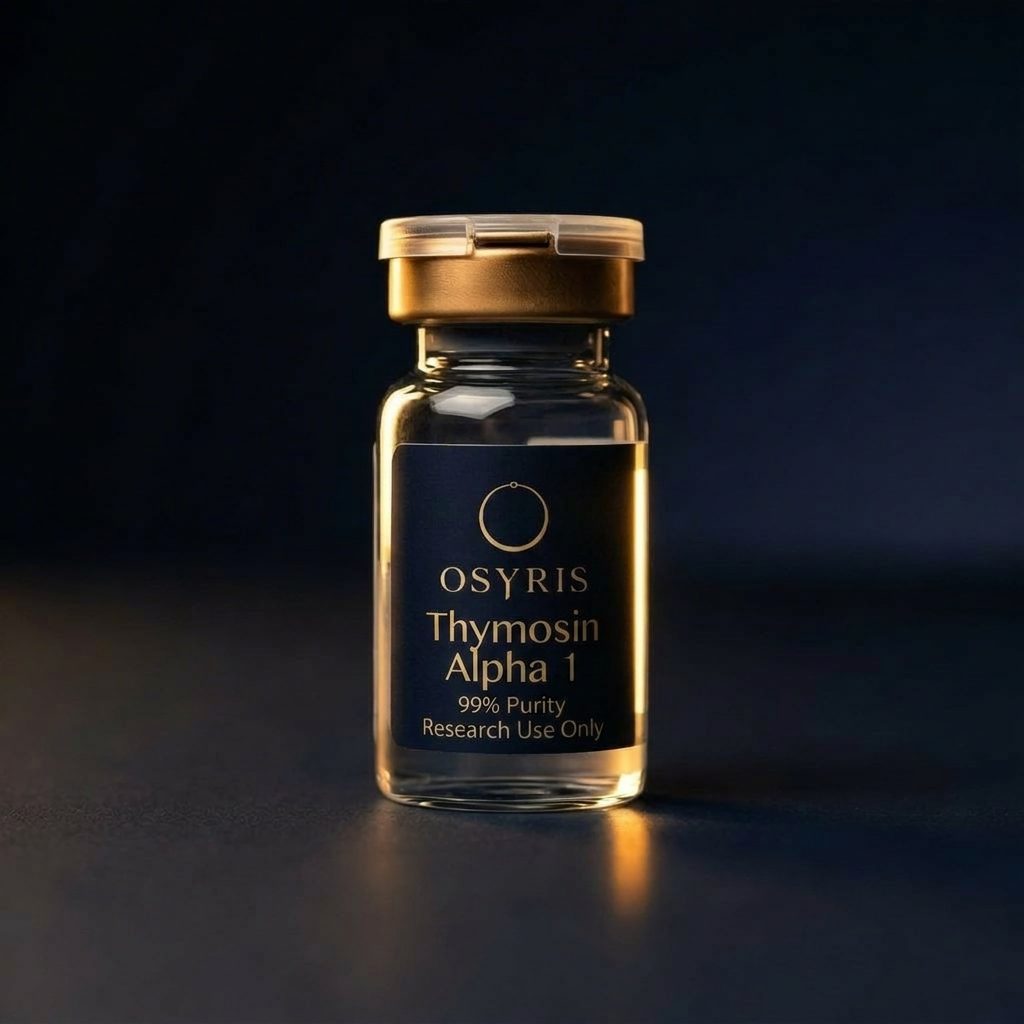
Thymosin Alpha 1
Thymosin Alpha 1 is a synthetic 28-amino-acid peptide fragment derived from pro-thymosin α, classified as an immunomodulatory research peptide. It is widely used in laboratory settings to investigate cellular regulation, biochemical signaling pathways, and interactions with immune-related molecular targets. Intended strictly for controlled research applications only.
- Quantity
- Standard research vial
- Purity
- See COA
Standard $9.99 | Expedited $12.99 | Free standard over $200
Download Certificate of AnalysisResearch overview
Research Overview
Thymosin Alpha 1 (Tα1) is a naturally occurring 28-residue peptide fragment derived from the N-terminal region of pro-thymosin α, a protein associated with intracellular immune regulation. According to PubChem, Thymosin Alpha 1 is categorized as a synthetic immunologically active peptide with a well-defined amino acid sequence (PubChem CID: 16132368) [1]. Current research focuses on its molecular interactions, signaling pathways, and potential regulatory roles across various biological systems. No human use or clinical claims should be inferred, as all work remains confined to laboratory-controlled studies.
-
Molecular and Structural Research
Research utilizing Thymosin Alpha 1 often centers on its primary structure, which consists of a 28-amino-acid chain demonstrating amphipathic properties and potential conformational changes under varying conditions [1]. Laboratory work investigates how these structural features influence protein–protein interactions, receptor binding affinities, and intracellular translocation. Structural characterization studies also examine peptide stability, folding behavior, and degradation kinetics under different experimental environments. These data contribute to ongoing efforts to map biochemical activity and understand sequence-dependent functionality [1].
-
Cell Signaling and Pathway Regulation Studies
A significant area of research explores Thymosin Alpha 1’s influence on intracellular signaling cascades. Experimental models have evaluated its ability to modulate transcription factors, affect cytokine-related pathways, and participate in upstream regulatory events involving innate cellular responses [1]. PubChem notes that Tα1 has been studied as a signaling-active peptide capable of interacting with pathways associated with immune cell activation and cellular stress responses. These investigations focus strictly on mechanistic activity in vitro, providing valuable insight into how small peptides interface with larger regulatory networks.
-
Peptide–Receptor Interaction and Binding Investigations
Thymosin Alpha 1 is frequently used to study peptide-receptor mechanics and receptor-mediated signaling. Research examines potential binding sites, affinity constants, and downstream molecular effects after association with cell-surface or intracellular receptors [1]. These studies help characterize how small peptides engage with regulatory proteins and how such interactions may influence transcriptional or enzymatic activity. No conclusions are drawn regarding physiological or clinical outcomes; the research remains limited to controlled laboratory systems.
-
Biochemical and Immunological Mechanism Research
In immunology-focused research environments, Thymosin Alpha 1 is examined for its biochemical participation in immune-related processes. PubChem documentation highlights its usage as a model compound in studies analyzing immune signaling molecules, antigen-presentation mechanisms, and cellular regulatory events [1]. Researchers use Tα1 to probe immune-associated biochemical pathways, identify key regulatory checkpoints, and map functional relationships between small peptides and immune-related intracellular machinery.