
Immune
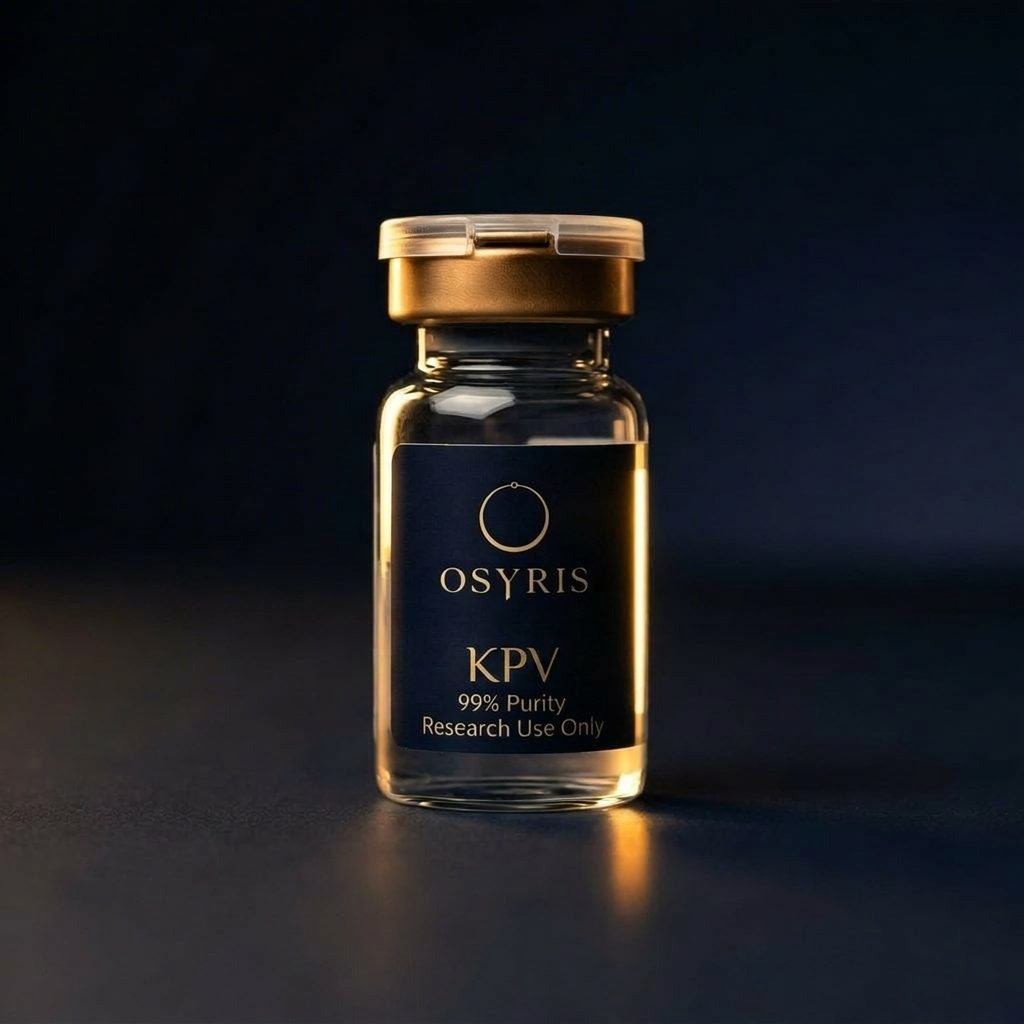
KPV
KPV is a tripeptide fragment (Lys-Pro-Val) derived from the α-melanocyte-stimulating hormone (α-MSH). Supplied as a high-purity research peptide, KPV 10 mg is used exclusively in controlled laboratory settings for studies exploring cellular interactions, peptide signaling, and structure–function relationships. For research purposes only.
- Quantity
- Standard research vial
- Purity
- See COA
Standard $9.99 | Expedited $12.99 | Free standard over $200
Download Certificate of AnalysisResearch overview
Research Applications Based on PubChem
Peptide Structure and Classification
KPV (PubChem CID: 123912) is a tripeptide consisting of lysine, proline, and valine arranged as Lys-Pro-Val. It is structurally classified as a linear oligomeric peptide derived from the C-terminal region of α-MSH. PubChem identifies KPV as a melanocortin-related peptide fragment with preserved structural motifs that allow interaction with biological systems in controlled research models [1]. Its small size and stability make it suitable for analytical studies involving peptide–receptor interactions, ligand conformations, and comparative degradation pathways.
Molecular Interaction and Mechanistic Research
According to PubChem, KPV is associated with research examining its interaction with melanocortin-related pathways due to its origin from α-MSH [1]. Investigators use KPV in cell-based assays to study intracellular signaling cascades, modulation of molecular messengers, and peptide behavior under varying biochemical environments. This includes work assessing:
- Binding characteristics of melanocortin-derived fragments
- Signal transduction profiling in vitro
- Structural requirements for receptor engagement
These studies help clarify how truncated peptides retain or modify activity patterns within controlled laboratory frameworks.
Biochemical Stability and Degradation Studies
Research involving KPV also includes examination of peptide degradation, enzymatic stability, and comparison with other melanocortin fragments. PubChem notes its use as a reference fragment to evaluate metabolic breakdown, proteolytic susceptibility, and physicochemical behavior such as solubility and binding tendencies in different research media [1]. These experiments support broader investigations of peptide optimization and structural resilience.
Analytical and In Vitro Assay Development
KPV’s defined molecular structure enables its use in standardization of analytical methods, chromatographic profiling, and assay calibration in peptide research laboratories. PubChem records its use for in vitro modeling as part of peptide mapping experiments and structural characterization work [1]. Researchers may employ KPV when developing comparative assays to evaluate:
- Mass spectrometry detection parameters
- Peptide purity assessment workflows
- Chromatographic retention behavior of small bioactive fragments