
AboutStandards
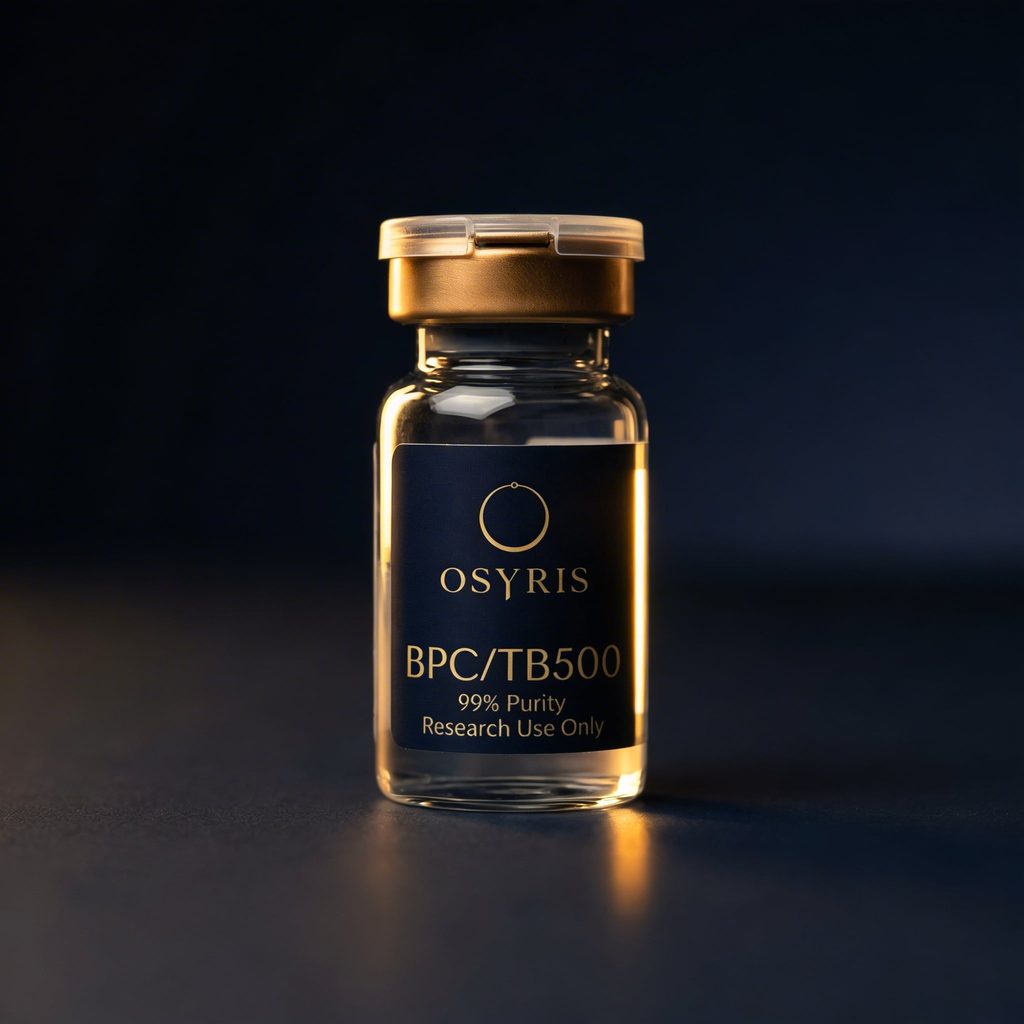
BPC/TB500 Blend research peptide vial — OSYRIS Health
RECOVERY

BPC/TB500 Blend

$69.99

This research-only blend combines BPC-157 and TB-500, two synthetic peptides studied for their roles in tissue regeneration, cellular repair, angiogenesis, and inflammation modulation. The synergistic activity of these peptides supports their investigation across diverse biological models involving injury, oxidative stress, and vascular function. For controlled laboratory use only.

Size
Quantity10MG/10MG
PuritySee COA
Free shipping on orders over $200
Download Certificate of Analysis
About This Compound

Product Overview

The BPC/TB500 Blend combines two of the most studied tissue repair peptides — BPC-157 and TB500 — in a single vial. The rationale behind this combination is mechanistic complementarity: BPC-157 and TB500 promote tissue repair through entirely different biological pathways, and researchers investigate whether using both simultaneously produces effects that neither achieves alone.

BPC-157 works primarily through growth factor modulation — upregulating EGF, VEGF, and FGF expression — and the FAK-paxillin signaling pathway that governs cell adhesion and migration to injury sites. TB500 works through actin polymerization — reorganizing the cytoskeletal framework that allows cells to physically move. One compound enhances the biological signals calling cells to the injury. The other gives the cells the structural machinery to get there.

This blend is designed for research protocols that investigate multi-mechanism tissue repair — a growing area of preclinical research interest.

BPC/TB500 Blend dual-mechanism tissue repair research visualization — OSYRIS Health
Research Applications

Mechanism and Experimental Context

The scientific basis for combining BPC-157 and TB500 rests on their non-overlapping mechanisms. Published research on each compound individually has established distinct pathways: BPC-157 modulates growth factors (EGF, VEGF, FGF) and the FAK-paxillin cell adhesion pathway, while TB500 promotes actin polymerization and cytoskeletal reorganization for cell migration.1

Combination research investigates whether simultaneous activation of both growth factor signaling and actin-mediated cell migration produces additive or synergistic effects in tissue repair models. While published studies on the specific BPC-157 + TB500 combination are limited, the mechanistic rationale is well-supported by the independent literature on each compound.

Researchers use the BPC/TB500 combination in various wound healing assays. In scratch-wound assays using fibroblast cell cultures, the combination protocol allows investigation of whether growth factor upregulation (BPC-157's contribution) and enhanced cell motility (TB500's contribution) together accelerate wound closure rates compared to either compound individually.2

The combination is also studied in more complex tissue explant models where multiple cell types (fibroblasts, endothelial cells, immune cells) are present, allowing investigation of how the two mechanisms interact in a multi-cellular environment.

A key application of the blend is direct comparison research: measuring outcomes with BPC-157 alone, TB500 alone, and the combination side by side. This experimental design helps researchers determine whether the effects are additive (sum of individual effects), synergistic (greater than the sum), or show diminishing returns. Understanding these relationships is important for designing optimal research protocols.3

Referenced Studies

Source Literature

[1]

Chang CH, et al. "BPC 157 enhances the growth of tendon fibroblasts." Journal of Orthopaedic Research, 2011. PubMed: PMID 20839318

[2]

Malinda KM, et al. "Thymosin beta-4 accelerates wound healing." Journal of Investigative Dermatology, 1999. PubMed: PMID 10383732

[3]

Sikiric P, et al. "Stable gastric pentadecapeptide BPC 157: novel therapy in gastrointestinal tract." Current Pharmaceutical Design, 2011. PubMed: PMID 21861804

Certificate of Analysis

Batch Documentation

Current published batch documentation is surfaced on-page whenever the provider exposes a public COA asset.

BPC/TB500 Blend certificate of analysis

Frequently Asked Questions

Questions About BPC/TB500 Blend

It combines BPC-157 and TB500 in a single vial for researchers studying both compounds together. The two peptides work through different tissue repair mechanisms — BPC-157 through growth factor modulation and TB500 through actin polymerization.

They target complementary repair pathways. BPC-157 enhances the biological signals that recruit repair cells to injury sites. TB500 gives those cells the cytoskeletal machinery to physically migrate. Researchers investigate whether activating both pathways simultaneously produces effects beyond what either achieves alone.

Yes. OSYRIS offers BPC-157 and TB500 as individual products. The blend is designed for protocols that specifically require both compounds in combination.

The BPC/TB500 Blend contains 10mg BPC-157 and 10mg TB500 per vial. Exact ratios are documented on the product specifications.

That is an active research question. The blend allows researchers to investigate potential additive or synergistic effects. Published literature supports the mechanistic rationale, but direct combination studies are still an emerging area.

Same as individual peptides: lyophilized at 2-8°C (short-term) or -20°C (long-term). Protect from light. Once reconstituted, refrigerate.

Each component is independently tested via HPLC and LC-MS. The COA is downloadable on this page.

KLOW combines KPV + BPC-157 + TB500 + GHK-Cu — four compounds targeting immune and repair pathways. The BPC/TB500 Blend is simpler: just the two core recovery peptides without immune or aesthetics components.

Every Batch Tested by an Independent Lab

We publish the Certificate of Analysis for every product. See our full testing process.

See Our Standards →

All products sold by OSYRIS Health are intended for laboratory research purposes only and are not for human or veterinary use. The information provided on this page describes published scientific research and does not constitute medical advice, diagnosis guidance, or a recommendation for any specific use. Always ensure compliance with local regulations.