
Aesthetics
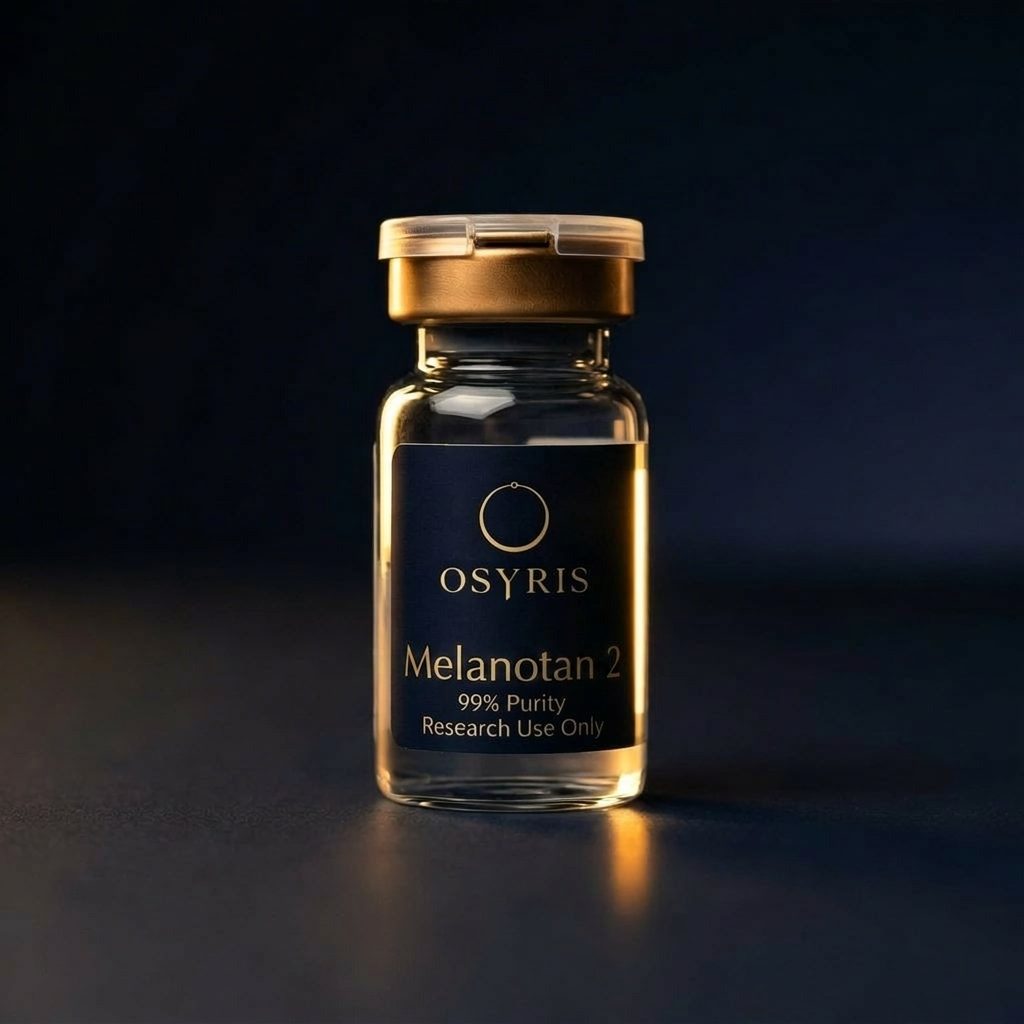
Melanotan 2
Melanotan II is a synthetic cyclic heptapeptide analog of α-MSH (alpha-melanocyte-stimulating hormone). It is studied for its interaction with melanocortin receptors, particularly MC1R and MC4R. MT-2 is used exclusively in laboratory settings to explore pigment regulation, energy homeostasis, and neuroendocrine signaling. Not for diagnostic or therapeutic use.
- Quantity
- 10mg
- Formula
- C50H69N15O9
- Purity
- See COA
Standard $9.99 | Expedited $12.99 | Free standard over $200
Download Certificate of AnalysisResearch overview
Product Overview:
Product Name: Melanotan II (MT-2)
Quantity: 10mg
Molecular Formula: C50H69N15O9
Research Use Only. Not for Human Consumption.
Research Applications:
-
Pigmentation and Melanocortin Receptor Studies
Melanotan II acts primarily as a non-selective agonist of melanocortin receptors, including MC1R, which is involved in melanogenesis. In vitro and in vivo studies show that MT-2 increases melanin production in melanocytes through cAMP-dependent pathways, making it a valuable compound in pigmentation and UV-protection models [1].
In research settings, Melanotan II has been shown to upregulate tyrosinase activity and melanosome production, key components in skin pigmentation pathways. This has led to its widespread use in dermatological and photobiology research involving α-MSH analogs.
-
Neuroendocrine Signaling and Appetite Regulation
MT-2’s activation of MC3R and MC4R has also made it a focus of investigation in the fields of energy homeostasis and neuroendocrine regulation. Studies in rodent models have demonstrated that MT-2 can reduce food intake and influence hypothalamic signaling associated with appetite and satiety [2].
Researchers use Melanotan II to probe melanocortin-related pathways involved in the central regulation of feeding behavior, offering insights into potential metabolic and neurobehavioral mechanisms.
-
Sexual Function and Behavioral Research
Melanotan II has been noted for its ability to activate MC4R, which plays a role in sexual arousal pathways in animal models. It has been investigated in neurobehavioral studies exploring the relationship between central melanocortin signaling and sexual motivation or erectile function in male rodents [3].
These models help define how centrally acting melanocortin peptides affect autonomic and behavioral outputs related to sexual function, which remains a significant area of neuroendocrine research.
-
Anti-inflammatory and Immunomodulatory Studies
Some research indicates that melanocortin receptor activation may modulate immune response and inflammation. MT-2 has been examined in models involving oxidative stress and tissue inflammation, where it was observed to reduce markers of inflammation through MC1R and MC3R pathways [4].
This activity has led to its experimental use in studies of immune modulation, particularly where melanocortin pathways intersect with cytokine signaling and redox balance.