
Aesthetics
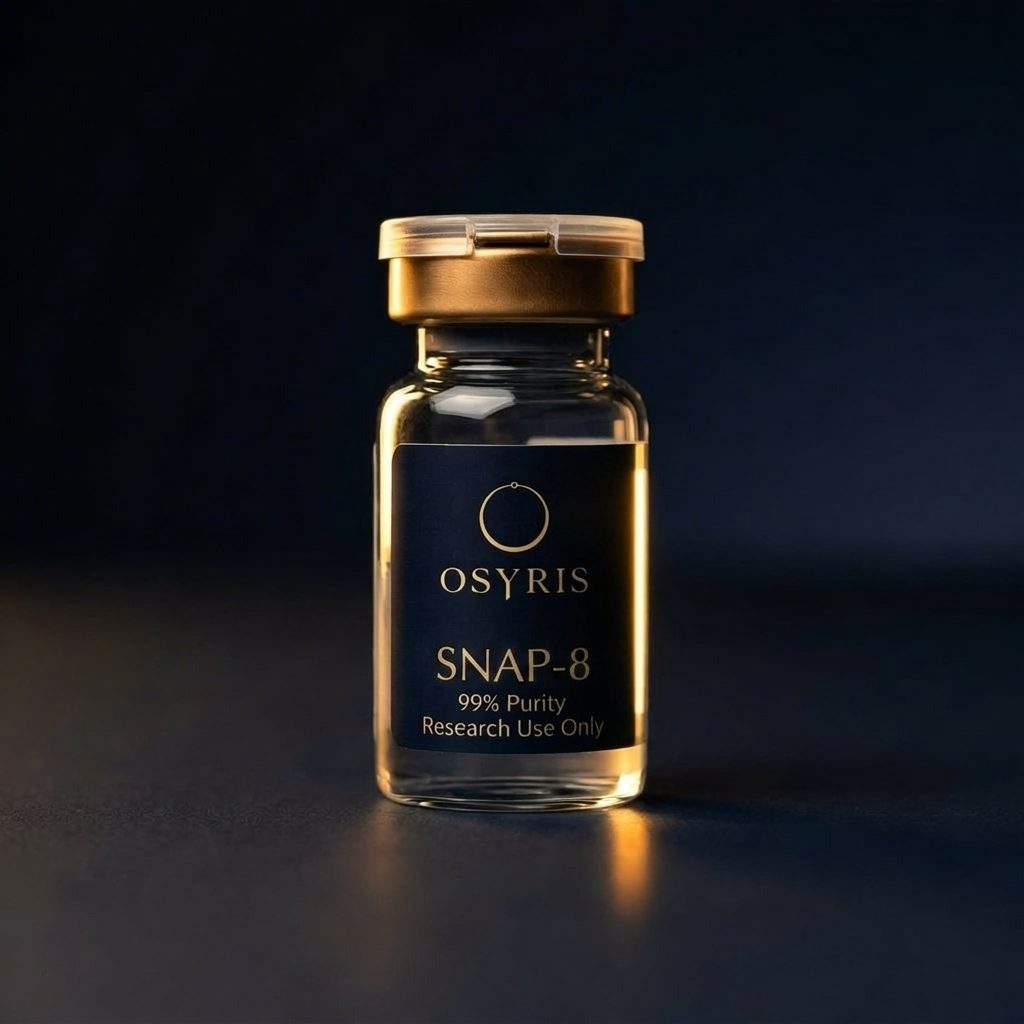
SNAP-8
SNAP-8 is an acetylated octapeptide analog of the N-terminal domain of SNAP-25. It is used in vitro to investigate SNARE complex interactions, synaptic vesicle fusion, and peptide-mediated modulation of exocytosis in neuromuscular and dermal models, supporting structure–activity and vesicle trafficking research under controlled conditions.
- Quantity
- Standard research vial
- Purity
- See COA
Standard $9.99 | Expedited $12.99 | Free standard over $200
Download Certificate of AnalysisResearch overview
Research Overview
SNAP-8 is a synthetic neuropeptide-mimetic designed to competitively interact with components of the SNARE complex involved in regulated exocytosis. Its defined length, charge distribution, and derivation from SNAP-25 make it suitable for dissecting presynaptic signaling, vesicle docking, and neurotransmitter release processes in biochemical and cell-based systems.[1] PubMed-indexed cosmeceutical and neuromodulatory peptide literature further contextualizes SNAP-8 within peptide libraries studied for their influence on vesicle fusion and neuromuscular signaling endpoints.[2,3]
Molecular Structure & SNARE Interaction Studies
SNAP-8 (Ac-Glu-Glu-Met-Gln-Arg-Arg-Ala-Asp-NH₂) models a functional region of SNAP-25, enabling controlled assessment of peptide–protein and peptide–membrane interactions.[1] Researchers employ it in binding, fluorescence, and electrophysiological assays to probe competitive interference with SNARE assembly and to map determinants of vesicle fusion specificity in neuronal and neurocutaneous preparations.
Neuromuscular and Exocytosis Research
In neuromuscular junction and neuron-derived cell models, SNAP-8 is used to quantify effects on exocytotic markers, synaptic vesicle recycling, and neurotransmitter release.[2] These systems facilitate evaluation of how short peptides influence presynaptic machinery, without invoking irreversible modification or systemic administration.
Dermatologic and Cosmetic Science Models
SNAP-8 also appears in in vitro skin and myocyte models exploring peptide-based modulation of signal pathways relevant to expression lines and cutaneous tension.[2,3] Work remains strictly preclinical, focusing on mechanistic characterization of peptide–SNARE interactions and not on validated clinical performance.