
Metabolic
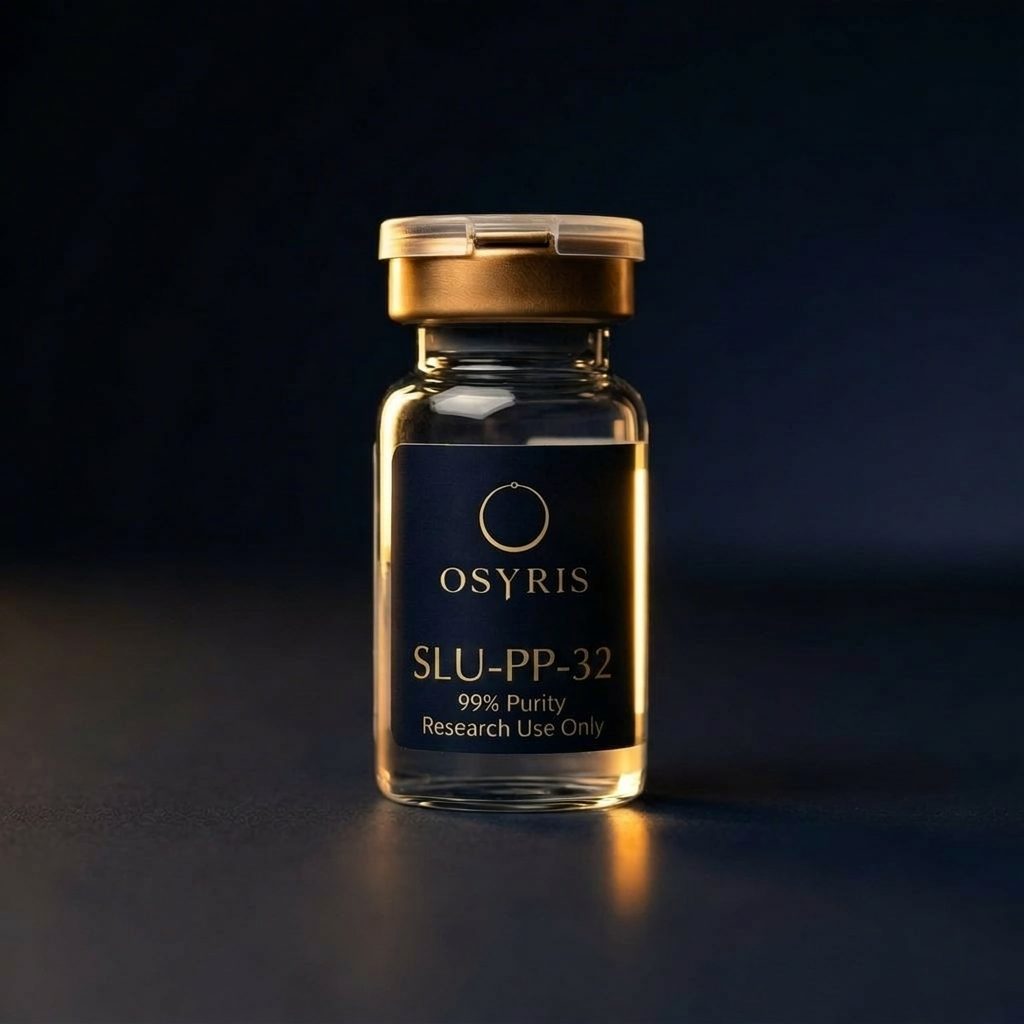
SLU-PP-32
SLU-PP-32 is offered as an experimental ligand within the emerging family of estrogen-related receptor (ERR) agonist tool compounds. It is strictly for exploratory research on nuclear receptor signaling, mitochondrial regulation, and oxidative metabolism.
- Quantity
- Standard research vial
- Purity
- See COA
Leave your email and we will notify you when this compound returns to inventory.
Research overview
Research Overview
Pan-ERR agonists such as SLU-PP-332 and SLU-PP-915 have been described as small molecules that directly bind ERRα/β/γ, activating transcriptional programs linked to oxidative metabolism and mitochondrial biogenesis.[1,2] SLU-PP-32 is positioned as a related investigative compound for extending structure–activity relationship (SAR) and pathway analyses in this domain.
ERR Activation & Mitochondrial Function
ERRs regulate genes involved in fatty acid oxidation, oxidative phosphorylation, and ATP production. Using characterized ligands, investigators assess changes in oxygen consumption rate, mitochondrial content, and expression of PGC-1α target genes in muscle, cardiac, and renal models.[1–3]
Exercise-Mimetic & Metabolic Models
Preclinical work evaluates how ERR activation influences endurance-associated gene signatures and metabolic syndrome phenotypes, strictly at the level of mechanistic discovery.[1–3] SLU-PP-32 is provided to support such ERR-focused research and should not be extrapolated to human use.
Related products
-
Metabolic
GLP – 2 (T)
Multiple sizes · C225H348N48O68 · MW 4813.45 g/mol
Price range: $99.99 through $169.99Add to cart This product has multiple variants. The options may be chosen on the product page -
Metabolic
GLP – 3 (R)
Multiple sizes · C222H340N60O68 · MW 5100 Da
Price range: $94.99 through $229.99Add to cart This product has multiple variants. The options may be chosen on the product page -

-