

Growth Hormone
Tesamorelin — The Stabilized GHRH With Clinical Proof
Tesamorelin research overview covering stabilized GHRH signaling, DPP-IV resistance, visceral fat data, and liver-fat research.

Engineering Stability
Tesamorelin solves Sermorelin's main limitation: rapid enzymatic degradation. The trans-3-hexenoic acid modification at the N-terminus blocks DPP-IV from cleaving the peptide, extending its active duration from minutes to hours.¹
This modification is elegant in its simplicity — a single chemical group added to one end of the molecule transforms a short-acting research tool into a longer-acting compound suitable for less frequent administration in experimental protocols.
The Clinical Evidence Advantage
Tesamorelin (Egrifta) holds current FDA approval for HIV-associated lipodystrophy — giving it the most recent clinical evidence base of any compound in the OSYRIS Growth Hormone category. The clinical trial program provided data on:
Visceral fat reduction. Tesamorelin significantly reduced visceral adipose tissue (VAT) in clinical trials, as measured by CT scan. The effect was specific to visceral fat — subcutaneous fat was not significantly affected, and lean mass was preserved.²
Hepatic fat. Studies by Stanley et al. demonstrated that Tesamorelin reduced liver fat content in subjects with hepatic steatosis. This connects GH-axis biology to liver metabolism — a research area where Tesamorelin has uniquely strong clinical data.³
Safety profile. The clinical program confirmed no increase in diabetes incidence, no clinically meaningful changes in glucose metabolism, and manageable side effects (injection site reactions, edema) in the studied population.
Comparative GHRH Research
| GHRH Analog | Modification | DPP-IV Resistant | Duration | Clinical Data |
|---|---|---|---|---|
| Sermorelin (GRF 1-29) | None (minimum fragment) | No | ~10-20 min | Former FDA (diagnostic) |
| Tesamorelin | Hexenoic acid at N-terminus | Yes | Hours | Current FDA (lipodystrophy) |
| CJC-1295 (no DAC) | Multiple substitutions | Partially | 30+ min | Phase 2 |
Tesamorelin is the gold standard for sustained GHRH-R stimulation in clinical contexts. Sermorelin is the reference for unmodified pulsatile research. CJC-1295 offers intermediate stability.
Limitations
Tesamorelin's clinical data is specifically from HIV-associated lipodystrophy populations. Whether results generalize to non-HIV metabolic contexts is extrapolated but not proven. The FDA approval is indication-specific, not a general endorsement of GH-axis modulation.
Featured Links
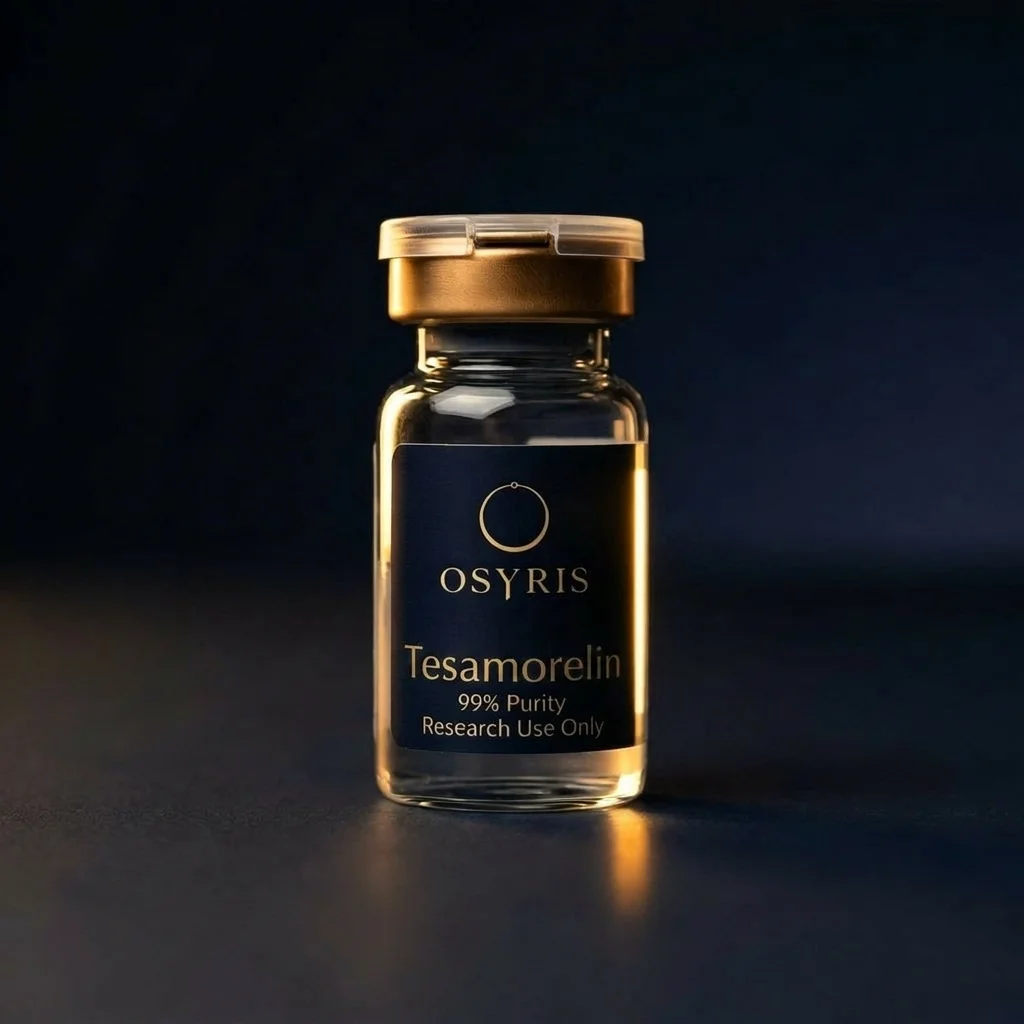 Research Product
Tesamorelin
Research Product
Tesamorelin
Tesamorelin is a synthetic analog of growth hormone-releasing hormone (GHRH) composed of 44 amino acids. It is studied for its role in stimulating endogenous growth hormone (GH) release via pituitary GHRH receptors. Tesamorelin is used exclusively for controlled scientific research and is not approved for therapeutic or diagnostic use.
View product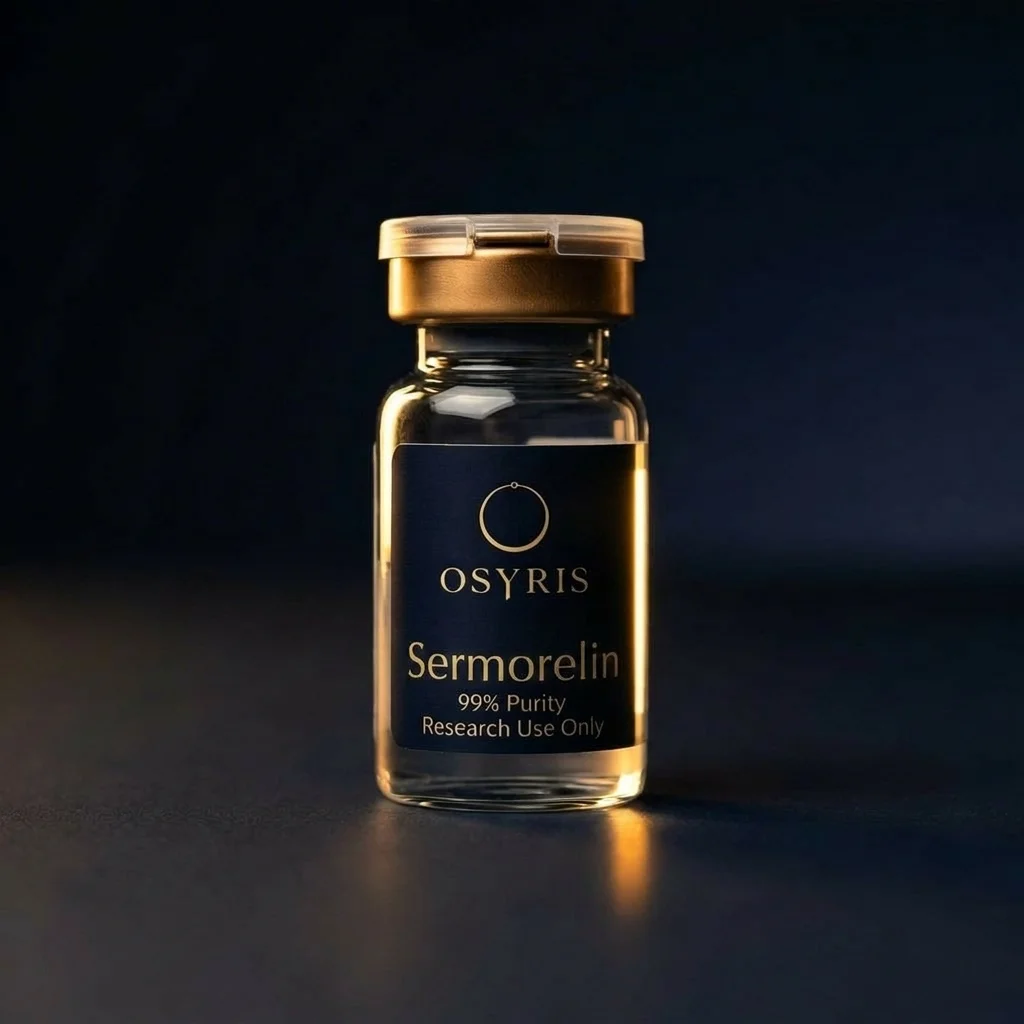 Research Product
Sermorelin
Research Product
Sermorelin
Sermorelin acetate (10mg) is a synthetic analog of growth hormone–releasing hormone (GHRH), consisting of the first 29 amino acids of the natural peptide. With ≥99% purity, this research peptide is used in laboratory studies exploring neuroendocrine regulation, aging models, and pituitary function. Supplied for research purposes only.
View product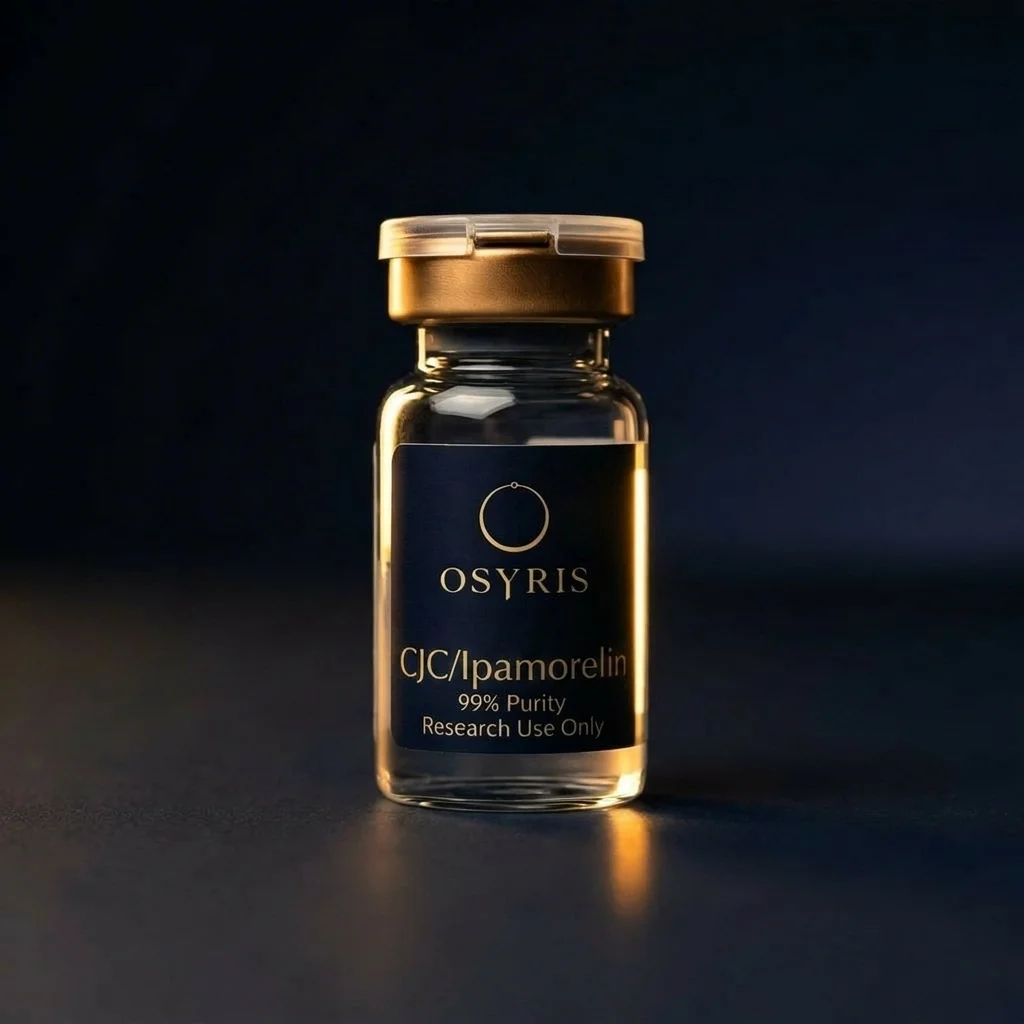 Research Product
CJC/Ipamorelin Blend
Research Product
CJC/Ipamorelin Blend
This blend combines CJC-1295 (No DAC) and Ipamorelin—two research peptides that act synergistically on the growth hormone (GH) axis. CJC-1295 stimulates GH-releasing hormone (GHRH) receptors, while Ipamorelin targets ghrelin receptors. Their combined use supports investigation into pulsatile GH secretion and downstream effects in cellular and endocrine research models.
View productQuestions
Common Questions
What makes Tesamorelin different from Sermorelin?
Tesamorelin has an N-terminal modification that protects it from DPP-IV degradation, giving it a much longer active duration than unmodified Sermorelin.
Why is DPP-IV resistance important?
Because it extends the peptide’s functional exposure in vivo, allowing more sustained GHRH receptor stimulation and a different GH-release profile.
Why does Tesamorelin have stronger clinical data than most GH-axis peptides?
It has been evaluated in regulated clinical programs, including FDA-approved use in HIV-associated lipodystrophy, which generated real imaging and safety data.
What is the hepatic-fat connection with Tesamorelin?
Clinical studies showed reductions in liver fat in certain populations, making Tesamorelin relevant not only to GH signaling but also to metabolic-liver research.
Does Tesamorelin replace upstream or downstream GH-axis tools?
No. It remains an upstream pituitary stimulus, while compounds like IGF1-LR3 act downstream at the effector level.
Why is Tesamorelin in the Growth Hormone category?
Because its core mechanism is still GHRH receptor stimulation and endogenous GH release, even though the strongest clinical data focuses on body-composition endpoints.
References