

Growth Hormone
IGF1-LR3 — The Downstream Effector With Enhanced Bioavailability
IGF1-LR3 research overview covering reduced IGFBP binding, cell-culture use, IGF-1 receptor signaling, and downstream GH-axis biology.

Bypassing the Binding Proteins
Native IGF-1 has a bioavailability problem. In biological systems, approximately 98% of circulating IGF-1 is bound to IGF-binding proteins (IGFBPs), which sequester the molecule and prevent it from interacting with the IGF-1 receptor. Only the remaining ~2% of free IGF-1 is biologically active.¹
IGF1-LR3 solves this with two modifications: an arginine-to-glutamate substitution at position 3 and a 13-amino-acid N-terminal extension. Together, these changes reduce IGFBP binding by approximately 100-fold. The result: IGF1-LR3 remains largely free in solution, providing dramatically higher effective concentrations at the IGF-1 receptor than equivalent amounts of native IGF-1.
The Cell Culture Workhorse
IGF1-LR3's primary application isn't in vivo pharmacology — it's in cell culture. It is a standard component of serum-free and low-serum media formulations used for: - Stem cell maintenance and expansion - Primary cell culture (hepatocytes, chondrocytes, myoblasts) - Hybridoma maintenance for antibody production - Proliferation assays measuring growth factor responsiveness²
In these applications, IGF1-LR3's reduced IGFBP binding provides predictable dose-response relationships that native IGF-1 cannot offer. When you add IGF1-LR3 to media at a known concentration, that concentration is the effective concentration. With native IGF-1, most of the added molecule is immediately sequestered by binding proteins in the media.
Position in the GH Axis
IGF1-LR3 sits at the effector level of the somatotropic axis — downstream of everything else in the OSYRIS Growth Hormone category:
GHRH analogs (Sermorelin/Tesamorelin) → stimulate pituitary → GH release → liver produces IGF-1 → IGF1-LR3 acts here → cell proliferation, survival, differentiation
This position makes IGF1-LR3 the tool for studying GH's downstream effects independently from the upstream signaling cascade. Researchers can bypass GH entirely and deliver the effector molecule directly.³
IGF-1 Receptor Biology
The IGF-1 receptor (IGF-1R) is a receptor tyrosine kinase that activates PI3K/Akt and MAPK/ERK signaling — pathways controlling cell survival, proliferation, and differentiation. IGF1-LR3's clean receptor engagement (without IGFBP interference) makes it preferred over native IGF-1 for mechanistic studies of IGF-1R signaling.
Limitations
IGF1-LR3 is a research tool, not a therapeutic candidate. Its enhanced potency and reduced regulation by binding proteins make it pharmacologically "uncontrolled" compared to native IGF-1, whose IGFBP interactions serve as a natural buffering system. Temperature sensitivity is also greater than most peptides — cold chain management is critical.
Featured Links
 Research Product
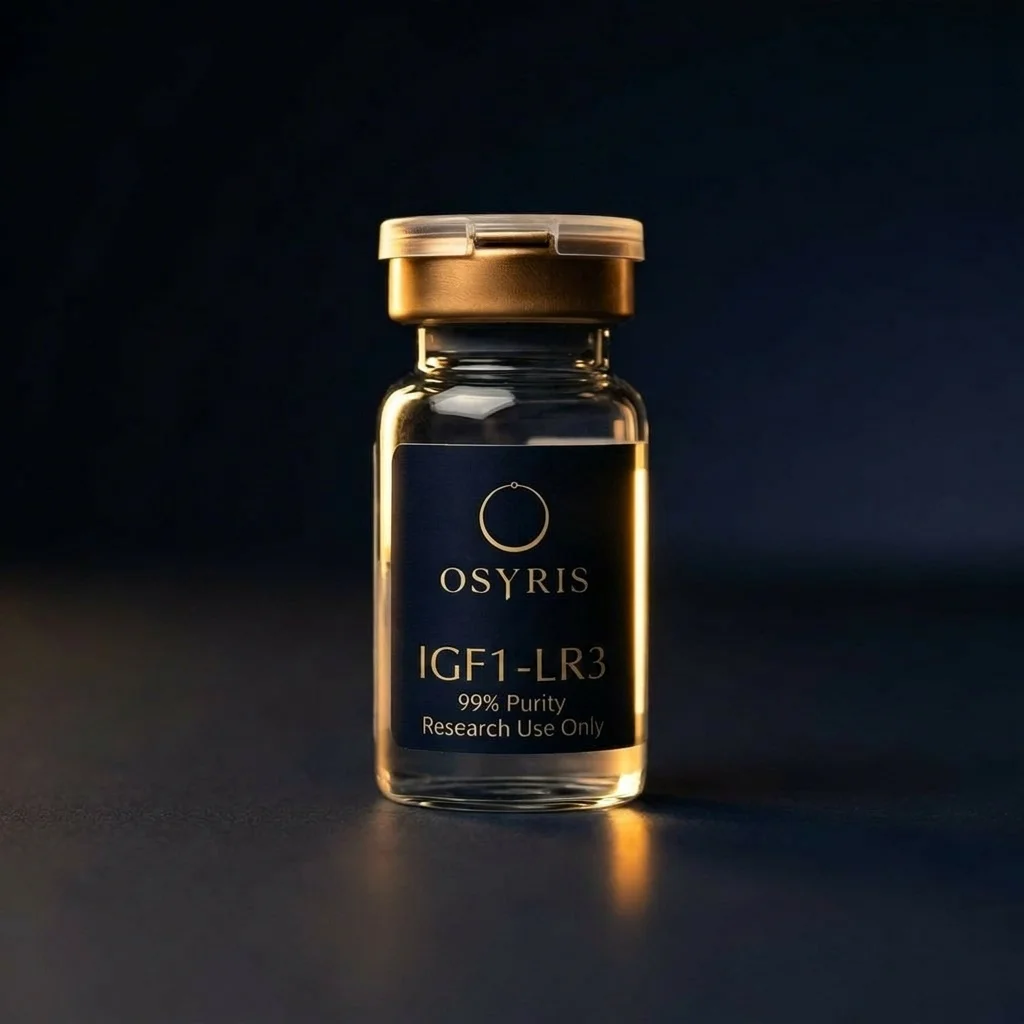
IGF1-LR3
Research Product
IGF1-LR3
IGF-1 LR3 is an 83-amino-acid recombinant analog of insulin-like growth factor-1 with an N-terminal extension and Arg3 substitution. It is used to study IGF-1 receptor signaling, proliferation, differentiation, and survival pathways in cell culture and animal models.
View product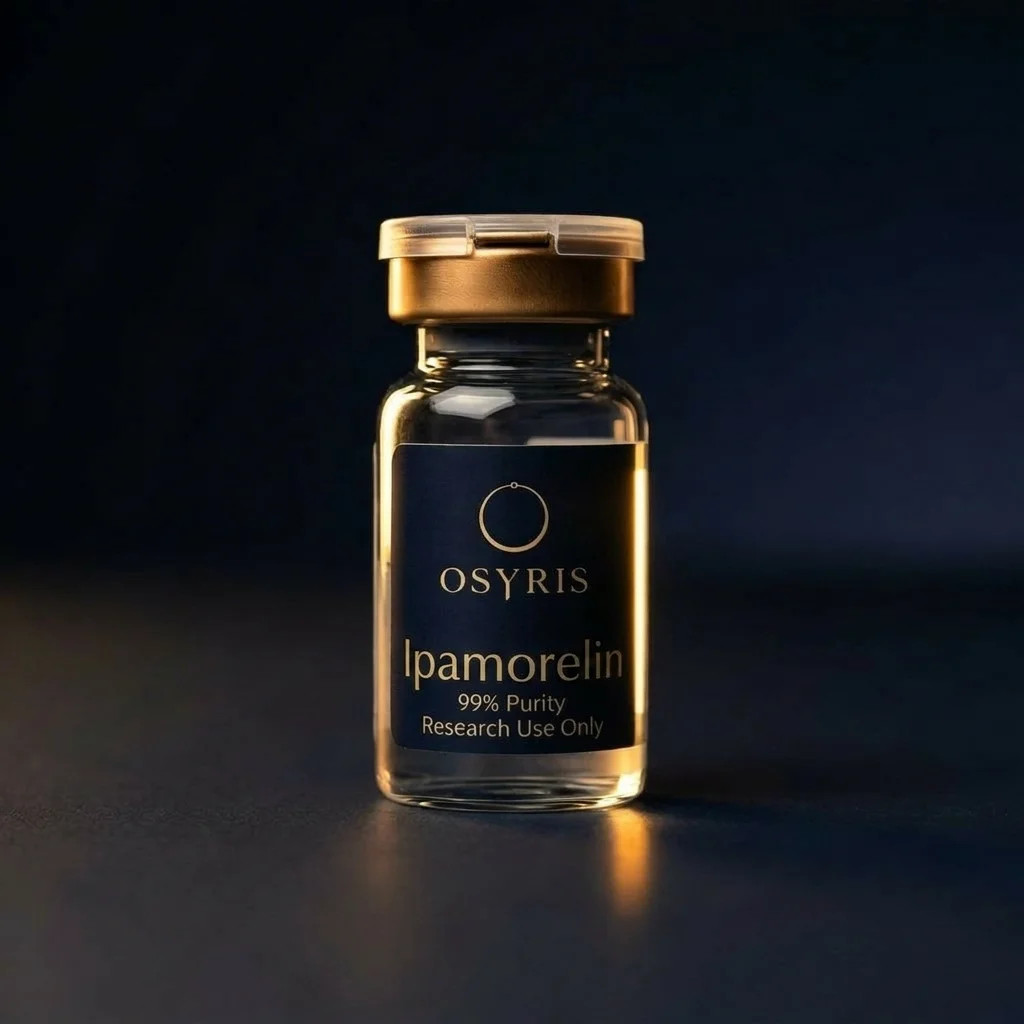 Research Product
Ipamorelin
Research Product
Ipamorelin
Ipamorelin is a selective pentapeptide agonist of the growth hormone secretagogue receptor (GHSR1a). It is used to study GH-axis regulation, receptor pharmacology, and peptide signaling in endocrine and analytical research models.
View product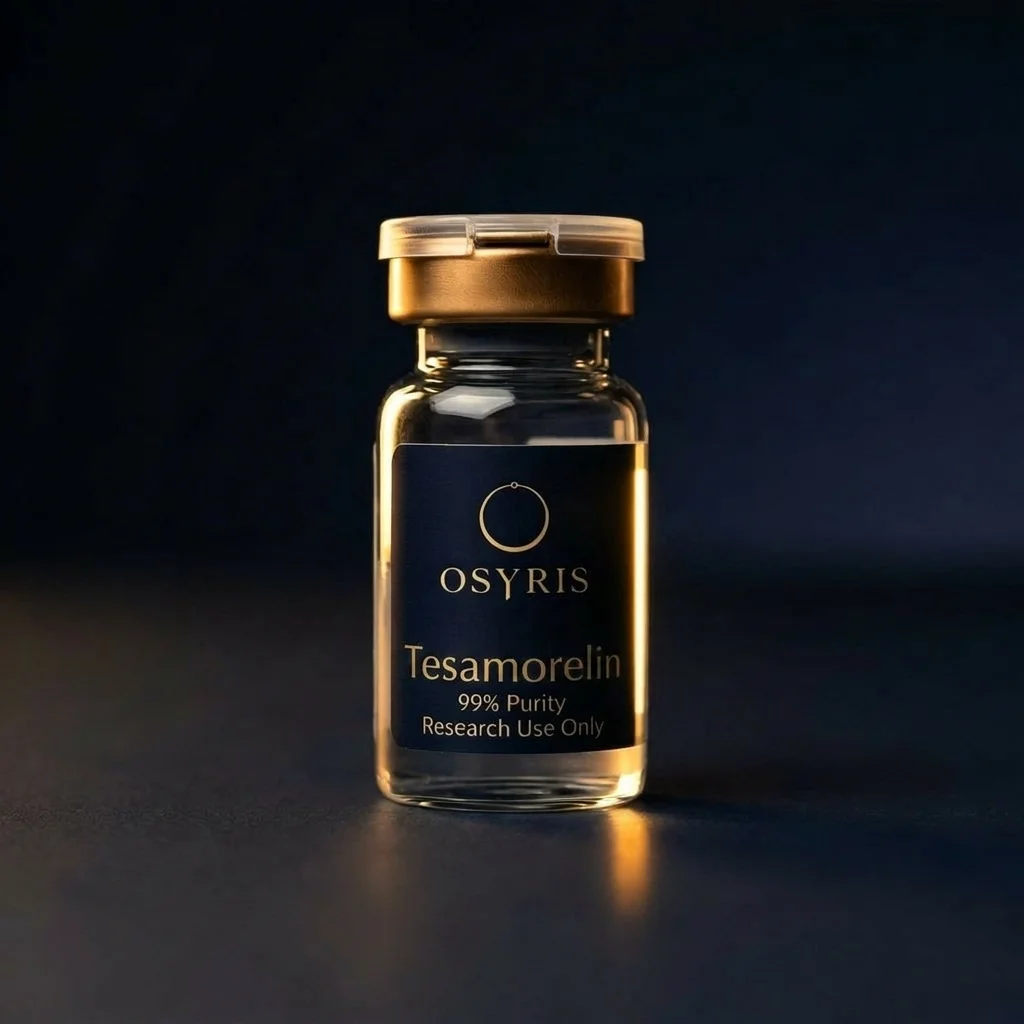 Research Product
Tesamorelin
Research Product
Tesamorelin
Tesamorelin is a synthetic analog of growth hormone-releasing hormone (GHRH) composed of 44 amino acids. It is studied for its role in stimulating endogenous growth hormone (GH) release via pituitary GHRH receptors. Tesamorelin is used exclusively for controlled scientific research and is not approved for therapeutic or diagnostic use.
View productQuestions
Common Questions
What does the Long R3 modification accomplish?
It reduces IGF-binding-protein affinity dramatically, leaving far more of the molecule free to engage the IGF-1 receptor.
Why is IGF1-LR3 so common in cell-culture work?
Because its reduced sequestration produces cleaner, more predictable receptor exposure in media, especially under serum-free or low-serum conditions.
Where does IGF1-LR3 sit in the GH axis?
Downstream. GHRH analogs and GHRPs increase GH release, GH stimulates endogenous IGF-1 production, and IGF1-LR3 acts directly at the IGF-1 receptor level.
How is IGF1-LR3 different from native IGF-1?
Native IGF-1 is heavily buffered by IGFBPs. IGF1-LR3 is engineered to escape much of that buffering, making it much less regulated in experimental systems.
Why is temperature management emphasized with IGF1-LR3?
Because it is more sensitive than many smaller peptides, so cold-chain handling matters for preserving a stable, interpretable research reagent.
Why is IGF1-LR3 considered a research tool rather than a therapeutic analog here?
Its value is in mechanistic control and receptor-level experimentation. OSYRIS supplies it for laboratory protocols, not clinical use.
References
- Francis GL, et al. "Insulin-like growth factor 1 analogue with enhanced potency." Journal of Molecular Endocrinology, 1992.
- Pollard JW. "Growth factors in cell culture." Methods in Molecular Biology, 1997.
- Clemmons DR. "Role of IGF-binding proteins." Journal of Molecular Endocrinology, 2018.