
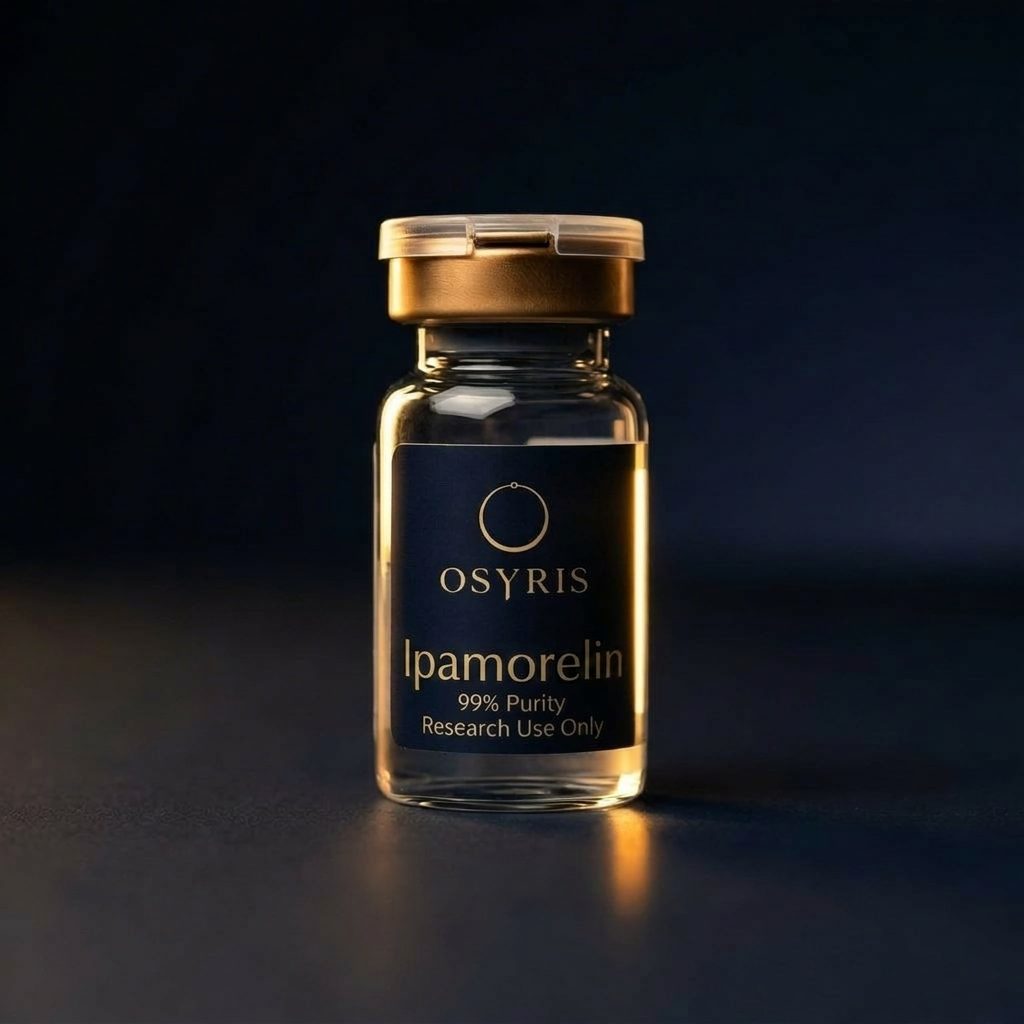
Growth Hormone
Ipamorelin
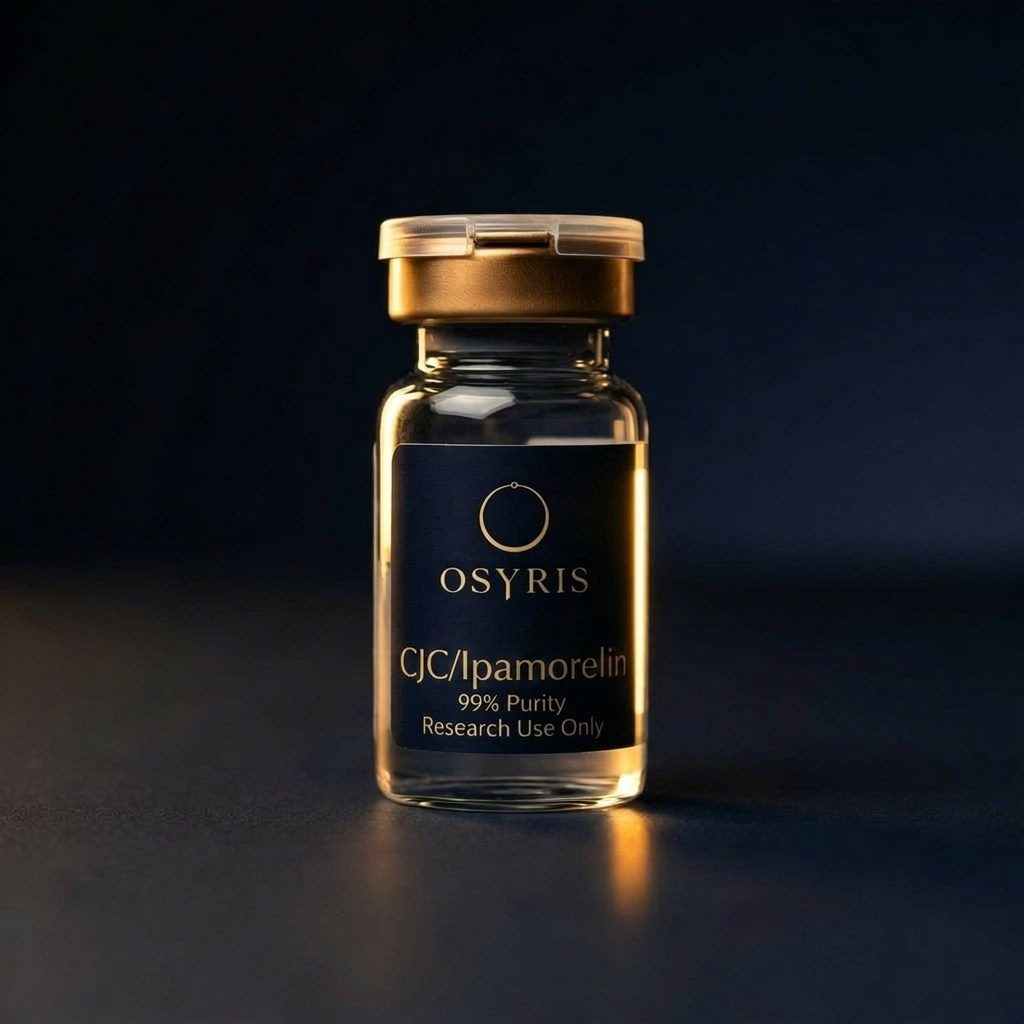
Ipamorelin is a selective pentapeptide agonist of the growth hormone secretagogue receptor (GHSR1a). It is used to study GH-axis regulation, receptor pharmacology, and peptide signaling in endocrine and analytical research models.
- Quantity
- 10MG
- Purity
- See COA
Standard $9.99 | Expedited $12.99 | Free standard over $200
Download Certificate of AnalysisResearch overview
Research Overview
Ipamorelin (Aib-His-D-2-Nal-D-Phe-Lys-NH₂) belongs to the growth hormone secretagogue (GHS) class and exhibits high specificity for GHSR1a with reduced off-target endocrine effects compared with earlier GHRPs.[1] It is widely utilized to probe GH release mechanisms, receptor signaling, and detection methods relevant to sports pharmacology.
Molecular Pharmacology
Binding studies demonstrate potent activation of GHSR1a, enabling characterization of downstream signaling (e.g., Ca²⁺ mobilization, PKC, and ERK pathways).[1] This selectivity makes ipamorelin a useful reference in receptor profiling assays.
GH-axis & Endocrine Research
In vitro pituitary and in vivo animal models use ipamorelin to explore pulsatile GH secretion, feedback regulation, and interactions with endogenous ghrelin and GHRH.[1,2] All work is conducted under controlled laboratory protocols.