

Cognitive
Selank — The Anxiolytic Peptide That Came From the Immune System
Selank anxiolytic peptide research overview. Tuftsin-derived GABA modulation, serotonin effects, immune biology. PubMed cited.

An Immune Peptide With Anxiolytic Effects
Selank's origin story is unusual in nootropic research. Most anxiolytic compounds are designed by starting with known anxiety pathways (GABA, serotonin) and working backward to find molecules that modulate them. Selank took the opposite path: researchers started with an immune peptide (tuftsin) and discovered that modifying it produced anxiolytic effects — a finding that was not predicted from the parent molecule's biology.
This accident of discovery is scientifically significant because it revealed unexpected connections between immune signaling and anxiety neurobiology. The nervous and immune systems were once considered separate. Selank's dual activity is evidence that they share regulatory mechanisms at the molecular level.¹
The Tuftsin Connection
Tuftsin (Thr-Lys-Pro-Arg) is a naturally occurring tetrapeptide produced by enzymatic cleavage of immunoglobulin G — the most abundant antibody in human blood. Its primary known function is immune cell activation: tuftsin stimulates phagocytosis by monocytes and macrophages, enhances natural killer cell activity, and promotes antibody production.²
Selank extends tuftsin with the Pro-Gly-Pro tripeptide — the same C-terminal modification used in Semax. This extension was originally added to improve metabolic stability. But the modification did more than extend half-life — it introduced neurological activity that tuftsin alone does not possess.
The molecular basis for this emergent property is not fully understood. One hypothesis is that the Pro-Gly-Pro extension enables Selank to cross the blood-brain barrier more efficiently than tuftsin, accessing CNS targets that the parent peptide cannot reach. Another is that the extended sequence creates a new binding surface that interacts with neuronal receptors.
The GABAergic Evidence
Selank's anxiolytic effects have been documented across multiple behavioral paradigms in rodent models:
Elevated plus maze: Rats treated with Selank spent significantly more time in the open arms (indicating reduced anxiety) without changes in total locomotion (indicating no sedation). This dissociation between anxiolytic effect and sedation is important — benzodiazepines reduce anxiety but also cause sedation, motor impairment, and cognitive dulling.³
Conflict test (Vogel): Selank increased punished drinking behavior (indicating willingness to accept aversive stimuli), a standard measure of anxiolytic activity.
Open field test: Selank-treated animals showed increased exploratory behavior and reduced freezing in novel environments.
The mechanism underlying these behavioral effects involves GABA-A receptor modulation. Research demonstrated that Selank alters the expression of GABA-A receptor subunit genes — specifically, it modulates the ratio of different subunit isoforms in the hippocampus and amygdala. This is a fundamentally different mechanism from benzodiazepines, which directly bind the GABA-A receptor and enhance its response to GABA.⁴
Selank appears to remodel the molecular composition of GABA-A receptors themselves — changing which subunit variants are expressed and potentially altering the receptor's sensitivity, kinetics, or pharmacological profile. This gene-expression-level modulation may explain why Selank doesn't produce the tolerance, dependence, or withdrawal that characterize direct GABA-A agonists.
The Serotonin Dimension
Beyond GABA, Selank influences serotonergic neurotransmission. Studies in rat brain tissue demonstrated that Selank treatment modulated serotonin metabolism in the hypothalamus and frontal cortex — brain regions involved in mood regulation and emotional processing.⁵
The serotonergic effects were measured as changes in the ratio of serotonin to its metabolite 5-HIAA, indicating altered serotonin turnover. The direction of change was consistent with anxiolytic activity — a pattern resembling (but mechanistically distinct from) SSRI antidepressant effects.
The combination of GABAergic and serotonergic modulation gives Selank a broader neuropharmacological profile than compounds targeting a single system. This breadth is consistent with the transcriptomic data showing that Selank influences hundreds of genes across multiple neurotransmitter systems.
Immunomodulatory Effects: The Tuftsin Heritage
Selank retains some of its parent molecule's immune activity. Studies in human blood cell cultures demonstrated that Selank modulated the expression of cytokine genes — altering the balance between pro-inflammatory and anti-inflammatory mediators.⁶
This dual neuro-immune profile makes Selank valuable for studying neuroimmunology — the intersection of nervous and immune system function. Research questions that can be addressed with Selank include: Does immune modulation affect anxiety-like behavior? Does anxiolytic signaling affect immune function? Are the two effects mechanistically linked or independent?
The neuroimmune research is increasingly relevant because chronic inflammation has been associated with anxiety and depression in epidemiological studies, and anti-inflammatory interventions have shown anxiolytic-like effects in some preclinical models. Selank's simultaneous activity on both systems provides a tool for investigating these connections.
Comparison with Pharmaceutical Anxiolytics
| Property | Benzodiazepines | SSRIs | Selank |
|---|---|---|---|
| Target | GABA-A receptor (direct agonism) | Serotonin transporter | GABA-A subunit gene expression + serotonin turnover |
| Onset | Minutes | Weeks | Hours-days (animal data) |
| Sedation | Yes | No | No |
| Tolerance | Yes | Possible | Not observed |
| Dependence | Yes (significant) | Yes (discontinuation syndrome) | Not observed |
| Immune effects | No | Variable | Yes (from tuftsin heritage) |
| Mechanism level | Receptor binding | Transporter inhibition | Gene expression modulation |
This comparison illustrates Selank's unique pharmacological position. It doesn't fit neatly into existing anxiolytic categories because it works at a different biological level — modulating gene expression rather than directly binding receptors or transporters.
Limitations
Predominantly Russian evidence. Like Semax, the Selank literature is heavily concentrated in Russian research groups and Russian-language journals. International replication is growing but limited.
Behavioral vs cognitive outcomes. Most studies measure anxiety-like behavior in rodent paradigms. Whether these behavioral effects translate to subjective anxiety reduction in humans is unknown from the published data (though Russian clinical approval suggests some human data exists in non-English-language publications).
Mechanism complexity. Selank modulates multiple systems (GABA, serotonin, immune). Which system is most relevant to its anxiolytic effect — and whether the effects are separable — is not yet resolved.
Dose-response characterization. Optimal dosing for different research applications is not well standardized in the published literature.
Featured Links
 Research Product
Selank
Research Product
Selank
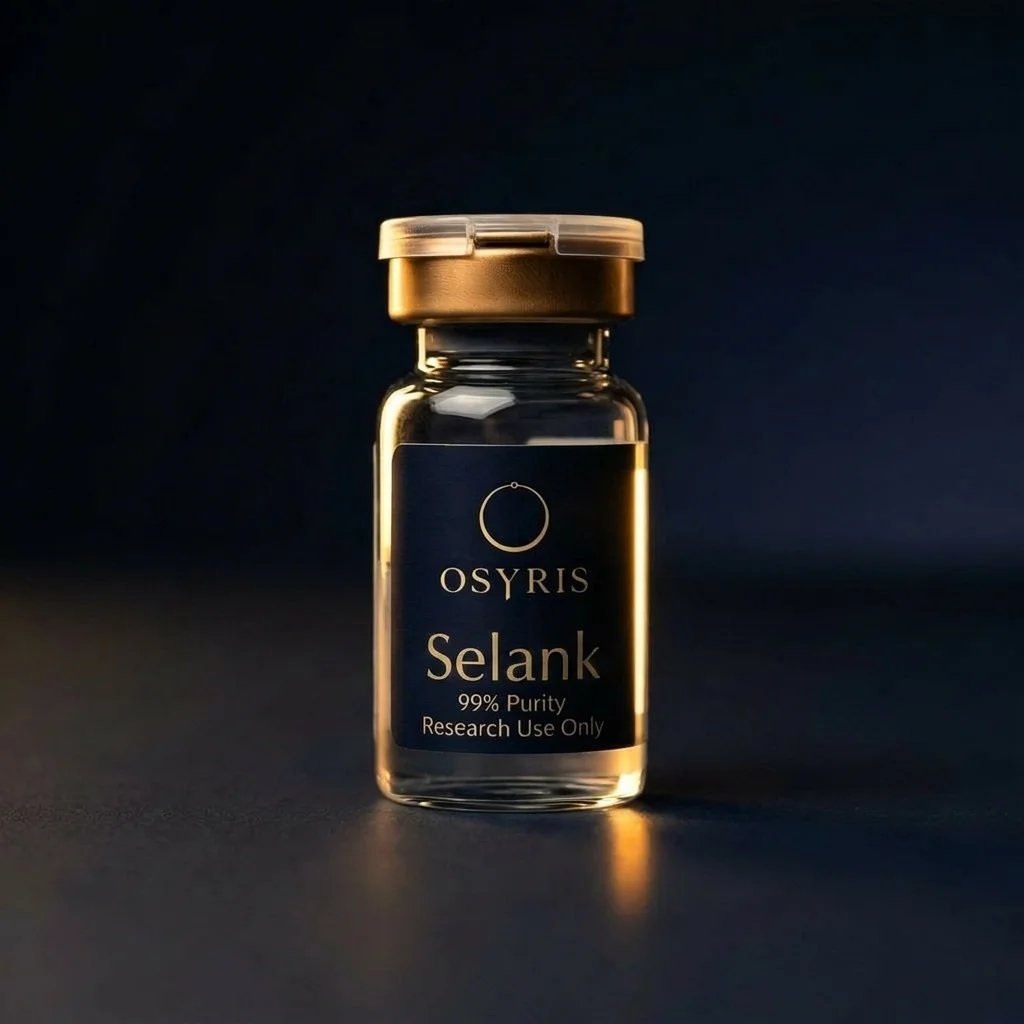
Selank is a synthetic heptapeptide with the amino acid sequence Thr-Lys-Pro-Arg-Pro-Gly-Pro. Structurally derived from the endogenous tetrapeptide tuftsin, Selank is classified as an anxiolytic and neuroregulatory research peptide. It has been widely studied for its impact on monoamine neurotransmitters, immune modulation, and neurotrophic factors. Supplied as a lyophilized powder, Selank is intended strictly for in vitro and in vivo research applications.
View product Research Product
Semax
Research Product
Semax
Semax is a synthetic heptapeptide (Met-Glu-His-Phe-Pro-Gly-Pro) derived from the ACTH(4–10) fragment of adrenocorticotropic hormone. It is widely used in neuroscience and pharmacological research for its ability to modulate brain-derived neurotrophic factor (BDNF), melanocortin receptors, and various neurotransmitter systems. Supplied as a lyophilized powder, Semax is intended strictly for laboratory research use only.
View product Research Product
DSIP
Research Product
DSIP
DSIP is a synthetic nonapeptide corresponding to an endogenous peptide first associated with sleep regulation. It is used in neurobiology to investigate sleep–wake modulation, stress responses, and neuroendocrine signaling.
View productQuestions
Common Questions
How was Selank discovered to be anxiolytic?
Unexpectedly. Researchers modified tuftsin (an immune peptide) for metabolic stability and discovered the modified compound had neurological effects — including anxiolytic activity — that the parent molecule lacked.
Does Selank cause sedation?
In animal behavioral studies, Selank reduced anxiety-like behavior without affecting locomotion, indicating no sedative effect. This distinguishes it from benzodiazepines.
Is Selank addictive?
No tolerance, dependence, or withdrawal has been observed in published preclinical studies. The gene-expression-level mechanism (rather than direct receptor binding) may explain this absence.
How does Selank differ from benzodiazepines mechanistically?
Benzodiazepines directly bind GABA-A receptors and enhance their activity. Selank modulates the gene expression of GABA-A receptor subunits — changing the molecular composition of the receptors themselves. This is a deeper level of intervention.
Can Selank and Semax be studied together?
Yes. They target complementary pathways and were designed at the same institute. Combination protocols investigate simultaneous neurotrophic (Semax) and anxiolytic (Selank) effects.
What is neuroimmunology?
The study of interactions between the nervous and immune systems. Selank's dual neuro-immune profile makes it a research tool for investigating how anxiety biology and immune function influence each other.
References
- Seredenin SB, et al. "Anxiolytic-like effect of Selank." Bulletin of Experimental Biology and Medicine, 2006. PMID 17369724
- Najjar VA. "Tuftsin, a natural activator of phagocyte cells." Annals of the New York Academy of Sciences, 1983. PMID 6351085
- Seredenin SB, et al. "Selank behavioral pharmacology." Vestnik RAMN, 1998.
- Skrebitsky VG, et al. "Effect of Selank on GABA-A receptor subunit gene expression." Doklady Biological Sciences, 2010.
- Narkevich VB, et al. "Selank effects on serotonin metabolism." Bulletin of Experimental Biology and Medicine, 2008. PMID 19489028
- Ershov FI, et al. "Selank effects on cytokine gene expression." Immunologiya, 2009.