

Cognitive
DSIP — The Brain's Own Sleep Architect
DSIP research overview covering sleep architecture, neuroendocrine modulation, HPA-axis effects, and stress adaptation. PubMed cited.
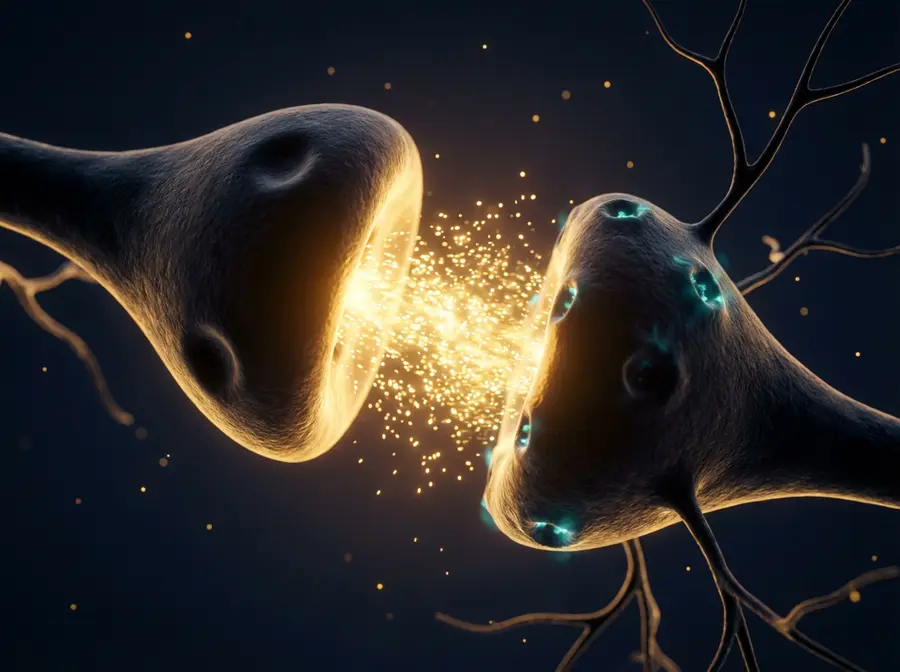
Discovered in a Sleeping Brain
In 1977, Swiss researchers Schoenenberger and Monnier isolated a peptide from the cerebral venous blood of rabbits during electrically induced slow-wave sleep. The compound, which they named Delta Sleep-Inducing Peptide, was the first endogenous peptide specifically associated with sleep biology.¹
The name was both its identity and its burden. "Delta Sleep-Inducing" set expectations that DSIP would reliably induce deep sleep — a promise the research has only partially fulfilled. What decades of subsequent investigation revealed is more nuanced: DSIP doesn't force sleep. It modulates sleep architecture, neuroendocrine function, and stress response in ways that are complex and context-dependent.
Not a Sedative: A Sleep Modulator
The critical distinction between DSIP and hypnotic drugs (benzodiazepines, Z-drugs) is mechanism. Hypnotics force sedation by directly enhancing inhibitory neurotransmission. DSIP appears to influence the structure of sleep — the staging, timing, and quality of sleep cycles — without producing forced unconsciousness.
In animal studies, DSIP administration altered the distribution of sleep stages. Some studies showed increased slow-wave (delta) sleep duration. Others showed improved sleep continuity — fewer awakenings, smoother transitions between sleep stages. The effects were modulatory, not sedative: animals treated with DSIP could still be aroused normally and showed no impairment in wakefulness behavior.²
Human studies (conducted primarily in the 1980s-90s) produced variable results. Some trials reported improved subjective sleep quality and normalized sleep EEG patterns in subjects with disrupted sleep. Others found minimal effects. The inconsistency may reflect differences in dosing protocols, sleep measurement methods, and subject selection criteria.³
The Neuroendocrine Web
DSIP's effects extend well beyond sleep. Research has revealed interactions with multiple neuroendocrine systems:
HPA axis modulation. DSIP appears to modulate the stress-response axis (hypothalamic-pituitary-adrenal). In stressed animal models, DSIP normalized ACTH and cortisol responses — not suppressing them entirely but reducing the amplitude of stress-induced hormonal surges.⁴
Opioid system interaction. DSIP has weak affinity for certain opioid receptor subtypes. The functional significance of this interaction is unclear, but it connects DSIP to pain modulation and reward circuitry.
Somatotropic connection. Some research has linked DSIP to growth hormone release patterns, which is biologically logical since the largest GH pulse occurs during deep sleep. If DSIP enhances slow-wave sleep, it may indirectly facilitate GH secretion.
These broad neuroendocrine effects suggest DSIP functions as a modulator of brain-body communication during the sleep-wake transition — a coordinator rather than a simple sleep switch.
Stress Adaptation Research
An underappreciated line of DSIP research explores its effects on stress resilience. Studies in rats demonstrated that DSIP administration before stress exposure reduced anxiety-like behavior and normalized physiological stress markers (heart rate, corticosterone) during forced swim and restraint stress paradigms.⁵
This stress-adaptive research positions DSIP at the intersection of sleep and stress biology — two systems that are deeply interconnected. Sleep disruption worsens stress responses. Stress disrupts sleep. DSIP may modulate both sides of this cycle.
Limitations
DSIP's research profile is characterized by inconsistency. The variable human results, the multiple neuroendocrine interactions without clear mechanistic hierarchy, and the relatively small number of recent publications make it one of the less definitively characterized compounds in the OSYRIS catalog. The compound is biologically interesting but mechanistically complex and not yet fully understood.
Featured Links
 Research Product
DSIP
Research Product
DSIP
DSIP is a synthetic nonapeptide corresponding to an endogenous peptide first associated with sleep regulation. It is used in neurobiology to investigate sleep–wake modulation, stress responses, and neuroendocrine signaling.
View product Research Product
Semax
Research Product
Semax
Semax is a synthetic heptapeptide (Met-Glu-His-Phe-Pro-Gly-Pro) derived from the ACTH(4–10) fragment of adrenocorticotropic hormone. It is widely used in neuroscience and pharmacological research for its ability to modulate brain-derived neurotrophic factor (BDNF), melanocortin receptors, and various neurotransmitter systems. Supplied as a lyophilized powder, Semax is intended strictly for laboratory research use only.
View product Research Product
Selank
Research Product
Selank
Selank is a synthetic heptapeptide with the amino acid sequence Thr-Lys-Pro-Arg-Pro-Gly-Pro. Structurally derived from the endogenous tetrapeptide tuftsin, Selank is classified as an anxiolytic and neuroregulatory research peptide. It has been widely studied for its impact on monoamine neurotransmitters, immune modulation, and neurotrophic factors. Supplied as a lyophilized powder, Selank is intended strictly for in vitro and in vivo research applications.
View productQuestions
Common Questions
Does DSIP cause drowsiness?
Not in the sedative sense. DSIP modulates sleep architecture without producing forced sedation. Research shows effects on sleep staging rather than wakefulness impairment.
Why were human results inconsistent?
Likely due to differences in dosing, measurement methods, and subject selection. Sleep research is technically challenging — subjective and objective sleep measures don't always correlate.
How does DSIP relate to stress?
DSIP modulates the HPA axis stress response and shows stress-adaptive effects in animal models. Sleep and stress are biologically interconnected, and DSIP may modulate both.
Is DSIP natural?
Yes. DSIP is found in human and animal brain tissue, with concentrations in the hypothalamus, limbic system, and pituitary.
Why is DSIP in the Cognitive category?
Sleep quality is fundamental to cognitive function. DSIP's sleep/neuroendocrine profile directly affects brain biology.
How is DSIP different from melatonin?
Different mechanisms entirely. Melatonin acts on MT1/MT2 receptors as a circadian timing signal. DSIP modulates sleep architecture and neuroendocrine function through poorly characterized pathways. They address different aspects of sleep biology.
References
- Schoenenberger GA, Monnier M. "Characterization of a delta-EEG sleep-inducing peptide." PNAS, 1977. PMID 266735
- Schneider-Helmert D, Schoenenberger GA. "Effects of DSIP in man." Neuropsychobiology, 1983. PMID 6580595
- Graf MV, Kastin AJ. "Delta-sleep-inducing peptide: a review." Neuroscience & Biobehavioral Reviews, 1984. PMID 6387660
- Sudakov KV, et al. "DSIP and neuronal activity." Neuroscience and Behavioral Physiology, 2004.
- Khvatova EM, et al. "DSIP: stress-protective activity." Bulletin of Experimental Biology and Medicine, 2003.