

Longevity
Epithalon — Telomerase, Telomeres, and the Clock of Aging
Epithalon telomerase research overview. Telomere biology, Khavinson's studies, melatonin, aging models. Evidence assessment with PubMed citations.
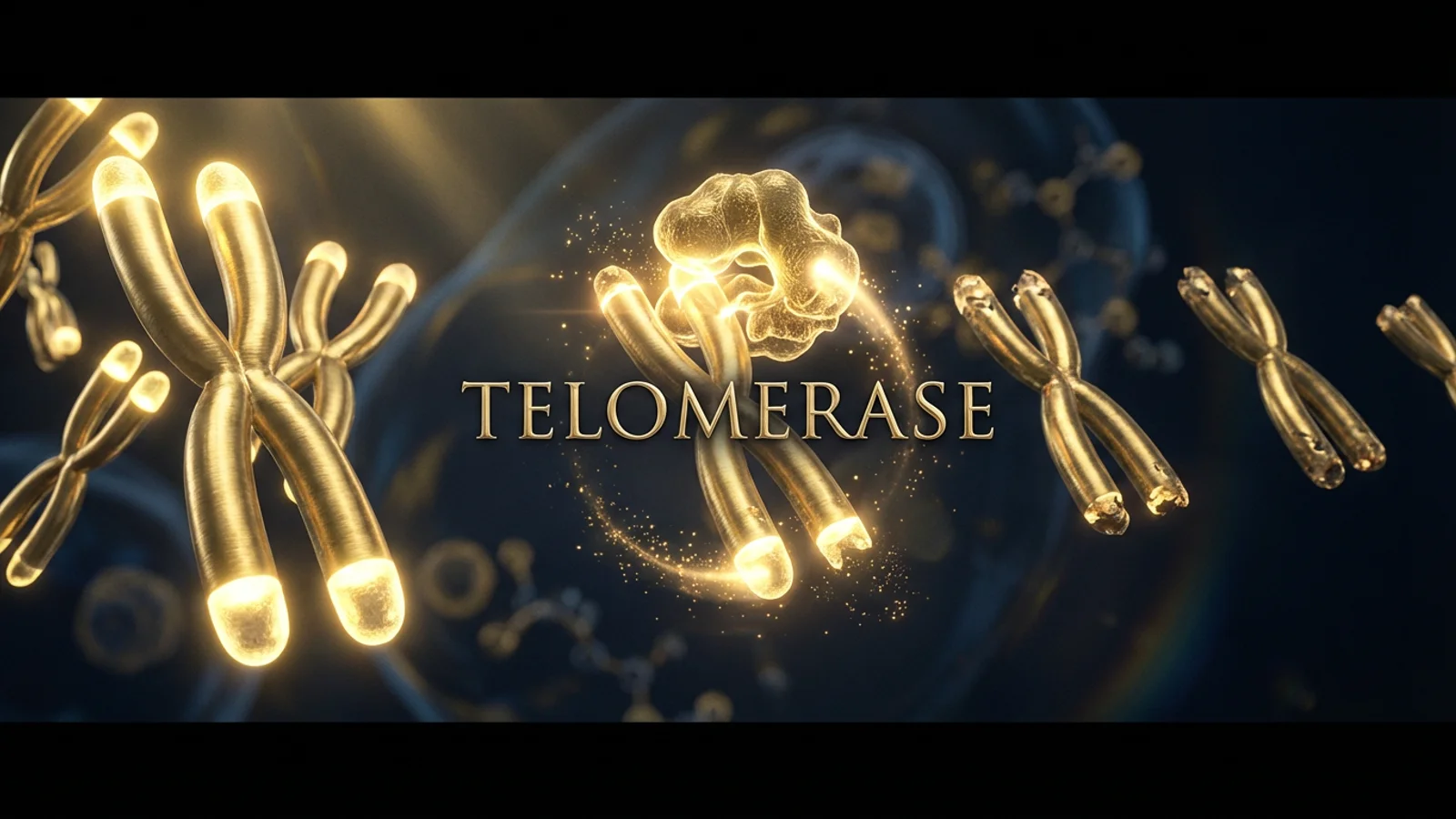
The Telomere Problem
Every time a human cell divides, its chromosomes lose a small piece from the ends. This is a fundamental consequence of how DNA replication works — the enzyme that copies DNA (DNA polymerase) cannot fully replicate the very tip of a linear chromosome. The result is progressive shortening with each division.
Telomeres are the solution — and the problem. They are repetitive DNA sequences (TTAGGG in humans, repeated thousands of times) that cap chromosome ends like protective bumpers. When cells divide, telomeres absorb the loss instead of coding DNA. But telomeres themselves get shorter with each division. When they reach a critical minimum length, the cell enters senescence — a permanent state of growth arrest where the cell stops dividing and begins secreting inflammatory signals.¹
This is the telomere clock: a built-in counter that limits the number of times a cell can divide. It's a cancer prevention mechanism (unlimited division is a hallmark of cancer), but it's also a driver of aging. As telomeres shorten across tissue-wide cell populations, the accumulating senescent cells contribute to chronic inflammation, tissue dysfunction, and the functional decline we experience as aging.
Telomerase: The Counter-Clock
Telomerase is the enzyme that can reset the clock. It adds TTAGGG repeats back onto telomere ends, extending them and restoring replicative capacity. In 2009, Elizabeth Blackburn, Carol Greider, and Jack Szostak shared the Nobel Prize in Physiology or Medicine for discovering telomerase and its role in chromosome protection.²
In most adult human cells, telomerase activity is extremely low or absent — which is why telomeres shorten with age. The exceptions are stem cells (which need to divide indefinitely), immune cells (which need rapid clonal expansion), and cancer cells (which have reactivated telomerase to achieve immortality).
The central question of Epithalon research: can a synthetic peptide reactivate telomerase in somatic cells, extending telomere length and potentially delaying cellular senescence?
Khavinson's Research Program
Epithalon was developed by Professor Vladimir Khavinson at the St. Petersburg Institute of Bioregulation and Gerontology. His research program spans decades and is built on a concept he calls "peptide bioregulation" — the idea that short peptides can modulate gene expression in specific tissues, restoring function that has declined with age.
Khavinson's key Epithalon findings include:
Telomerase reactivation in human cells. A 2003 study demonstrated that Epithalon treatment induced telomerase activity in human fetal fibroblast cultures and in pulmonary fibroblast cell lines that had low or undetectable baseline telomerase activity. The treated cells underwent more population doublings before reaching senescence than untreated controls — consistent with telomere extension delaying the senescence trigger.³
Telomere elongation. Follow-up studies reported measurable increases in telomere length in Epithalon-treated cell cultures, as determined by fluorescence in situ hybridization (FISH) and quantitative PCR methods.⁴
Melatonin restoration. Epithalon was originally conceived as a synthetic analog of epithalamin — a pineal gland extract. Studies in aged rats demonstrated that Epithalon administration restored melatonin production to levels approaching those seen in younger animals. Since melatonin production declines significantly with age (contributing to disrupted sleep, reduced antioxidant capacity, and altered immune function), this restoration has implications beyond telomere biology.⁵
Lifespan studies. Longitudinal studies in aging rat and mouse models reported that Epithalon treatment was associated with increased mean lifespan, reduced spontaneous tumor incidence, and improved immune function parameters compared to untreated controls.⁶
The Evidence Assessment: Honest Context
Epithalon's research profile requires careful contextual evaluation:
Single-laboratory concentration. The vast majority of Epithalon studies originate from Khavinson's laboratory. This parallels the BPC-157 situation (concentrated in the Zagreb group), but with Epithalon the concentration is even more pronounced. Independent replication by non-affiliated research groups is extremely limited.
Methodological questions. Some reviewers have raised questions about sample sizes, statistical methods, and the reproducibility of telomerase activation measurements in the published studies. These are methodological concerns, not fraud allegations — but they affect confidence in the magnitude of reported effects.
The "too good" problem. Epithalon's reported effects — telomerase activation, melatonin restoration, lifespan extension, tumor reduction — are broad enough to raise scientific skepticism. A single tetrapeptide producing all these effects simultaneously is not impossible (if it acts through a sufficiently upstream regulatory mechanism) but it requires a higher burden of evidence than more focused compounds.
Russian publication context. Many supporting studies are published in Russian-language journals with limited international accessibility. This doesn't invalidate the research, but it does make independent evaluation more difficult for the international scientific community.
What the data does support: Epithalon has a consistent research narrative across multiple published papers, spanning in vitro telomerase assays, cell culture longevity studies, animal melatonin measurements, and rodent lifespan data. The findings are internally consistent. The limitation is external validation.
Epithalon vs Other Longevity Approaches
Epithalon targets a different aging mechanism than other longevity compounds in the OSYRIS catalog:
| Compound | Aging Mechanism Targeted |
|---|---|
| Epithalon | Telomere maintenance (telomerase activation) |
| NAD+ | Sirtuin activation, DNA repair (PARP), mitochondrial function |
| MOTS-C | Mitochondrial signaling, AMPK activation |
| Vitamin B12 | One-carbon metabolism, DNA methylation |
These represent different nodes in the aging network. The Hallmarks of Aging framework identifies telomere attrition, mitochondrial dysfunction, epigenetic alterations, and loss of proteostasis as separate (but interconnected) hallmarks. Each OSYRIS longevity compound addresses a different hallmark.⁷
Researchers interested in multi-hallmark approaches can study these compounds individually or in combination — investigating whether targeting multiple aging mechanisms simultaneously produces effects beyond single-hallmark intervention.
The Bigger Question: Should We Extend Telomeres?
This question is beyond Epithalon specifically, but it's relevant context. Telomere shortening is a cancer prevention mechanism — it limits uncontrolled cell division. Reactivating telomerase in somatic cells could theoretically increase cancer risk by removing this safeguard.
The counterargument: telomere shortening itself contributes to genomic instability (when telomeres become critically short, chromosome ends can fuse, causing mutations). Some researchers argue that maintaining telomeres at healthy lengths actually reduces cancer risk by preventing the genomic instability that arises from critically shortened telomeres.
This tension — between the cancer risk of unlimited replication and the genomic instability risk of excessive shortening — is a fundamental open question in telomere biology. Epithalon research operates within this tension.⁸
Featured Links
 Research Product
Epithalon
Research Product
Epithalon
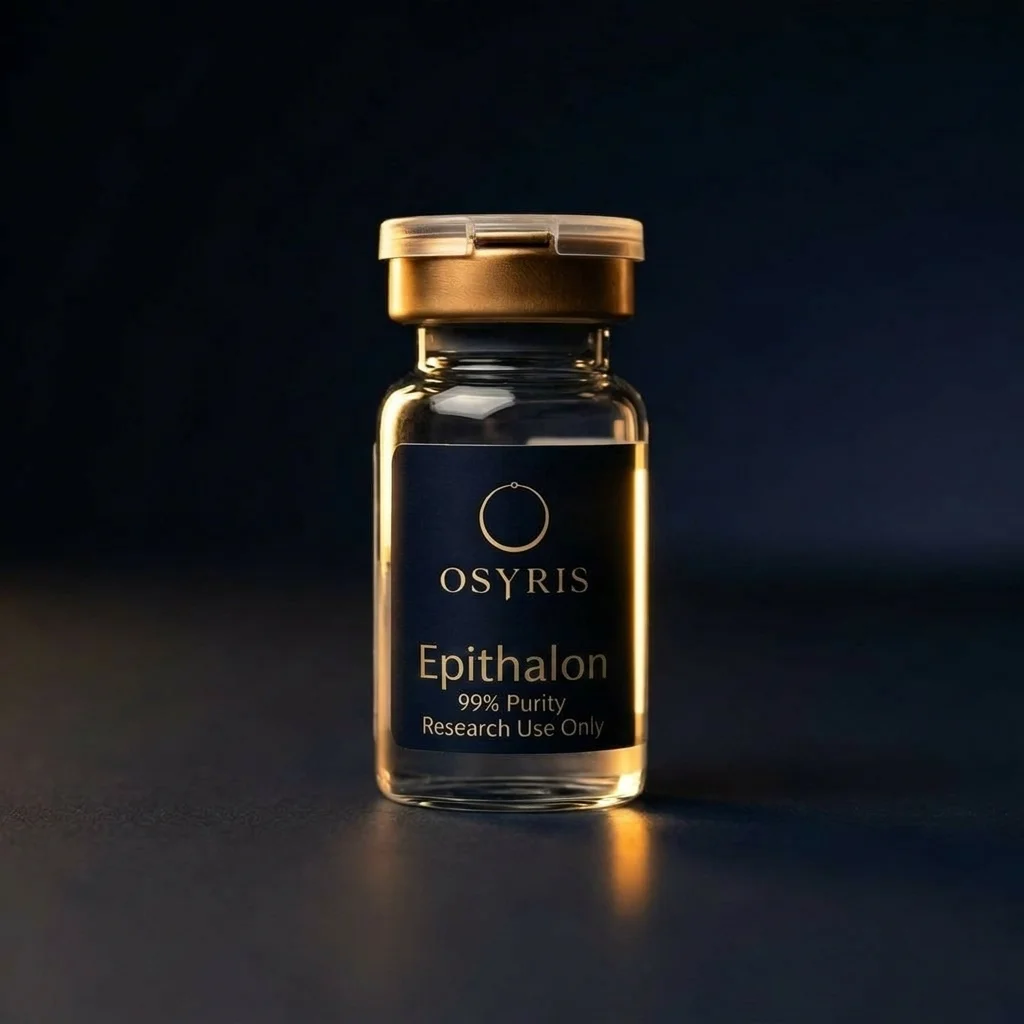
Epithalon (Ala-Glu-Asp-Gly) is a synthetic tetrapeptide modeled on pineal extracts. It is used in vitro and in vivo to investigate telomerase regulation, telomere dynamics, circadian biology, and molecular pathways associated with cellular aging and stress responses.
View product Research Product
NAD+
Research Product
NAD+
NAD⁺ is a coenzyme present in all living cells, playing a central role in redox reactions, energy metabolism, DNA repair, and cellular signaling. This high-purity NAD⁺ solution is designed for laboratory research involving aging, mitochondrial function, and sirtuin activation pathways. Not for human use or therapeutic application.
View product Research Product
MOTS-C
Research Product
MOTS-C
MOTS-c is a 16-amino acid mitochondrial-derived peptide encoded within the 12S rRNA of mitochondrial DNA. It is studied for its regulatory effects on metabolic homeostasis, cellular stress responses, and insulin sensitivity in preclinical models. MOTS-c is strictly intended for laboratory research use and not for human application.
View productQuestions
Common Questions
Does Epithalon actually extend telomeres?
In cell culture studies from Khavinson's laboratory, Epithalon induced telomerase activity and was associated with increased population doublings before senescence. Independent replication of these findings by other groups is limited. The data is promising but requires broader validation.
Could extending telomeres cause cancer?
This is an open question in telomere biology. Telomere shortening prevents unlimited cell division (cancer prevention), but critically short telomeres cause genomic instability (cancer promotion). The net risk depends on the balance between these opposing effects. Epithalon's cancer relationship has been studied in animal models (reduced spontaneous tumors), but human data does not exist.
Who is Khavinson?
Professor Vladimir Khavinson leads the St. Petersburg Institute of Bioregulation and Gerontology. He developed Epithalon and the broader concept of "peptide bioregulation." His group has published extensively on Epithalon and related peptides over several decades.
How is Epithalon different from TA-65?
TA-65 is a telomerase activator derived from astragalus (a plant). Epithalon is a synthetic tetrapeptide. They target the same enzyme (telomerase) through different molecular mechanisms. Both have limited independent validation.
Why is melatonin relevant to Epithalon?
Epithalon was originally based on a pineal gland extract. Melatonin is the pineal gland's primary hormone. Epithalon's melatonin-restoring effects in aged animals connect it to circadian rhythm regulation, sleep quality, and antioxidant defense — all functions that decline with age.
What are the main evidence limitations?
Single-laboratory research concentration, limited independent replication, questions about methodology in some studies, and Russian-language publications that are difficult for the international community to evaluate.
References
- Blackburn EH. "Telomere states and cell fates." Nature, 2000. PMID 11089968
- Blackburn EH, et al. "Telomeres and telomerase: the path from maize, Tetrahymena and yeast to human cancer and aging." Nature Medicine, 2006. PMID 17024208
- Khavinson VK, et al. "Peptide regulation of telomerase activity." Bulletin of Experimental Biology and Medicine, 2003. PMID 14615105
- Khavinson VK, et al. "Epithalon peptide induces telomerase activity and telomere elongation in human somatic cells." Bulletin of Experimental Biology and Medicine, 2003.
- Khavinson VK, et al. "Effects of epithalon on the pineal gland." Neuroendocrinology Letters, 2001. PMID 11524638
- Anisimov VN, et al. "Effect of Epithalon on biomarkers of aging." Biogerontology, 2003. PMID 14618027
- Lopez-Otin C, et al. "Hallmarks of aging: An expanding universe." Cell, 2023. PMID 36599349
- Shay JW, Wright WE. "Telomeres and telomerase: three decades of progress." Nature Reviews Genetics, 2019. PMID 30760854