

Longevity
Understanding Telomerase and Telomere Biology
A plain-language explainer on telomeres, telomerase, senescence, and why telomere biology is central to aging research.
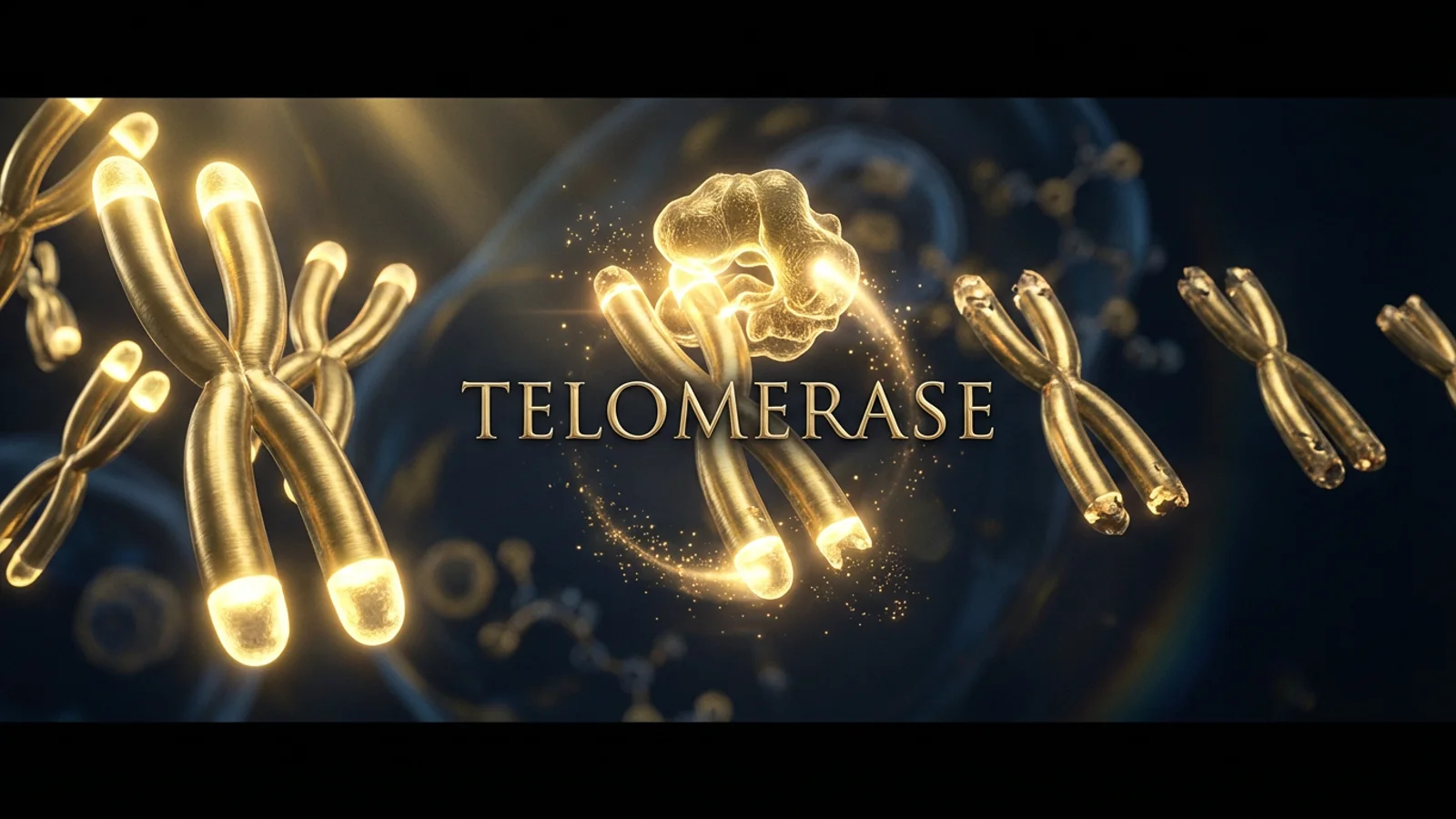
The End-Replication Problem
Telomeres are repetitive DNA caps at chromosome ends. In humans, the repeating motif is TTAGGG. They exist because linear chromosomes cannot be copied perfectly all the way to the end during normal DNA replication. Each cell division leaves a small amount behind, so the telomere gradually shortens over time.
This is known as the end-replication problem, and it is one reason replicating cells carry a built-in countdown. When telomeres become critically short, the cell interprets that as a damage signal and shifts toward a senescent, growth-arrested state.
What Telomerase Does
Telomerase is a reverse transcriptase that adds telomeric repeats back to chromosome ends. It is active in stem cells, germ cells, and most cancer cells, but comparatively quiet in most adult somatic tissue. That difference is why telomerase attracts so much attention in aging biology: it looks like one of the cleanest molecular levers for delaying replicative exhaustion.
The classic Hayflick limit — roughly 50 to 70 divisions for human fibroblasts — is closely tied to telomere length. Cells that maintain telomeres can divide longer. Cells that cannot eventually stop.
Why This Pathway Matters to OSYRIS Readers
Epithalon is studied because of reported telomerase reactivation effects in somatic cells and associated telomere-length findings. Whether that literature ultimately scales into broader aging biology is an open question, but the mechanism is clear enough to justify its place in longevity research.
Understanding telomere biology helps separate compounds that target the replicative clock from compounds that target mitochondria, metabolism, or antioxidant signaling. That distinction matters when researchers say two longevity compounds both affect aging but actually intervene at completely different levels.
Featured Links
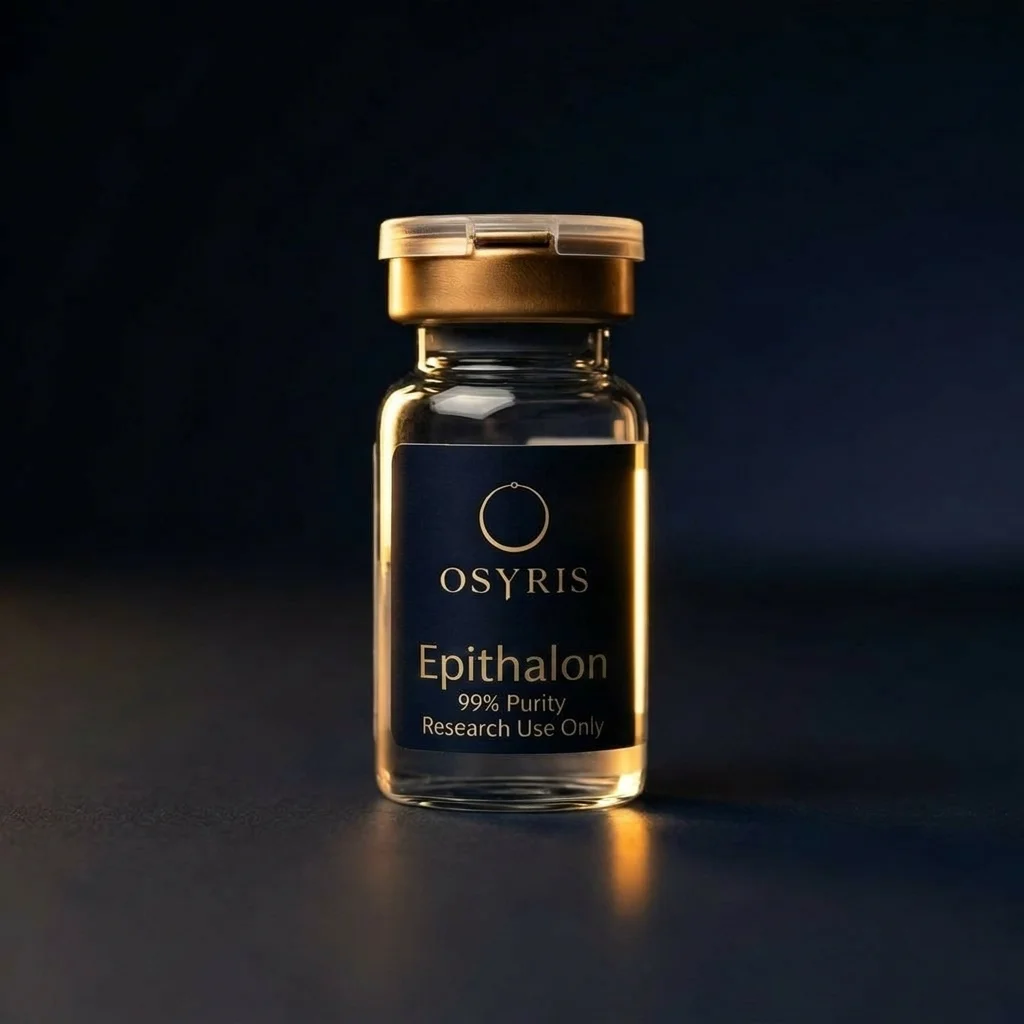 Research Product
Epithalon
Research Product
Epithalon
Epithalon (Ala-Glu-Asp-Gly) is a synthetic tetrapeptide modeled on pineal extracts. It is used in vitro and in vivo to investigate telomerase regulation, telomere dynamics, circadian biology, and molecular pathways associated with cellular aging and stress responses.
View product Research Guide Epithalon Research OverviewMove from the pathway-level explainer into the compound-level literature on Epithalon and reported telomerase activation.
Read → Research Guide Longevity Peptides Research GuideSee how telomere biology fits alongside mitochondrial and epigenetic aging mechanisms in the OSYRIS longevity category.
Read →Questions
Common Questions
What is the end-replication problem?
It is the inability of normal DNA replication machinery to fully copy the very end of a linear chromosome, which causes telomeres to shorten over repeated divisions.
What is the Hayflick limit?
The approximate maximum number of times a normal somatic cell can divide before it enters permanent growth arrest, largely due to telomere shortening.
What is senescence?
A durable growth-arrest state in which a cell remains alive but no longer divides and often adopts a pro-inflammatory secretory profile.
Why don't cancer cells senesce?
Many cancer cells reactivate telomerase or use other telomere-maintenance mechanisms, allowing them to bypass normal replicative limits.
Who won the Nobel Prize for telomerase?
Elizabeth Blackburn, Carol Greider, and Jack Szostak shared the 2009 Nobel Prize in Physiology or Medicine for discoveries related to telomeres and telomerase.
How is telomere length measured?
Common methods include qPCR-based relative telomere assays, Southern blot terminal restriction fragment analysis, and fluorescence-based cytogenetic approaches.