

Longevity
Longevity Peptides — Targeting the Hallmarks of Aging
Complete guide to longevity and cellular health compounds. Telomeres, sirtuins, mitochondria, methylation. Hallmarks of aging framework.
The Hallmarks Framework
Aging biology was transformed in 2013 when López-Otín et al. published "The Hallmarks of Aging" in Cell — a framework identifying nine (later expanded to twelve) biological processes that drive aging across species. This framework gave researchers a shared vocabulary and a systematic way to study aging: identify a hallmark, find compounds that modulate it, test whether modulation slows or reverses aging parameters.¹
The OSYRIS Longevity category maps directly onto this framework. Each compound targets a specific hallmark — and no two compounds target the same one.
Mapping Compounds to Hallmarks
| Compound | Hallmark Targeted | Mechanism | Key Reference |
|---|---|---|---|
| Epithalon | Telomere attrition | Telomerase reactivation | Khavinson 2003 |
| NAD+ | Mitochondrial dysfunction + DNA damage | Sirtuin activation, PARP substrate | Gomes 2013 (Cell) |
| MOTS-C | Mitochondrial dysfunction | AMPK activation (retrograde signal) | Lee 2015 (Cell Metabolism) |
| Vitamin B12 | Epigenetic alterations | One-carbon metabolism, DNA methylation | Stabler 2013 (NEJM) |
| LA-31 | Cellular senescence / general | Cellular health maintenance | Emerging research |
Epithalon: Telomere Attrition
Telomere shortening is the biological clock that limits cell division. Epithalon targets this directly by reportedly reactivating telomerase — the enzyme that extends telomeres. If the data holds, Epithalon addresses what may be the most fundamental aging mechanism: the countdown timer built into every cell.
The tension: Telomere extension could theoretically increase cancer risk (removing the division limit). The counterargument: critically short telomeres cause genomic instability that also promotes cancer. Where the net risk falls is unresolved.
Evidence strength: Consistent findings within Khavinson's laboratory. Limited independent replication. Lifespan extension reported in mouse models.
NAD+: Mitochondrial Dysfunction + DNA Damage
NAD+ sits at the intersection of two hallmarks. As a sirtuin co-substrate, it regulates gene expression, DNA repair, and mitochondrial function. As a PARP substrate, it's consumed during DNA damage repair. The age-related decline in NAD+ creates a vicious cycle: more DNA damage → more PARP consumption → less NAD+ → less sirtuin activity → worse mitochondrial function → more damage.
The landmark: Gomes et al. 2013 in Cell showed that restoring NAD+ in aged mice reversed mitochondrial dysfunction in muscle to levels comparable to young mice.
Evidence strength: Strong preclinical data from multiple international laboratories. Human trials show NAD+ level increases with precursor supplementation, but clinically meaningful human health outcomes not yet proven.
→ Read the full NAD+ research overview → NAD+ vs NMN comparison
MOTS-C: Mitochondrial Dysfunction (Different Angle)
MOTS-C also targets mitochondrial dysfunction but through a completely different mechanism than NAD+. Where NAD+ works inside the mitochondria (electron transport, sirtuin activation), MOTS-C works as a signal sent FROM the mitochondria to the nucleus — a retrograde communication that triggers AMPK-mediated metabolic adaptation.
The discovery: MOTS-C was only identified in 2015. It revealed mitochondria as active signaling organelles, not just power generators. The finding that MOTS-C increases during exercise in humans connected mitochondrial signaling to the most robustly validated anti-aging intervention: physical activity.
Evidence strength: Growing rapidly from the USC laboratory. Independent replication emerging. No human clinical trials.
Vitamin B12: Epigenetic Alterations
B12 targets aging through a less obvious but well-established pathway: one-carbon metabolism and DNA methylation. Methylation is the primary epigenetic modification that regulates gene expression, and methylation patterns change systematically with age — the "epigenetic clock." B12 is a required cofactor in the methylation pathway (methionine synthase → SAM → methylation).
The connection: B12 deficiency disrupts methylation, accelerates homocysteine accumulation, and impairs neural myelin maintenance. B12 levels decline with age due to reduced absorption efficiency.
Evidence strength: Extensive epidemiological and biochemical data. B12's role in one-carbon metabolism is well-established. Direct longevity extension data is limited.
LA-31: Cellular Health Maintenance
LA-31 represents emerging longevity research targeting broader cellular health pathways. The longevity field is rapidly expanding, and newer compounds are being investigated alongside established ones to identify novel intervention points in the aging network.
The Multi-Hallmark Approach
The most sophisticated longevity research protocols don't target a single hallmark — they investigate whether addressing multiple hallmarks simultaneously produces effects beyond single-hallmark intervention.
The OSYRIS Longevity category enables this approach:
Combination 1: Epithalon + NAD+ — Telomere maintenance (Epithalon) + sirtuin activation and mitochondrial function (NAD+). Two different hallmarks, two different mechanisms, potentially additive effects.
Combination 2: NAD+ + MOTS-C — Two approaches to mitochondrial dysfunction from different directions: NAD+ works inside mitochondria (electron transport, sirtuins), MOTS-C works as a mitochondrial-to-nuclear signal (AMPK). Same hallmark, complementary mechanisms.
Combination 3: Full category — Telomere maintenance + sirtuin activation + mitochondrial signaling + epigenetic support. Addresses four hallmarks simultaneously.
Whether multi-hallmark intervention produces synergistic, additive, or diminishing effects is one of the most important open questions in aging biology.
Featured Links
 Primary Compound
Epithalon
Primary Compound
Epithalon
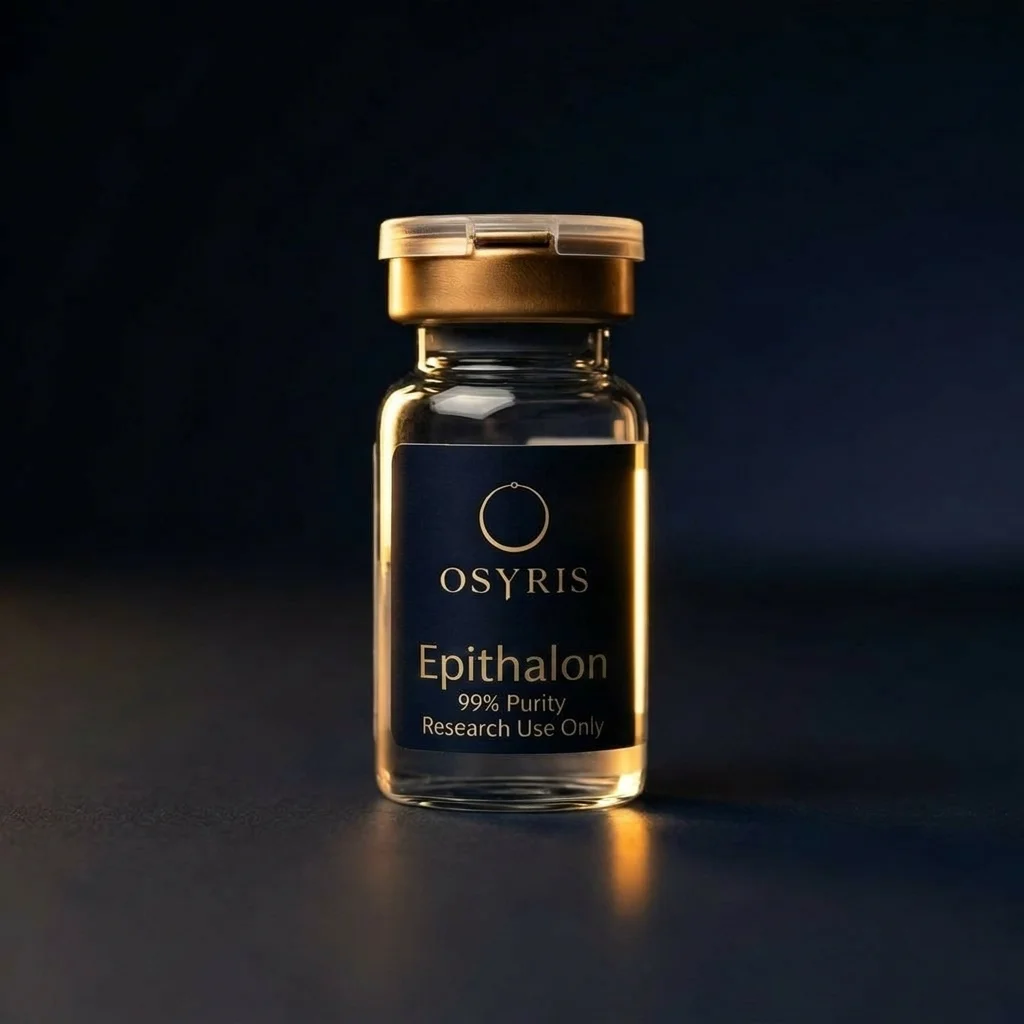
Epithalon (Ala-Glu-Asp-Gly) is a synthetic tetrapeptide modeled on pineal extracts. It is used in vitro and in vivo to investigate telomerase regulation, telomere dynamics, circadian biology, and molecular pathways associated with cellular aging and stress responses.
View →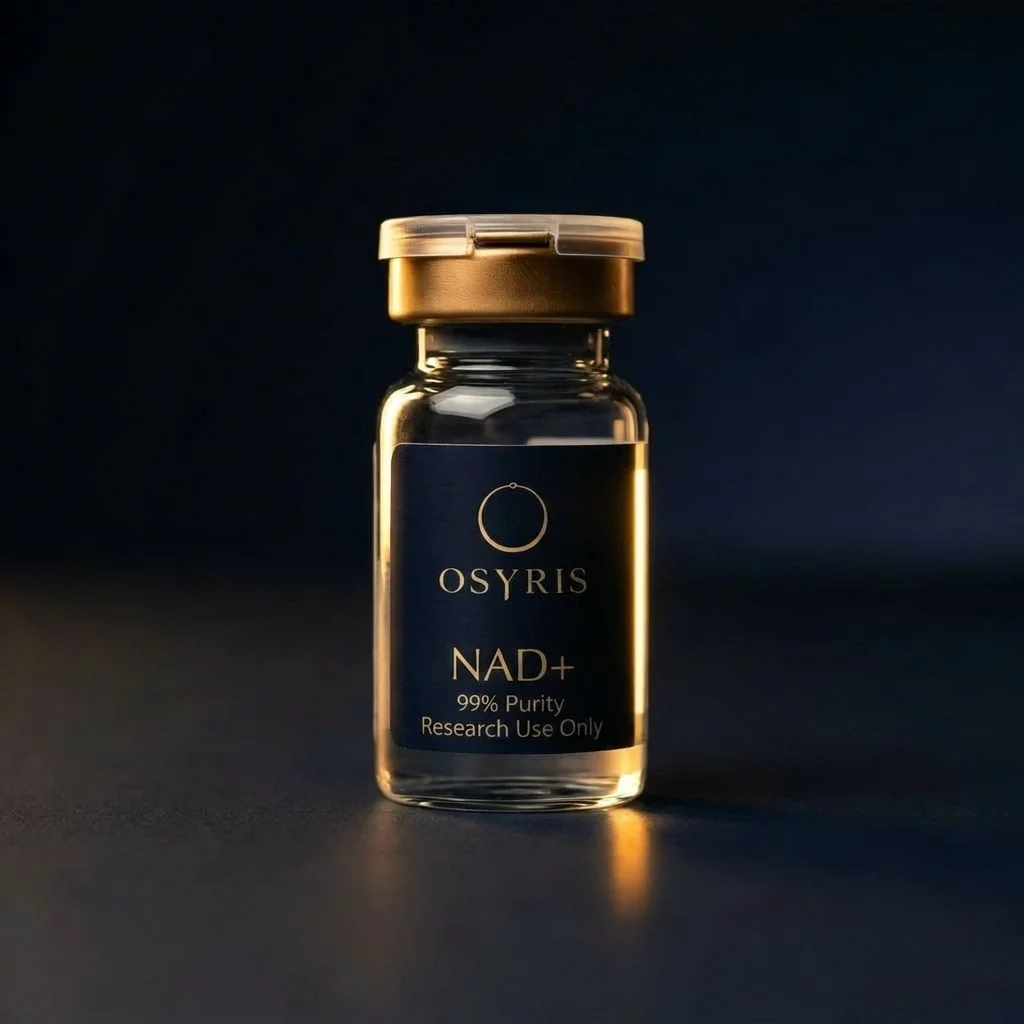 Primary Compound
NAD+
Primary Compound
NAD+
NAD⁺ is a coenzyme present in all living cells, playing a central role in redox reactions, energy metabolism, DNA repair, and cellular signaling. This high-purity NAD⁺ solution is designed for laboratory research involving aging, mitochondrial function, and sirtuin activation pathways. Not for human use or therapeutic application.
View → Primary Compound
MOTS-C
Primary Compound
MOTS-C
MOTS-c is a 16-amino acid mitochondrial-derived peptide encoded within the 12S rRNA of mitochondrial DNA. It is studied for its regulatory effects on metabolic homeostasis, cellular stress responses, and insulin sensitivity in preclinical models. MOTS-c is strictly intended for laboratory research use and not for human application.
View → Primary Compound
Vitamin B12
Primary Compound
Vitamin B12
This research-grade Vitamin B12 (cobalamin) is intended as a reference material for analytical chemistry, enzymology, and cellular one-carbon metabolism studies. It is not supplied as a dietary supplement.
View →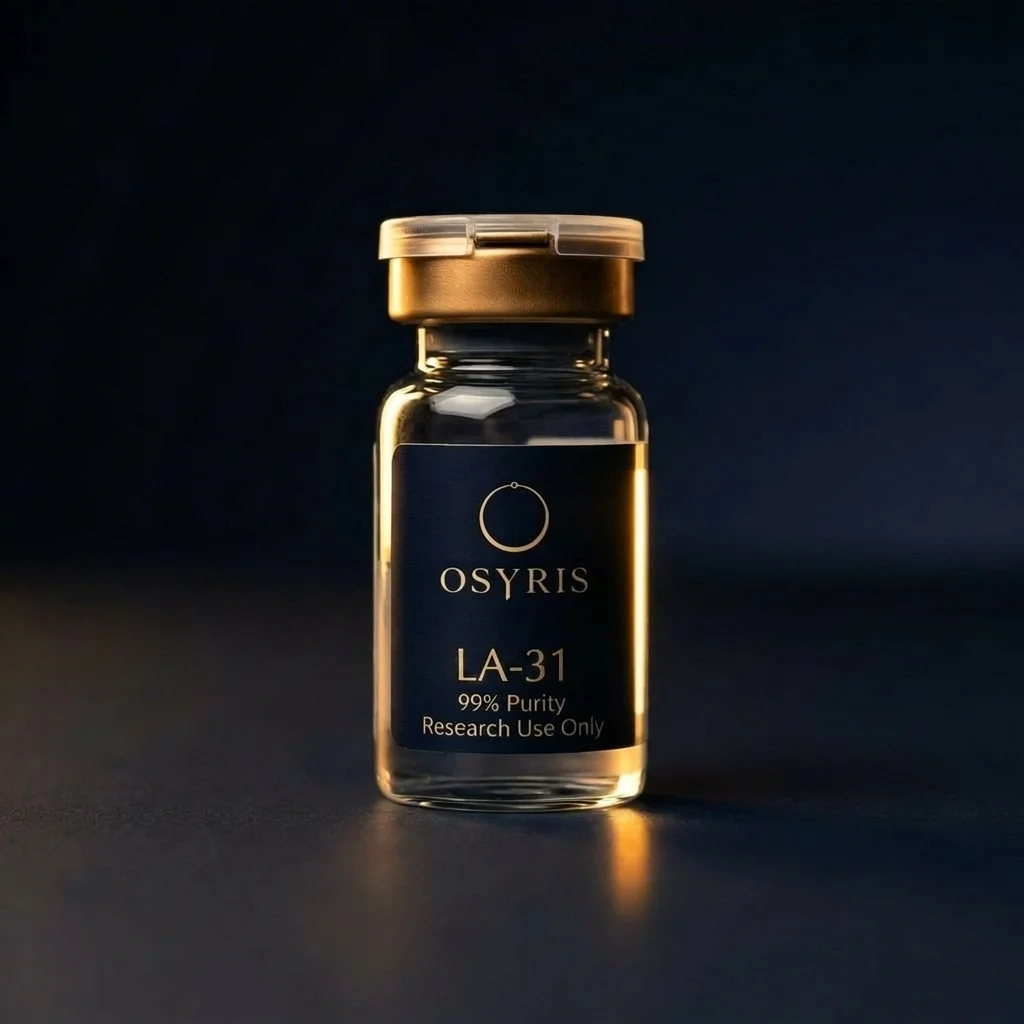 Primary Compound
LA-31
Primary Compound
LA-31
LA-31, formerly known as SS-31 (Elamipretide), is a mitochondria-targeted tetrapeptide that selectively associates with cardiolipin-rich inner mitochondrial membranes. It is used to study mitochondrial bioenergetics, reactive oxygen species (ROS) modulation, and organelle integrity in cellular and animal models.
View →Questions
Common Questions
Which longevity compound should I start with?
NAD+ has the broadest evidence base and targets two hallmarks. Epithalon targets the most fundamental mechanism (telomere clock). MOTS-C is the newest with exciting but early-stage data. The choice depends on which aging hallmark your research focuses on.
Can longevity compounds be combined?
Yes. Each targets a different aging mechanism, making combination protocols scientifically rational. Whether combinations produce synergistic effects is an active research question.
Does NAD+ or MOTS-C have better evidence?
NAD+ has substantially more published data (including the Gomes Cell paper and Zhang Science paper). MOTS-C was discovered more recently (2015) and has a growing but smaller evidence base. NAD+ has the edge on evidence volume; MOTS-C has the edge on novelty.
Is Epithalon's evidence reliable?
The data is internally consistent across Khavinson's publications. The limitation is concentration in one laboratory. Independent replication is limited. The findings are promising but require broader validation.
Why is B12 in the Longevity category?
Because its role in one-carbon metabolism directly connects to epigenetic aging (DNA methylation changes). OSYRIS offers research-grade B12, not consumer-grade supplements.
What are the "Hallmarks of Aging"?
A framework from López-Otín et al. (2013, Cell) identifying the fundamental biological processes that drive aging: telomere attrition, mitochondrial dysfunction, epigenetic alterations, genomic instability, loss of proteostasis, nutrient sensing deregulation, cellular senescence, stem cell exhaustion, and altered intercellular communication (expanded to twelve in 2023).