

Longevity
NAD+ vs NMN — Direct Coenzyme or Precursor?
NAD+ vs NMN compared for aging research. Direct supplementation vs precursor strategy. Bioavailability, evidence, and research implications.
The Same Destination, Different Routes
NAD+ and NMN are not competitors. They're the same molecule at different stages. NMN (nicotinamide mononucleotide) is converted to NAD+ inside cells by the enzyme NMNAT. The question researchers debate is whether it's better to provide the finished product (NAD+) or the raw material (NMN) and let cells do the conversion.
It sounds simple. It isn't.
The Case for NMN (the Precursor Approach)
Most published NAD+ aging studies have used NMN rather than NAD+ directly. The landmark studies — Gomes 2013 in Cell, Zhang 2016 in Science, Mills 2016 in Cell Metabolism — all administered NMN to aged mice and measured NAD+ level increases in target tissues.¹
The rationale: NMN is a smaller molecule (334 Da vs 663 Da) that may cross cell membranes more efficiently. In 2019, researchers identified Slc12a8, a specific NMN transporter on cell membranes, providing a molecular mechanism for direct NMN uptake into cells. Once inside, NMNAT enzymes rapidly convert NMN to NAD+.²
The NMN approach has generated the most extensive published evidence base for NAD+ repletion in aging models. If you're replicating published protocols, most of them used NMN.
The Case for Direct NAD+ (the Product Approach)
Direct NAD+ supplementation bypasses the NMNAT conversion step entirely. The active coenzyme is delivered without relying on enzymatic conversion that may be impaired in aged or diseased tissues — a meaningful consideration, since NMNAT activity can vary between tissue types and age groups.³
Research has shown that NAD+ can be taken up by cells through CD73-mediated dephosphorylation at the cell surface (NAD+ → NMN → NR → cell entry → reconversion to NAD+) and potentially through direct transport mechanisms that are still being characterized.
The direct approach is particularly relevant for in vitro research, where NAD+ can be added to cell culture media without any absorption or transport barriers. For cell-based assays, direct NAD+ supplementation provides precise control over the coenzyme concentration reaching the cells.
OSYRIS offers NAD+ in its active form specifically for research protocols that require the finished coenzyme rather than a precursor.
What the Evidence Actually Shows
The honest assessment: most of the dramatic aging results come from NMN studies, not direct NAD+ studies. This doesn't mean NMN is superior — it means NMN has been more extensively studied in this context. The evidence gap reflects research history rather than a proven biological difference.
A few direct NAD+ administration studies exist, primarily using intravenous or intraperitoneal delivery in animal models, showing tissue NAD+ level increases and functional improvements consistent with the NMN literature. But the body of evidence is smaller.⁴
The field is moving toward a more nuanced understanding: the optimal NAD+ repletion strategy may depend on the tissue type, the delivery route, and the specific research question. Cell culture studies may favor direct NAD+. In vivo studies with oral delivery may favor NMN. Neither approach is universally superior.
The Third Option: NR
Nicotinamide riboside (NR) is another NAD+ precursor, one step further upstream than NMN in the salvage pathway (NR → NMN → NAD+). NR has its own body of published evidence, including human clinical trials showing blood NAD+ increases. NR is not currently in the OSYRIS catalog.⁵
Why OSYRIS Carries NAD+ Instead of NMN
OSYRIS offers the active coenzyme rather than a precursor for several reasons: it eliminates conversion-step variability in research protocols, it provides exact concentration control in cell culture, and it serves researchers studying NAD+ biology directly (sirtuin activation assays, PARP activity assays, electron transport chain studies) where the active molecule is the appropriate reagent.
For researchers who specifically need NMN for protocols replicating published NMN studies, NMN is widely available from other suppliers. OSYRIS fills the gap for research-grade direct NAD+ with batch-specific independent testing.
Featured Links
 Research Product
NAD+
Research Product
NAD+
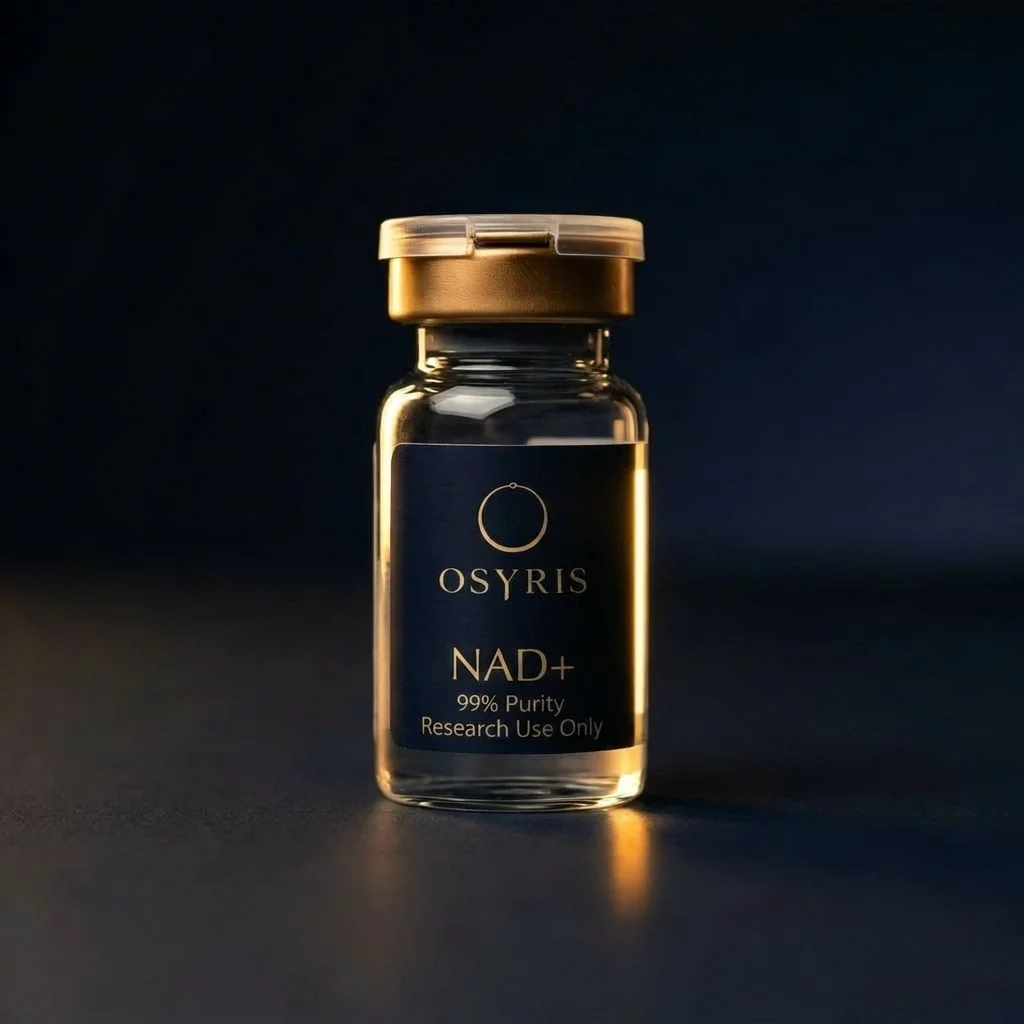
NAD⁺ is a coenzyme present in all living cells, playing a central role in redox reactions, energy metabolism, DNA repair, and cellular signaling. This high-purity NAD⁺ solution is designed for laboratory research involving aging, mitochondrial function, and sirtuin activation pathways. Not for human use or therapeutic application.
View product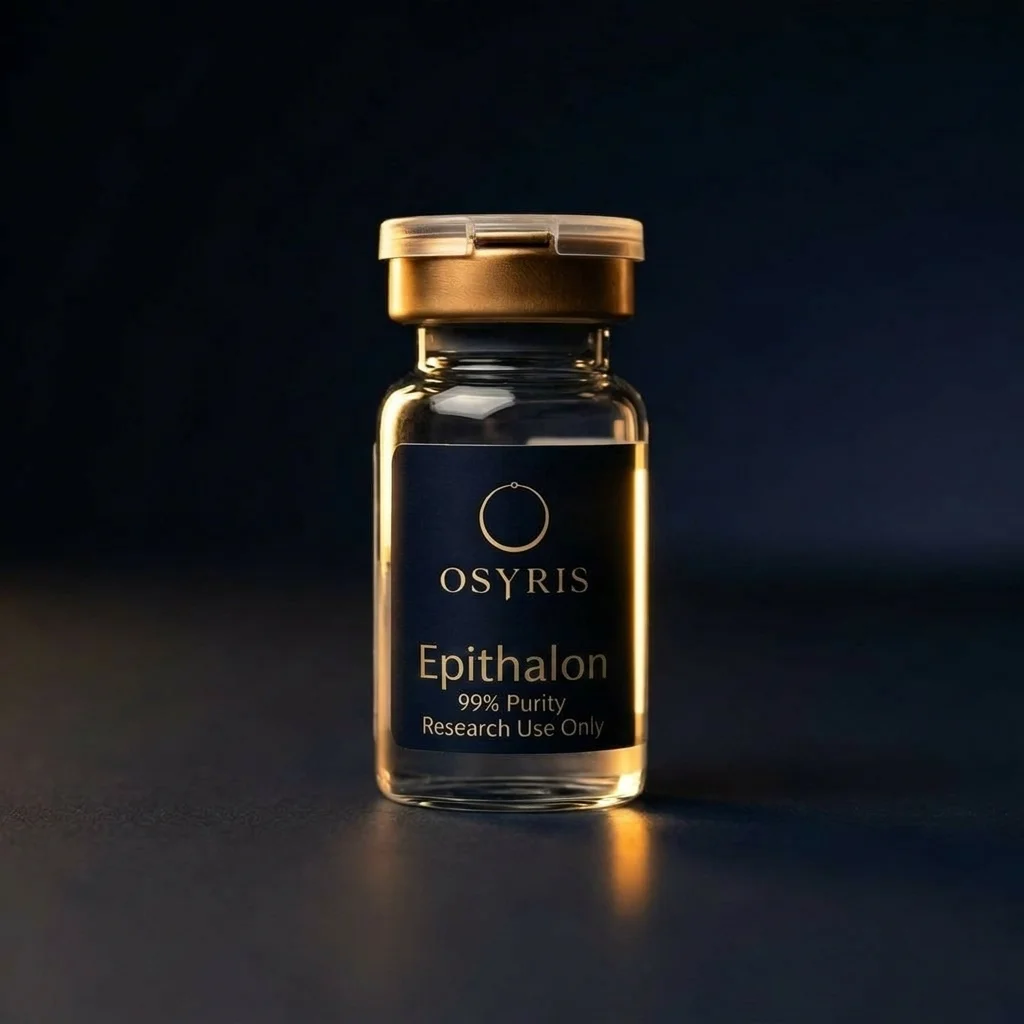 Research Product
Epithalon
Research Product
Epithalon
Epithalon (Ala-Glu-Asp-Gly) is a synthetic tetrapeptide modeled on pineal extracts. It is used in vitro and in vivo to investigate telomerase regulation, telomere dynamics, circadian biology, and molecular pathways associated with cellular aging and stress responses.
View product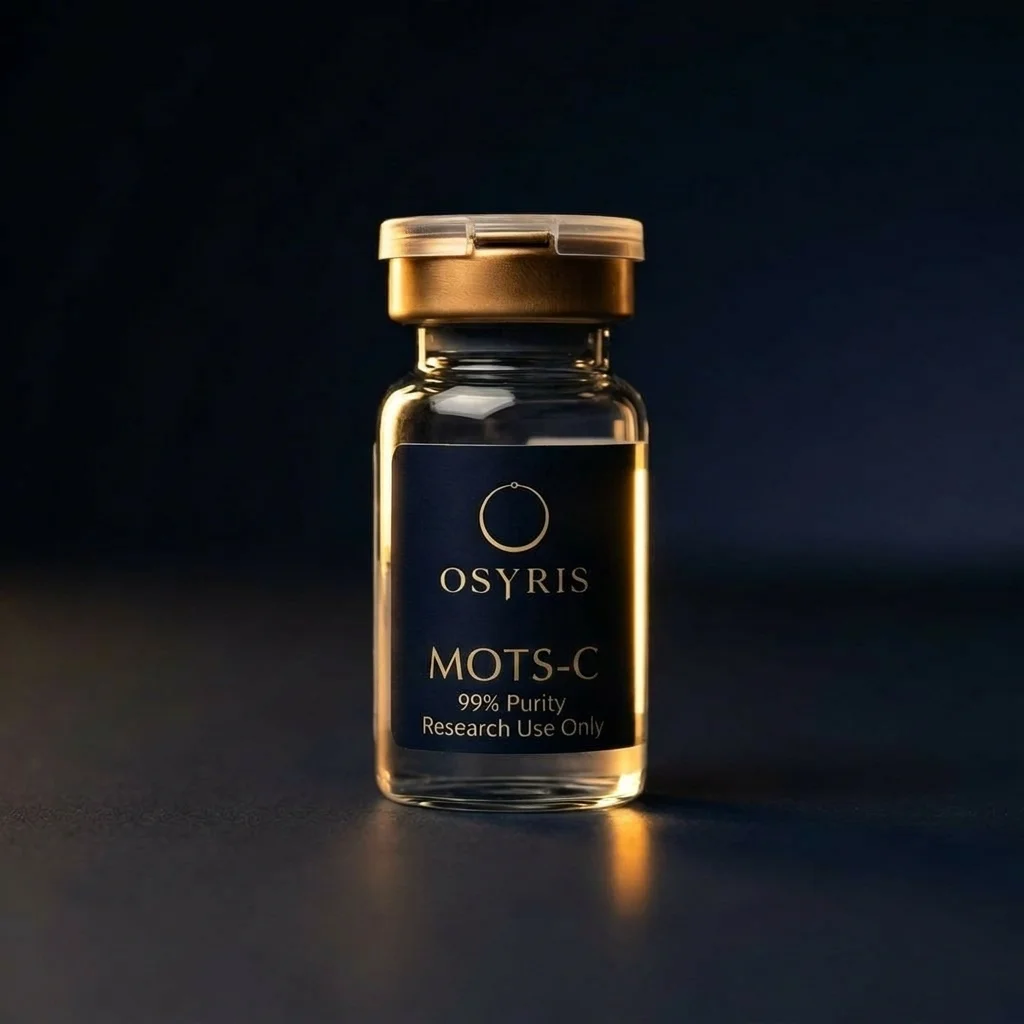 Research Product
MOTS-C
Research Product
MOTS-C
MOTS-c is a 16-amino acid mitochondrial-derived peptide encoded within the 12S rRNA of mitochondrial DNA. It is studied for its regulatory effects on metabolic homeostasis, cellular stress responses, and insulin sensitivity in preclinical models. MOTS-c is strictly intended for laboratory research use and not for human application.
View productQuestions
Common Questions
Should researchers use NAD+ or NMN?
It depends on the protocol. Cell culture studies often favor direct NAD+ for precise concentration control. In vivo studies replicating published literature may favor NMN, as most landmark studies used NMN. Neither is universally superior.
Can the body convert NMN to NAD+?
Yes. The enzyme NMNAT converts NMN to NAD+ inside cells. A specific NMN transporter (Slc12a8) has been identified on cell membranes. However, conversion efficiency may vary by tissue type and age.
Why have most aging studies used NMN instead of NAD+?
Primarily because early research on oral bioavailability suggested NMN (a smaller molecule) was more efficiently absorbed. This created a research precedent. The evidence doesn't prove NMN is biologically superior — it reflects research history.
Does OSYRIS carry NMN?
Not currently. OSYRIS offers NAD+ in its active form for research protocols that require the finished coenzyme. NMN is available from other suppliers for protocols specifically designed around NMN.
What is NR and how does it relate?
NR (nicotinamide riboside) is another NAD+ precursor, one step further upstream: NR → NMN → NAD+. It has its own clinical evidence base including human trials.
Is oral NAD+ effective?
Oral NAD+ bioavailability is debated. NAD+ is a larger molecule than NMN, and its absorption route is less clearly characterized. For research requiring guaranteed delivery, parenteral (non-oral) routes or cell culture direct addition are more controlled.
References
- Mills KF, et al. "Long-term administration of NMN mitigates age-associated physiological decline in mice." Cell Metabolism, 2016. PMID 28068222
- Grozio A, et al. "Slc12a8 is a nicotinamide mononucleotide transporter." Nature Metabolism, 2019. PMID 31131364
- Yoshino J, et al. "NAD+ intermediates: the biology and therapeutic potential of NMN and NR." Cell Metabolism, 2018. PMID 29249689
- Rajman L, et al. "Therapeutic potential of NAD-boosting molecules." Cell Metabolism, 2018. PMID 29514064
- Martens CR, et al. "Chronic nicotinamide riboside supplementation is well-tolerated and elevates NAD+ in healthy middle-aged and older adults." Nature Communications, 2018. PMID 29559646