
Longevity
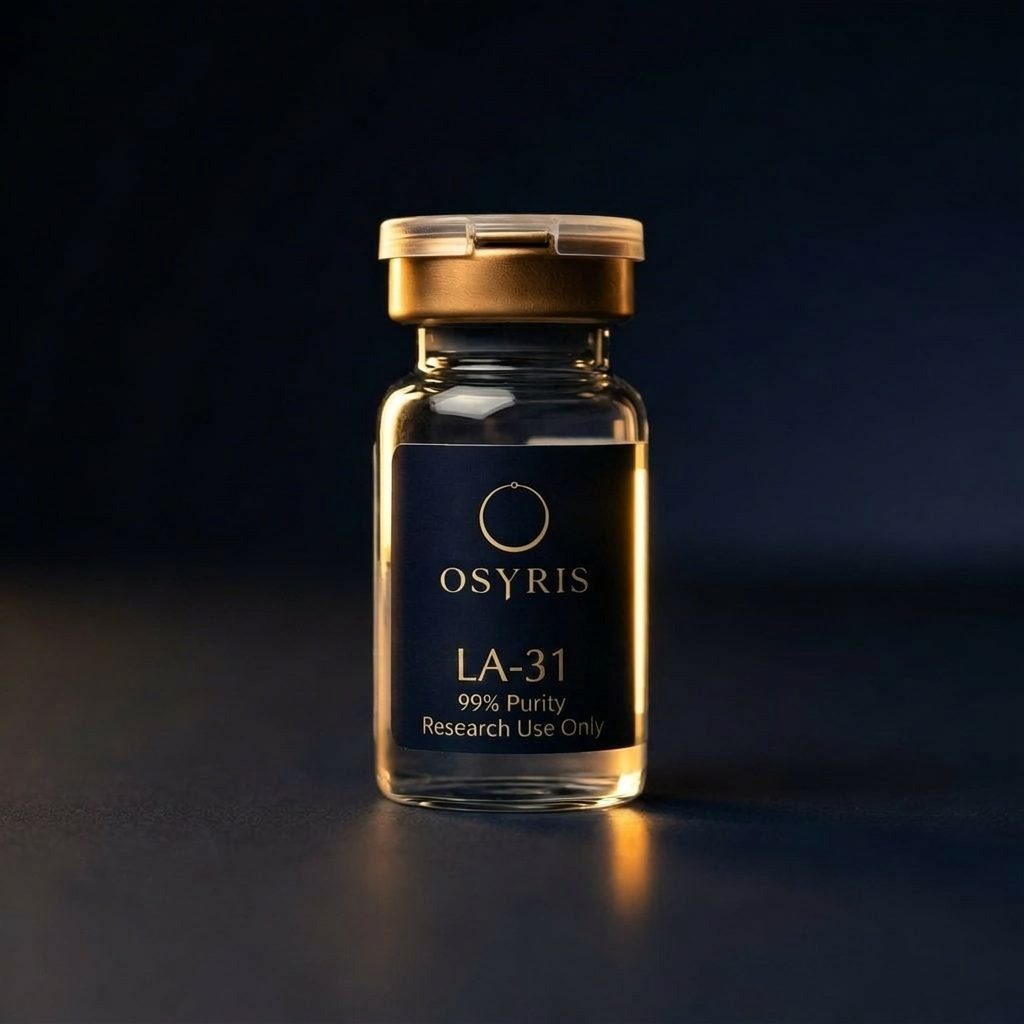
LA-31
LA-31, formerly known as SS-31 (Elamipretide), is a mitochondria-targeted tetrapeptide that selectively associates with cardiolipin-rich inner mitochondrial membranes. It is used to study mitochondrial bioenergetics, reactive oxygen species (ROS) modulation, and organelle integrity in cellular and animal models.
- Quantity
- Multiple sizes
- Purity
- See COA
Standard $9.99 | Expedited $12.99 | Free standard over $200
Research overview
Research Overview
SS-31 (D-Arg-2’,6’-dimethyltyrosine-Lys-Phe-NH₂) was designed to concentrate at the inner mitochondrial membrane through cationic and aromatic interactions with cardiolipin.[1] By modulating membrane microenvironment and electron transport chain (ETC) function, it enables researchers to probe mitochondrial coupling, ROS production, and susceptibility to stress in diverse tissues, including heart, kidney, brain, and skeletal muscle.[1–3]
Molecular Targeting & Cardiolipin Binding
SS-31’s net positive charge and aromatic residue distribution promote high-affinity binding to anionic phospholipids without requiring protein conjugation.[1] In vitro assays quantify its effects on membrane potential, cytochrome c association, and permeability transition pore behavior, providing insight into peptide–lipid interactions in bioenergetics.
Bioenergetics & Oxidative Stress Models
In isolated mitochondria and permeabilized fibers, SS-31 has been reported to improve ADP sensitivity, preserve ETC activity, and reduce indices of oxidative damage under stress conditions.[2,3] These data are obtained under controlled experimental dosing and endpoints, strictly within non-clinical settings.
Organ-Specific Mechanistic Studies
Preclinical studies explore SS-31 in models of ischemia-reperfusion, nephrotoxicity, neurodegeneration, and myopathy to dissect mitochondrial contributions to cell survival and inflammation.[2,3] The compound functions as a mechanistic probe of mitochondrial resilience rather than a validated therapeutic.