

Recovery
Understanding Growth Factor Signaling in Tissue Repair
A plain-language explainer on EGF, VEGF, FGF, receptor tyrosine kinases, and why growth factor signaling matters in repair-focused peptide research.

Why Growth Factors Matter
Growth factors are proteins that tell cells when to proliferate, migrate, and differentiate. In tissue repair, that makes them some of the most important molecular signals in the entire healing cascade. Without them, cells would have far less direction about where to go, when to divide, and what kind of tissue program to adopt.
Three families dominate most repair conversations: EGF pushes epithelial proliferation, VEGF promotes angiogenesis, and FGF supports fibroblast activity and collagen production. Together they coordinate surface closure, blood-vessel support, and matrix rebuilding.
How the Signal Gets Inside the Cell
These growth factors act by binding receptor tyrosine kinases on cell membranes. Once activated, those receptors trigger intracellular cascades such as MAPK and PI3K/Akt, which carry the message inward until the nucleus changes gene-expression output. In other words, the surface receptor hears the signal, and the cell rewrites its behavior in response.
Downstream adhesion pathways matter too. The FAK-paxillin axis helps translate external repair signals into migration behavior, which is one reason growth-factor signaling is so tightly linked to movement at an injury site rather than just proliferation in place.
Why This Matters for Peptide Research
BPC-157 is studied for its reported ability to upregulate multiple growth factor families at once. That helps explain why its tissue-repair profile appears across tendons, gut tissue, vasculature, and other models: the growth-factor network is broadly reused across tissue types.
Understanding the pathway first makes the compound-level literature easier to read. If a study reports more VEGF, more fibroblast migration, or faster angiogenesis, it is pointing back to this same signaling architecture.
Featured Links
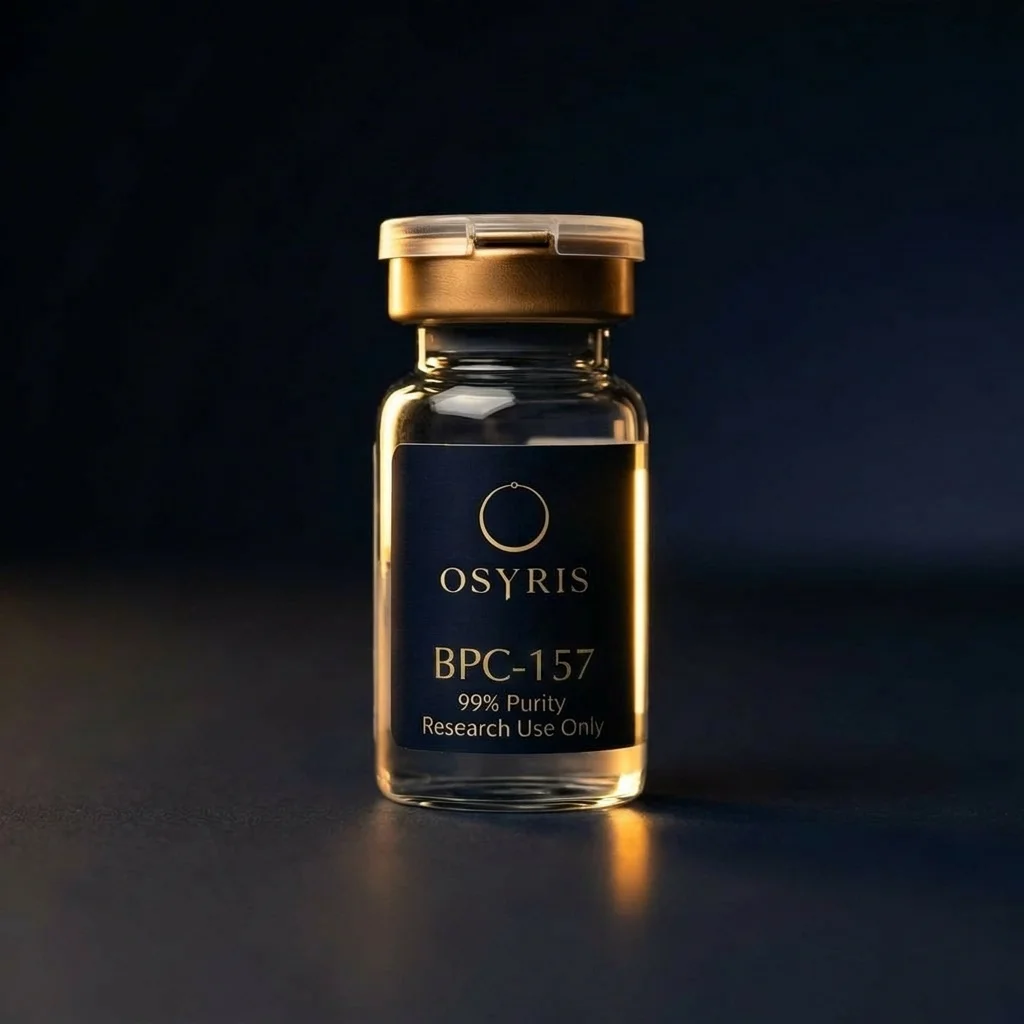 Research Product
BPC-157
Research Product
BPC-157
BPC-157 is a synthetic pentadecapeptide derived from a protective protein found in the gastric mucosa. Structurally stable and water-soluble, it is widely studied for its potential role in cellular signaling, tissue regeneration, and inflammation models. BPC-157 is intended solely for laboratory and in vitro research purposes.
View product Research Guide BPC-157 Research OverviewRead the compound-level article that maps BPC-157 literature back onto EGF, VEGF, FGF, and migration signaling.
Read → Research Guide Recovery Peptides Research GuideUse the category guide for the broader repair-network context surrounding growth-factor amplification and cell migration.
Read →Questions
Common Questions
What are growth factors?
They are signaling proteins that tell cells when to proliferate, migrate, differentiate, or build new tissue structures.
What do EGF, VEGF, and FGF each do?
EGF emphasizes epithelial proliferation, VEGF emphasizes new blood-vessel formation, and FGF emphasizes fibroblast activity and collagen-related rebuilding.
What is a receptor tyrosine kinase?
A cell-surface receptor that activates internal signaling cascades after ligand binding, often by phosphorylating tyrosine residues and recruiting downstream signaling proteins.
How do growth factors relate to peptide research?
Many repair-focused peptides are studied because they influence growth-factor expression or the downstream pathways growth factors control.
What is angiogenesis?
The formation of new blood vessels. It is essential in tissue repair because new tissue requires oxygen and nutrient delivery.
What is the FAK-paxillin pathway?
A focal-adhesion signaling axis that helps cells translate external repair signals into movement and attachment changes during migration.