

Guide
What Are Research Peptides?
What are research peptides? A plain-language introduction covering peptide biology, how they're made, categories, quality, and regulatory context.
Peptides in Plain Language
A peptide is a short chain of amino acids. Amino acids are the building blocks of proteins — there are 20 standard ones, and they link together like beads on a string. When the chain is short (typically 2-50 amino acids), it's called a peptide. When it's long (50+ amino acids), it's called a protein.
Your body is full of peptides. Insulin (51 amino acids) regulates blood sugar. Oxytocin (9 amino acids) plays a role in social bonding. Endorphins (a family of peptides) modulate pain perception. These are endogenous peptides — your body makes them naturally.
Research peptides are synthetic versions of naturally occurring peptides — or entirely novel sequences designed by researchers — that are manufactured in a laboratory and used as tools for scientific investigation. They are not medications. They are not supplements. They are research tools.
How Peptides Are Made
Research peptides are manufactured using a process called solid-phase peptide synthesis (SPPS), developed by Robert Bruce Merrifield in the 1960s (for which he won the Nobel Prize in Chemistry in 1984).
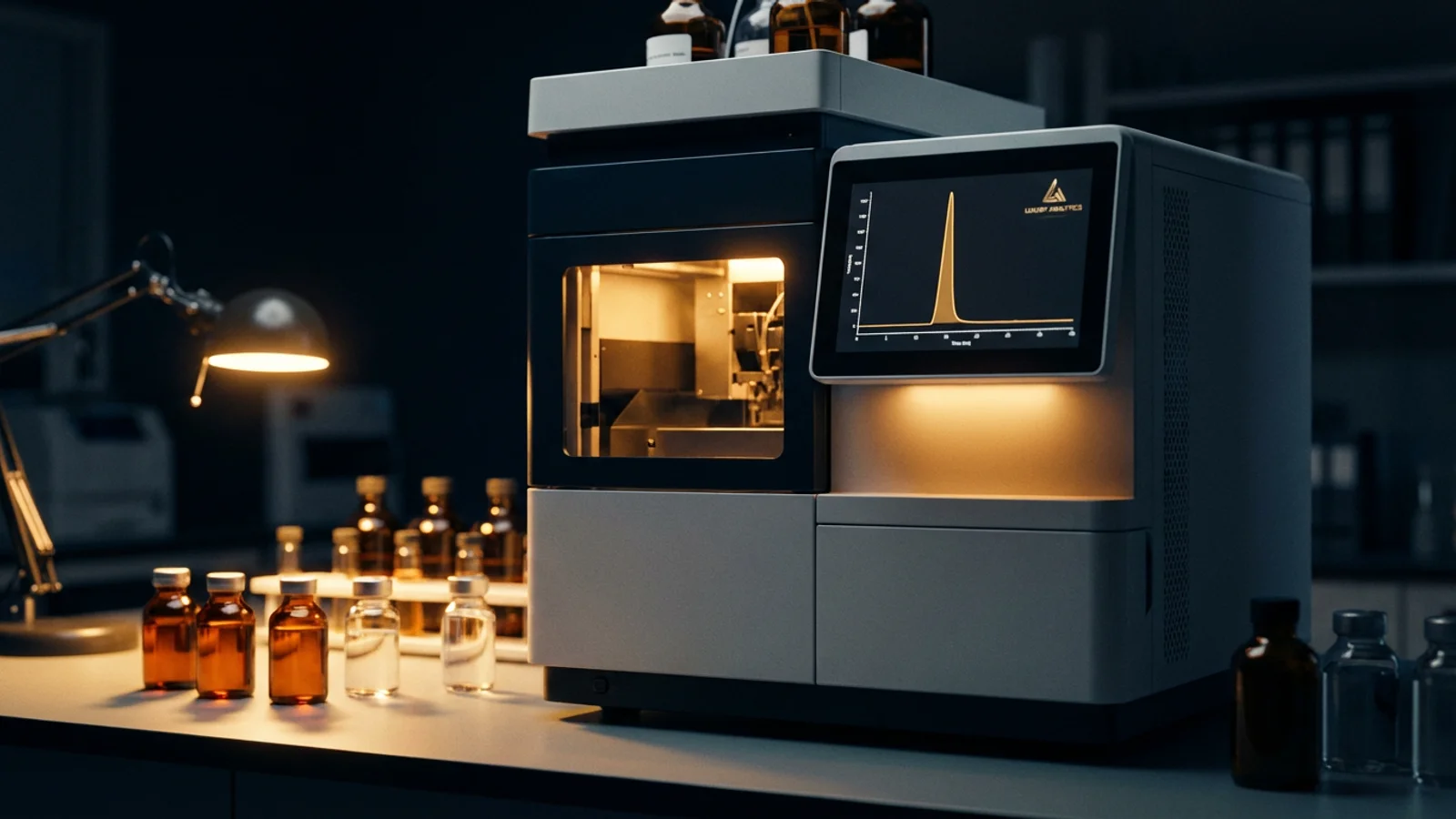
The process works by building the peptide chain one amino acid at a time, from the C-terminus (the end) to the N-terminus (the beginning). Each amino acid is chemically bonded to the growing chain, and after each addition, protective chemical groups are removed so the next amino acid can attach. After the full sequence is assembled, the peptide is cleaved from the solid support, purified (usually by HPLC), and lyophilized (freeze-dried) into powder form.
The purity of the final product depends on the efficiency of each coupling step. For a 15-amino-acid peptide like BPC-157, even 99% coupling efficiency at each step results in only ~86% overall yield of the full-length sequence (0.99^15 = 0.86). This is why purification after synthesis is critical — and why HPLC purity testing is the standard quality metric for research peptides.
What Makes a Peptide "Research Grade"
The term "research grade" has a specific meaning. It describes a compound that has been:
- Synthesized to specifications appropriate for laboratory research
- Purified to a defined purity standard (typically ≥95-99% by HPLC)
- Characterized for identity (mass spectrometry confirming molecular weight)
- Documented with a Certificate of Analysis reporting these results
Research-grade peptides are NOT:
- FDA-approved medications
- cGMP pharmaceutical-grade products (manufactured under pharmaceutical-level controls)
- USP reference standards (calibrated against certified reference materials)
- Dietary supplements (regulated under DSHEA)
The distinction matters for regulatory and scientific reasons. Research-grade peptides are intended for use in cell culture, animal models, and in vitro assays. They are sold under "for research use only" terms, which defines both their legal status and their appropriate application.
The Categories of Research Peptides
Research peptides span many biological domains. The OSYRIS catalog organizes them by research application:
Recovery & Tissue Repair — Peptides studied in wound healing, connective tissue repair, and tissue remodeling models. Examples: BPC-157 (growth factor modulation), TB500 (actin-mediated cell migration).
Longevity & Cellular Health — Compounds studied in aging biology: telomere maintenance, sirtuin activation, mitochondrial function. Examples: Epithalon (telomerase), NAD+ (sirtuins), MOTS-C (mitochondrial signaling).
Cognitive & Neurological — Peptides studied in brain biology: neurotrophic factor expression, GABA modulation, sleep architecture. Examples: Semax (BDNF), Selank (GABA), DSIP (delta sleep).
Metabolic & Weight Management — Compounds targeting metabolic pathways: incretin signaling, lipolysis, energy expenditure. Examples: GLP-1/2/3 agonists (incretin receptors), AOD-9604 (GH fragment), MOTS-C (AMPK).
Skin & Aesthetics — Peptides studied in skin biology: collagen synthesis, melanogenesis, ECM remodeling. Examples: GHK-Cu (copper peptide, gene expression), Glutathione (antioxidant, melanogenesis), SNAP-8 (SNARE complex).
Immune & Host Defense — Peptides studied in immune modulation: T-cell function, anti-inflammatory signaling. Examples: Thymosin Alpha 1 (T-cell maturation), KPV (NF-κB inhibition), VIP (neuroimmune).
Growth Hormone Axis — Peptides targeting the somatotropic axis: GH secretion, IGF-1 biology. Examples: Ipamorelin (GHRP), Sermorelin (GHRH analog), IGF1-LR3 (downstream effector).
Sexual & Hormonal Health — Peptides studied in melanocortin and hormonal signaling. Example: PT-141 (MC3R/MC4R agonist).
How Quality Varies
Not all research peptide vendors are equal. The quality spectrum ranges from rigorously tested compounds with full independent documentation to poorly characterized products with questionable purity and no verification. Key quality differentiators:
Independent third-party testing vs in-house testing or no testing. Third-party testing eliminates the conflict of interest inherent in a vendor testing their own product.
Batch-specific COAs vs generic or template COAs. Each production batch should have its own analytical results. A single COA covering "all batches" is a red flag.
HPLC + mass spectrometry vs HPLC only. Purity without identity confirmation is incomplete. Both tests are necessary for full characterization.
Published COAs vs COAs available "on request." If a vendor doesn't proactively provide COAs, ask why. Transparency should be the default, not the exception.
OSYRIS publishes the COA for the current batch on every product page. Every compound is independently tested using both HPLC and LC-MS before sale.
Regulatory Context
Research peptides exist in a specific regulatory space. They are:
- Not FDA-approved for any human use
- Not dietary supplements under DSHEA
- Legal to purchase for laboratory research purposes in the United States
- Sold under "research use only" terms that restrict their use to laboratory settings
Some peptides have related compounds that ARE FDA-approved as prescription medications (e.g., semaglutide as Ozempic, bremelanotide as Vyleesi, thymalfasin as Zadaxin in non-US markets). The research-grade versions sold by OSYRIS are distinct from these pharmaceutical products — they are manufactured to different standards and sold under different terms.
Researchers are responsible for ensuring their use of research peptides complies with applicable regulations, institutional policies, and ethical guidelines.
Where to Start
If you're new to peptide research, we recommend starting with:
- Our Standards page — Understand how OSYRIS tests and documents quality
- How to Read a COA — Learn to evaluate the analytical data that accompanies every product
- Peptide Storage and Handling — Protect your materials from degradation
- Individual product pages — Each product page includes research applications, published citations, and FAQs specific to that compound
Featured Links
Questions
Common Questions
Are research peptides legal?
Yes. Research peptides are legal to purchase in the United States for laboratory research purposes. They are sold under "research use only" terms and are not approved for human consumption.
Are research peptides the same as prescription medications?
No. Some peptides have related FDA-approved pharmaceutical versions (e.g., semaglutide/Ozempic, bremelanotide/Vyleesi). Research-grade peptides are manufactured to different standards and sold exclusively for laboratory use.
What is the difference between a peptide and a protein?
Size. Peptides are short chains (typically 2-50 amino acids). Proteins are longer chains (50+ amino acids). The distinction is somewhat arbitrary — there's no strict cutoff — but it's the standard convention.
How are research peptides used?
In cell culture experiments, in vitro assays, animal model studies, and other laboratory research applications. They are tools for studying biological mechanisms — not therapeutic products.
How do I verify the quality of research peptides?
Review the Certificate of Analysis (COA) for each batch. Look for: independent third-party testing, HPLC purity ≥98%, mass spectrometry identity confirmation, and a batch-specific (not generic) report. Our COA guide explains each element in detail.
What does "for research use only" mean?
It means the product is sold exclusively for use in laboratory research settings. It is not intended for human administration, veterinary use, or dietary supplementation. Purchasers must acknowledge these terms.
Why do some peptides have pharmaceutical equivalents and others don't?
Pharmaceutical development requires extensive clinical trials (Phase 1-3), regulatory submission, and FDA review — a process costing hundreds of millions of dollars and taking 10-15 years. Most research peptides have preclinical data only and have not undergone this process.
What should I look for in a peptide vendor?
Independent third-party testing, batch-specific COAs with chromatograms, mass spectrometry identity confirmation, transparent pricing, and clear "research use only" terms. Our Standards page details how OSYRIS meets these criteria.