

Hormonal
Understanding the Melanocortin System
A plain-language explainer on melanocortin receptors, α-MSH signaling, appetite circuits, and how PT-141, Melanotan 2, and KPV fit into the system.
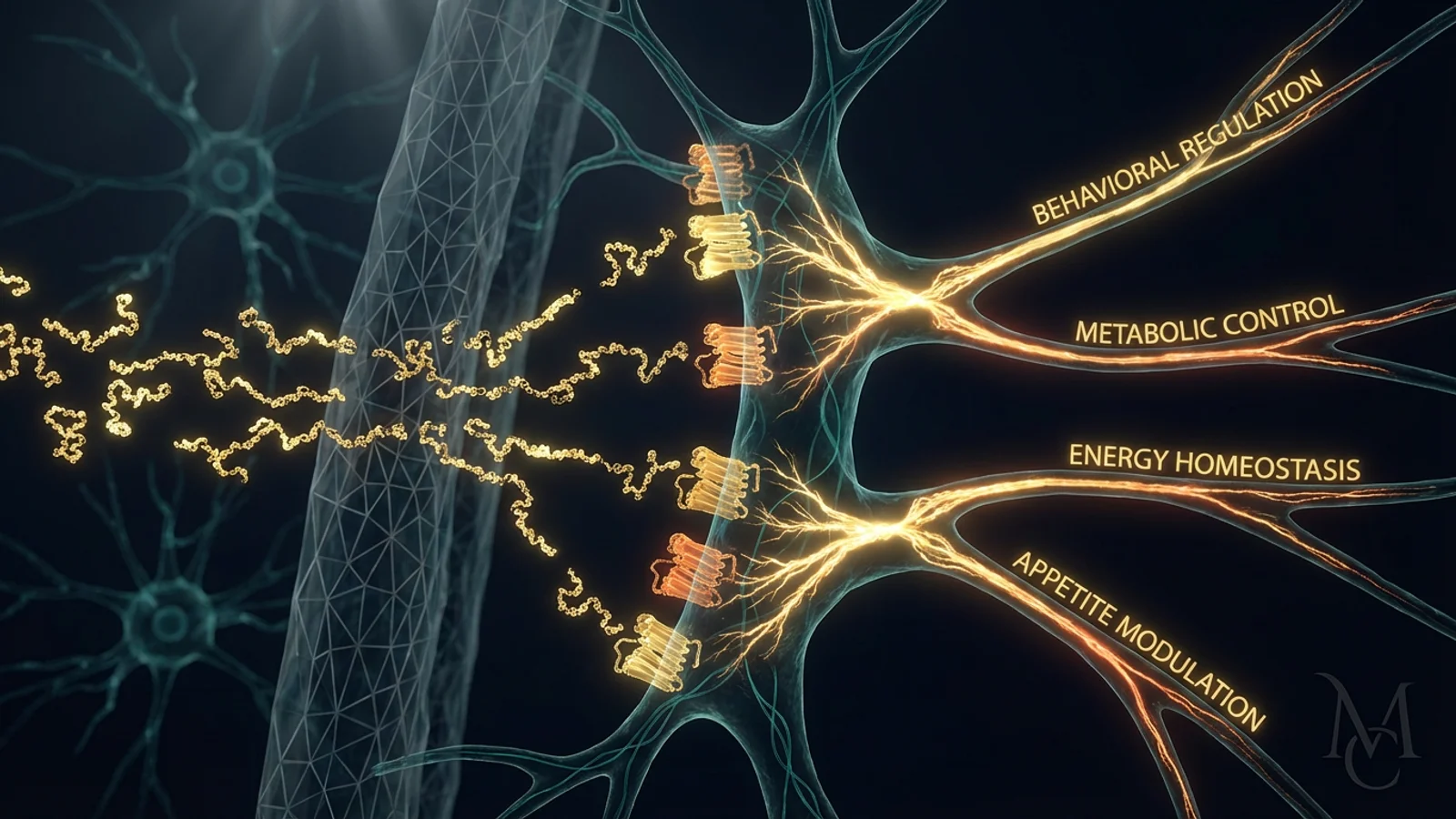
Five Receptors, One System
The melanocortin system is a family of five G-protein-coupled receptors: MC1R through MC5R. They respond to endogenous melanocortin peptides such as α-MSH, β-MSH, γ-MSH, and ACTH, but each receptor sits in a different tissue context and serves a different biological role.
MC1R is most associated with pigmentation. MC3R and MC4R play major roles in appetite and central signaling. MC2R is linked to adrenal cortisol biology. MC5R shows up in exocrine tissue contexts. Together they create a receptor map that explains why related melanocortin compounds can produce very different biological outcomes.
Why Selectivity Matters
Melanotan 2 is comparatively broad across melanocortin receptors, which helps explain its pigmentation profile. PT-141 is more focused on MC3R and MC4R, which puts it deeper inside central nervous system signaling rather than skin-focused melanogenesis. KPV is different again: it comes from the α-MSH sequence, but much of its anti-inflammatory interest is framed as receptor-independent NF-κB modulation rather than classical melanocortin agonism.
That is why receptor maps matter. Without them, it is easy to assume compounds with similar ancestry should behave the same way when in reality they activate different tissues and signaling circuits.
Appetite Circuits and AgRP
One of the most studied pieces of the melanocortin system is the MC4R-AgRP axis. Agouti-related protein acts as an inverse agonist at MC3R and MC4R, pushing appetite upward. That is one reason melanocortin biology frequently shows up in both hormonal and metabolic research conversations.
Understanding the receptor map clarifies why PT-141 can be relevant to central signaling, why Melanotan 2 has pigmentation consequences, and why KPV is often treated as a separate anti-inflammatory story despite its sequence heritage.
Featured Links
 Research Product
PT-141
Research Product
PT-141
PT-141 (Bremelanotide) is a synthetic peptide analog derived from α-Melanocyte-Stimulating Hormone (α-MSH), consisting of seven amino acids. Supplied in lyophilized 10 mg vials for research use only, PT-141 is studied primarily for its interaction with melanocortin receptors and its role in central nervous system signaling pathways.
View product Research Product
Melanotan 2
Research Product
Melanotan 2
Melanotan II is a synthetic cyclic heptapeptide analog of α-MSH (alpha-melanocyte-stimulating hormone). It is studied for its interaction with melanocortin receptors, particularly MC1R and MC4R. MT-2 is used exclusively in laboratory settings to explore pigment regulation, energy homeostasis, and neuroendocrine signaling. Not for diagnostic or therapeutic use.
View product Research Product
KPV
Research Product
KPV
KPV is a tripeptide fragment (Lys-Pro-Val) derived from the α-melanocyte-stimulating hormone (α-MSH). Supplied as a high-purity research peptide, KPV 10 mg is used exclusively in controlled laboratory settings for studies exploring cellular interactions, peptide signaling, and structure–function relationships. For research purposes only.
View productQuestions
Common Questions
What is α-MSH?
Alpha-melanocyte-stimulating hormone is an endogenous melanocortin peptide that activates melanocortin receptors across pigmentation and central signaling contexts.
Why are MC3R and MC4R important for appetite?
They sit inside hypothalamic energy-balance circuits and help regulate feeding behavior, satiety, and energy expenditure.
What are inverse agonists?
They are ligands that reduce receptor activity below its baseline constitutive level, not just block it.
How does KPV work without receptors?
KPV is commonly discussed as exerting anti-inflammatory effects through NF-κB-related pathways rather than through classical melanocortin-receptor activation.
What causes MC4R obesity?
Loss-of-function changes in MC4R signaling can impair satiety control, making MC4R one of the most important monogenic obesity pathways studied in humans.
What is the agouti signaling protein?
Agouti-related proteins antagonize melanocortin signaling at specific receptors and help shape appetite and pigmentation outcomes depending on the context.