

Recovery
BPC-157 vs TB-500 — Two Paths to Tissue Repair
BPC-157 vs TB-500 compared: mechanisms, research applications, key studies. Growth factors vs actin dynamics. Which compound for which protocol?
Why This Comparison Matters
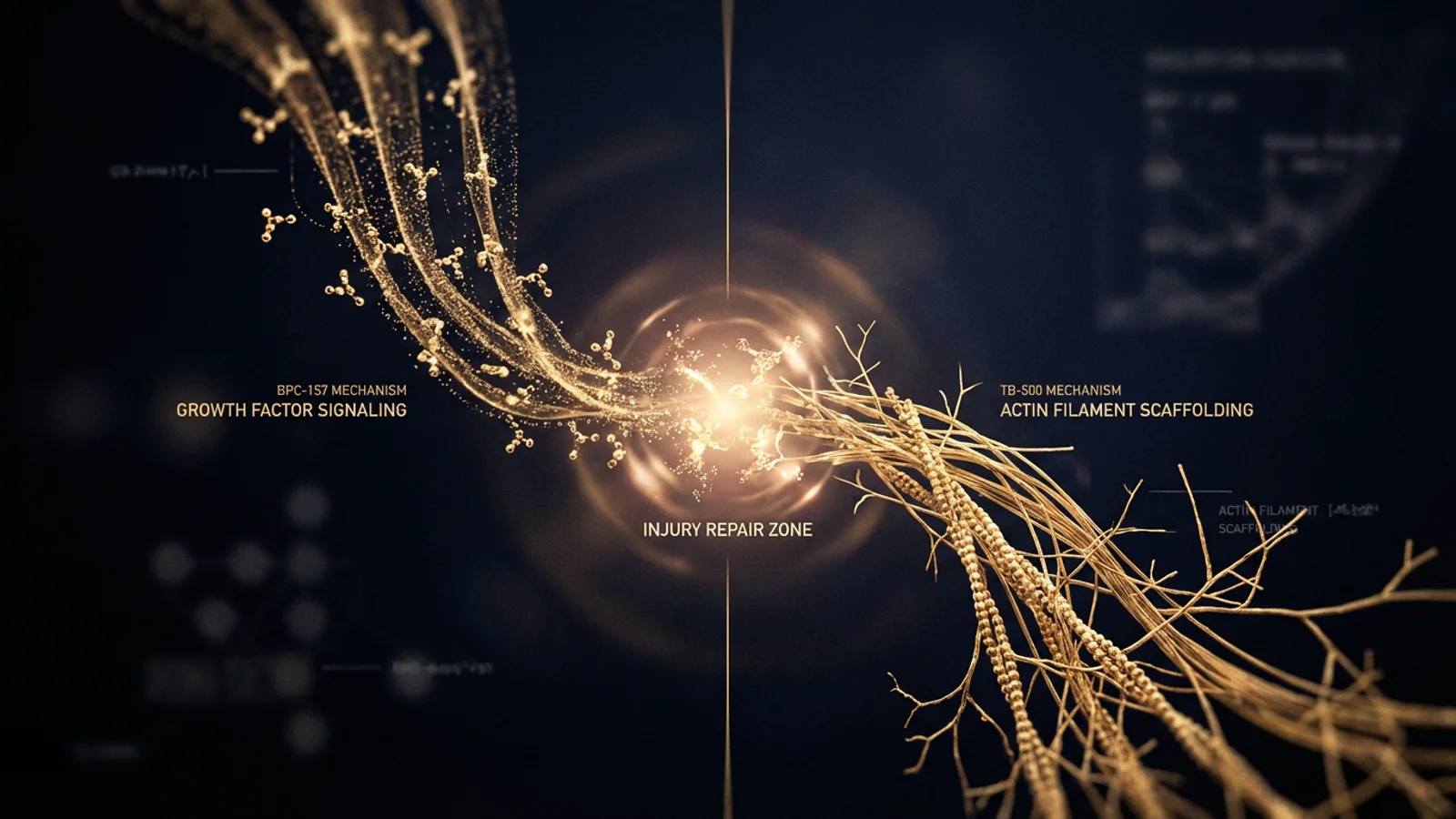
BPC-157 and TB-500 are the two most studied peptides in preclinical tissue repair research. They are frequently mentioned together, studied alongside each other, and combined in research protocols. But they work through fundamentally different biological mechanisms — and understanding those differences is essential for designing appropriate research protocols.
This article compares the two compounds on mechanism, evidence base, research applications, and practical considerations. It does not recommend one over the other — the appropriate choice depends entirely on the research question being asked.
Mechanism Deep Dive: How They're Different
BPC-157: The Signal Amplifier
BPC-157's tissue repair mechanism centers on growth factor signaling. When tissue is injured, cells at the injury site produce growth factors — EGF, VEGF, FGF, and others — that recruit repair cells, stimulate blood vessel formation, and drive collagen synthesis. BPC-157 appears to amplify this signaling by upregulating growth factor expression and their receptor availability.¹
The FAK-paxillin pathway is BPC-157's other key mechanism. FAK (focal adhesion kinase) and paxillin are proteins that control how cells attach to the extracellular matrix and how they respond to attachment signals. BPC-157 activates this pathway, promoting organized cell adhesion and directional migration toward injury sites.
Additionally, BPC-157 modulates the nitric oxide (NO) system — normalizing NO production in tissues where it's disrupted by injury or inflammation. This is particularly relevant to its gastrointestinal research, where NO balance is critical for mucosal protection.²
Think of BPC-157 as amplifying the body's natural repair signaling — turning up the volume on the molecular messages that tell cells where to go and what to do when they get there.
TB-500: The Structural Enabler
TB-500's mechanism is fundamentally different. Rather than amplifying signals, TB-500 provides cells with the structural machinery they need to respond to those signals.
Actin is the most abundant intracellular protein. It forms filaments that create the cell's internal skeleton and power cell movement. When a fibroblast needs to migrate to a wound site, it reorganizes its actin cytoskeleton — extending projections in the direction of movement and retracting at the rear. Without proper actin dynamics, cells receive the repair signals but can't physically move.³
TB-500 binds to actin monomers (G-actin) and promotes their assembly into filaments (F-actin). This is the molecular equivalent of giving cells better legs — they can move faster and more efficiently to where they're needed.
TB-500 also has established anti-inflammatory properties. Research in cardiac ischemia models showed that TB-500 reduced pro-inflammatory cytokines (TNF-alpha, IL-1beta) at injury sites, potentially creating a less hostile environment for repair cells to operate in.⁴
Think of TB-500 as upgrading the cellular infrastructure — giving repair cells the physical capacity to do their job.
Why the Difference Matters for Research
The mechanistic distinction is not academic — it has practical implications for research protocol design:
If the research question is: "Can we enhance the repair signals at an injury site?" → BPC-157 targets the signaling layer.
If the research question is: "Can we enhance the physical migration of cells to an injury site?" → TB-500 targets the structural/motility layer.
If the research question is: "Can we enhance both signaling and migration simultaneously?" → The combination (BPC/TB500 Blend) targets both layers.
Where Their Evidence Bases Diverge
BPC-157's Unique Territory: The GI Tract
BPC-157 has an extensive GI research portfolio that TB-500 lacks entirely. Gastric ulcer models, inflammatory bowel disease models, intestinal fistula repair, and esophageal damage models have all been studied. The GI work is BPC-157's strongest domain — supported by dozens of publications and consistent findings.⁵
BPC-157's reported oral activity in animal models further separates it in GI contexts. TB-500 has not been demonstrated to have oral activity.
TB-500's Unique Territory: The Heart
TB-500 has a cardiac research profile that BPC-157 lacks. The landmark 2004 Bock-Marquette paper in Nature demonstrated that Thymosin Beta-4 promoted cardiomyocyte survival after ischemic injury. Subsequent studies showed reduced cardiac scarring, improved ejection fraction, and neovascularization in infarcted myocardium. This cardiac data comes from multiple international research groups — a stronger independence profile than the BPC-157 literature.⁶
Shared Territory: Connective Tissue
Both compounds have been studied in tendon, skin, and wound healing models. The shared territory is where combination research becomes most relevant — investigating whether activating repair signaling (BPC-157) alongside cell migration machinery (TB-500) produces effects neither achieves alone.
The Combination Question
The BPC/TB500 Blend exists because the two compounds target non-overlapping mechanisms. The research hypothesis is mechanistic complementarity: BPC-157 amplifies the "come here and repair" signals while TB-500 gives cells the structural capacity to respond to those signals.
Direct combination studies (BPC-157 + TB-500 together vs each individually) are limited in the published literature. The rationale is theoretical — based on the independent mechanism data — rather than extensively validated in head-to-head combination experiments. This is an active area of investigation and one of the reasons researchers use combination protocols.⁷
How to Choose for Your Protocol
Choose BPC-157 if: Your research focuses on GI tissue, you need oral administration, your model emphasizes growth factor signaling or NO system biology, or your protocol is based on the Zagreb group's established methods.
Choose TB-500 if: Your research focuses on cardiac tissue, you need actin biology readouts, your model emphasizes cell migration and cytoskeletal dynamics, or you want a compound with more internationally distributed evidence.
Choose the Blend if: Your protocol investigates multi-mechanism tissue repair, you want to compare combination vs individual effects, or your research question is specifically about whether signaling + migration produces synergistic outcomes.
Featured Links
 Research Product
BPC-157
Research Product
BPC-157
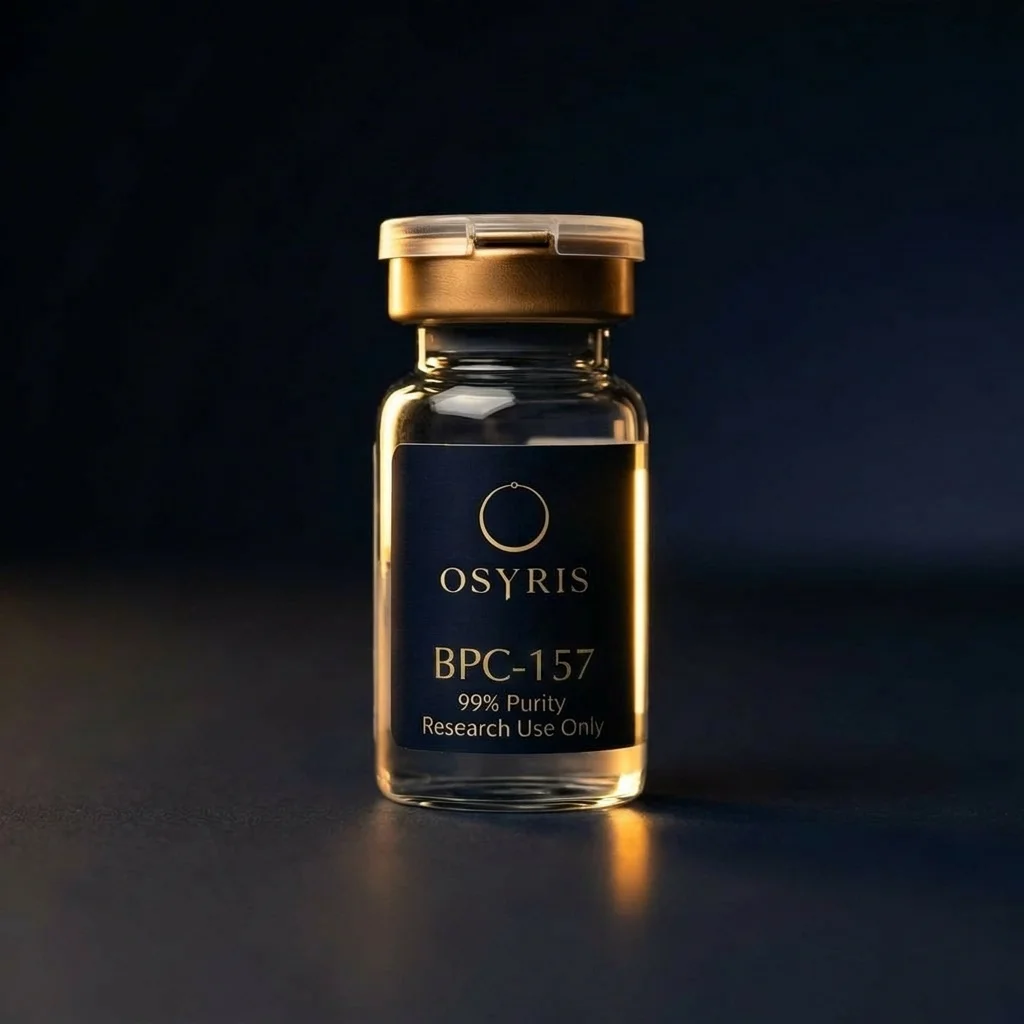
BPC-157 is a synthetic pentadecapeptide derived from a protective protein found in the gastric mucosa. Structurally stable and water-soluble, it is widely studied for its potential role in cellular signaling, tissue regeneration, and inflammation models. BPC-157 is intended solely for laboratory and in vitro research purposes.
View product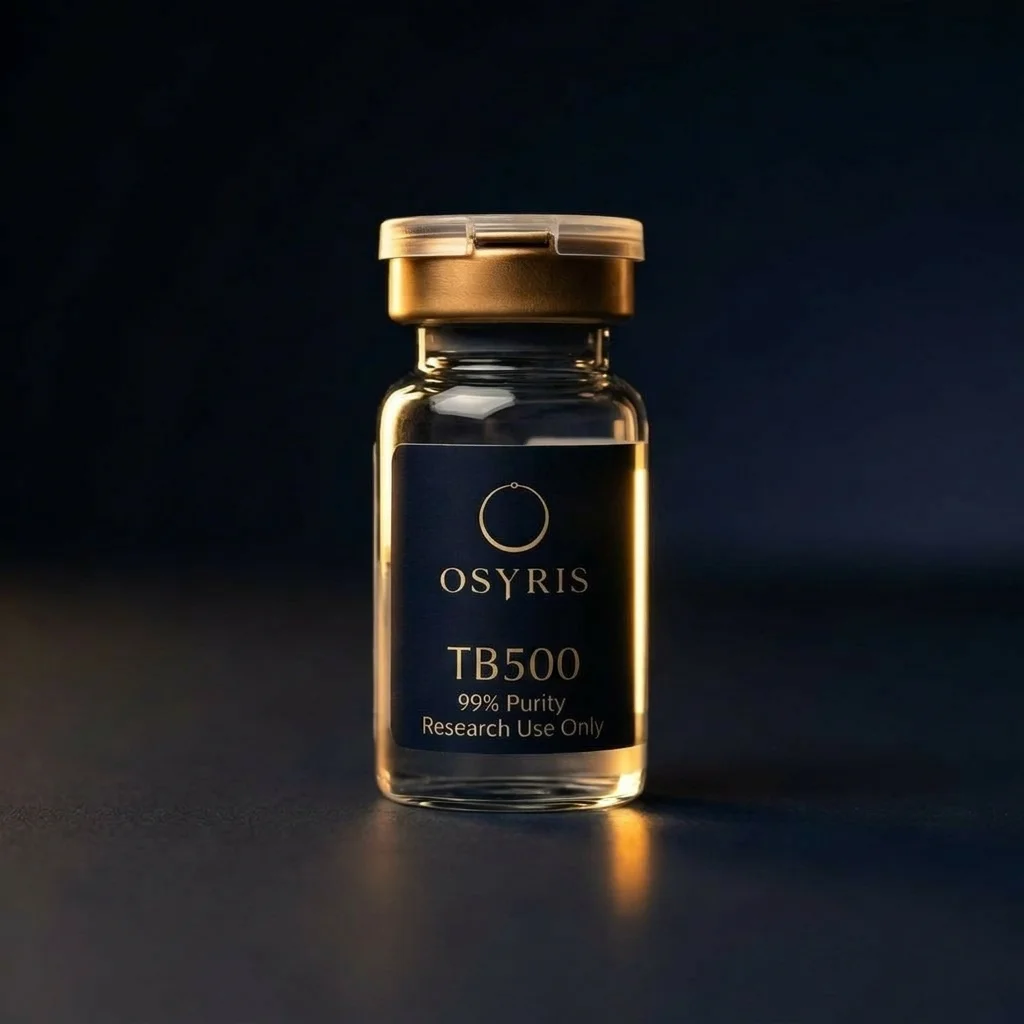 Research Product
TB500
Research Product
TB500
TB500 refers to research-grade thymosin beta-4–derived peptide material used to study actin binding, cell migration, angiogenesis, and tissue remodeling pathways. It is suited for in vitro and in vivo models investigating cytoskeletal regulation and repair-associated signaling, without any approved therapeutic designation.
View product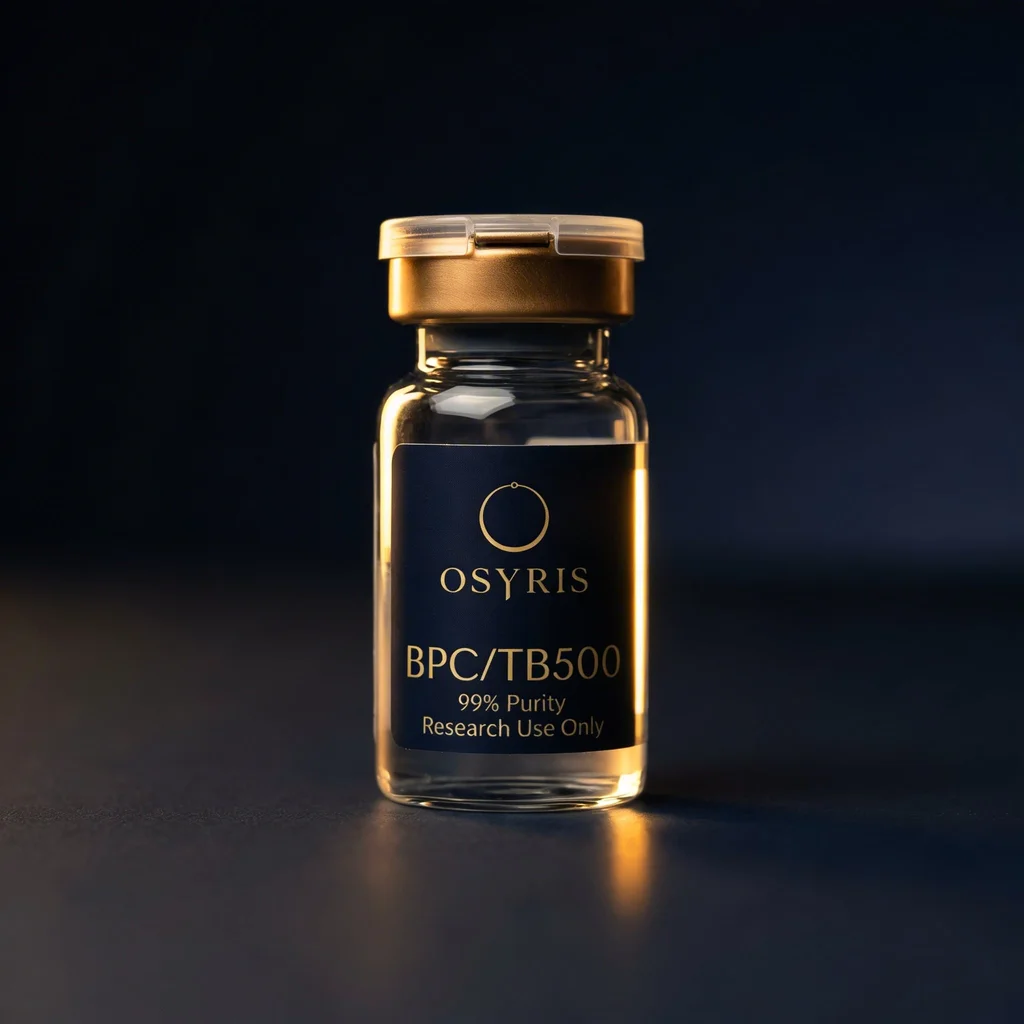 Research Product
BPC/TB500 Blend
Research Product
BPC/TB500 Blend
This research-only blend combines BPC-157 and TB-500, two synthetic peptides studied for their roles in tissue regeneration, cellular repair, angiogenesis, and inflammation modulation. The synergistic activity of these peptides supports their investigation across diverse biological models involving injury, oxidative stress, and vascular function. For controlled laboratory use only.
View productQuestions
Common Questions
Can BPC-157 and TB-500 be used together?
Yes. They target non-overlapping mechanisms (growth factor signaling vs actin dynamics), which is the rationale for the OSYRIS BPC/TB500 Blend. Combination research investigates whether dual-mechanism activation produces additive or synergistic effects.
Which one is better for tissue repair?
Neither is universally "better." BPC-157 excels in GI and growth factor-mediated repair models. TB-500 excels in cardiac and cell migration models. The choice depends on the specific research question and tissue type.
Which has stronger evidence?
TB-500's evidence is more internationally distributed (multiple research groups). BPC-157's evidence is deeper but more concentrated in one research program (University of Zagreb). Both have substantial preclinical data; neither has completed human clinical trials.
Do they work through the same receptors?
No. Their mechanisms are entirely different. BPC-157 modulates growth factors and the FAK-paxillin pathway. TB-500 modulates actin polymerization. They do not compete for the same molecular targets.
Can BPC-157 be taken orally?
In rat studies, BPC-157 showed biological activity when administered orally. TB-500 has not demonstrated oral activity. This distinction is relevant for GI research protocols.
Which is more studied?
Both have extensive literature. BPC-157 has more published papers but from fewer research groups. TB-500 (and its parent Thymosin Beta-4) has broader international research coverage including a Nature publication.
References
- Sikiric P, et al. "Stable gastric pentadecapeptide BPC 157." Current Pharmaceutical Design, 2011. PMID 21861804
- Sikiric P, et al. "Brain-gut axis and pentadecapeptide BPC 157." Current Neuropharmacology, 2016. PMID 26813123
- Safer D, et al. "Thymosin beta-4 and actin." International Journal of Biochemistry & Cell Biology, 2005. PMID 15913710
- Bock-Marquette I, et al. "Thymosin beta-4 activates integrin-linked kinase." Nature, 2004. PMID 15329770
- Seiwerth S, et al. "BPC 157's effect on healing." Journal of Physiology — Paris, 2017. PMID 28552706
- Hinkel R, et al. "Thymosin beta-4 mediated cardioprotection." Circulation, 2008. PMID 18824642
- Chang CH, et al. "BPC 157 enhances tendon fibroblasts." Journal of Orthopaedic Research, 2011. PMID 20839318