

Beginner Guide
What Are Longevity Peptides?
A simple introduction to longevity peptides and compounds, the Hallmarks of Aging framework, and why Epithalon, NAD+, and MOTS-C are studied in aging research.
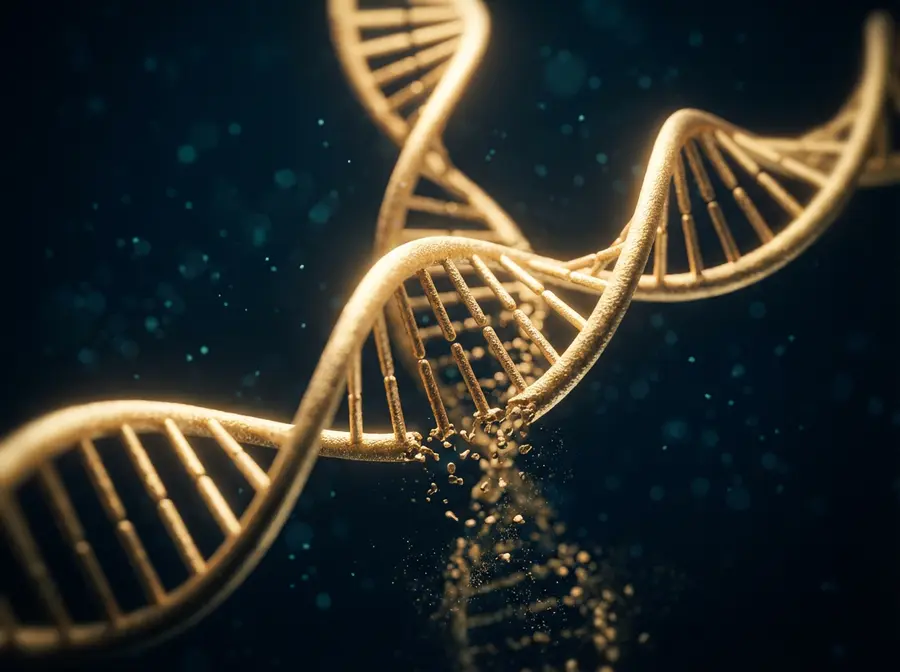
Longevity Peptides in Plain Language
Longevity peptides and compounds are research tools studied for their effects on the biological processes that drive aging. Aging isn't a single event — it's the cumulative result of multiple cellular processes breaking down over decades: telomeres shorten, mitochondria lose efficiency, DNA damage accumulates, and gene regulation drifts.
Scientists identified these processes as the "Hallmarks of Aging" — a framework published in *Cell* in 2013 that gives researchers specific targets to study. Longevity compounds are tools that interact with one or more of these hallmarks.
The Hallmarks, Simplified
Telomere attrition. Chromosome ends shorten with each cell division. When they get too short, the cell stops dividing (senescence). → Epithalon is studied for telomerase reactivation.
Mitochondrial dysfunction. The cell's power generators produce less energy and more waste as they age. → NAD+ is studied as a cofactor that supports mitochondrial function and sirtuin enzymes. MOTS-C is studied as a mitochondrial signaling peptide.
Epigenetic alterations. The chemical markers that regulate which genes are active change with age. → Vitamin B12 supports the one-carbon metabolism pathway involved in DNA methylation.
What's in the OSYRIS Longevity Category
| Compound | Aging Hallmark | What It Does |
|---|---|---|
| Epithalon | Telomere attrition | Studied for telomerase reactivation |
| NAD+ | Mitochondrial dysfunction | Sirtuin cofactor, energy metabolism |
| MOTS-C | Mitochondrial dysfunction | AMPK activation, exercise-mimetic |
| Vitamin B12 | Epigenetic alterations | One-carbon metabolism cofactor |
| LA-31 | Cellular health | Emerging research compound |
Where to Go Next
- Want deeper science? → Longevity Category Guide
- Interested in NAD+? → NAD+ and Cellular Aging
- New to peptides? → What Are Research Peptides?
Featured Links
See how telomere biology, mitochondria, and epigenetics fit together inside the broader aging framework.
Read → Shop Collection Longevity CollectionBrowse the full OSYRIS longevity lineup, including NAD+, Epithalon, MOTS-C, LA-31, and Vitamin B12.
Browse → Beginner Guide What Are Research Peptides?Start with the broad primer on what peptides are, how they are studied, and why RUO context matters.
Read →Questions
Common Questions
Can peptides reverse aging?
In mouse models, some compounds (NAD+, MOTS-C) have reversed specific aging parameters like mitochondrial dysfunction. Whether any of these translate to human anti-aging effects is an open research question.
What are the Hallmarks of Aging?
A scientific framework identifying the biological processes that drive aging: telomere shortening, mitochondrial dysfunction, epigenetic changes, and others. Published in *Cell* (2013) by López-Otín et al.
Is NAD+ a peptide?
No. It's a coenzyme (dinucleotide). It's included in the OSYRIS catalog for its central role in aging biology alongside peptide-based longevity compounds.
Which longevity compound has the most evidence?
NAD+ has the broadest preclinical evidence base, including landmark papers in cellular metabolism and aging biology. Epithalon and MOTS-C are compelling but narrower.
Why is Vitamin B12 in this category?
Because one-carbon metabolism and DNA methylation are part of epigenetic aging biology. Vitamin B12 is a cofactor in that pathway, making it relevant to aging research even though it is not a peptide.
Where do I start?
Start with the Longevity Category Guide for the full framework, then move into compound-specific articles like NAD+ and Cellular Aging.