

Growth Hormone
Sermorelin — The Original GHRH Analog
Sermorelin research overview covering GHRH receptor signaling, pituitary function, pulsatile GH release, and clinical diagnostic history.

The Minimum Active Fragment
Sermorelin is the first 29 amino acids of the 44-amino-acid GHRH molecule. It represents the minimum fragment that retains full biological activity at the GHRH receptor — everything after position 29 is dispensable for receptor binding and GH release stimulation.¹
This economy makes Sermorelin the cleanest GHRH tool: no extra sequences with potential off-target effects, just the essential receptor-binding domain.
Clinical Heritage
Sermorelin's former FDA approval (Geref, for GH deficiency assessment in children) gives it a clinical evidence base unusual for research peptides. The GHRH stimulation test — injecting Sermorelin and measuring the GH response — was used to distinguish pituitary GH deficiency from hypothalamic GH deficiency. A robust GH response to Sermorelin indicated the pituitary was functional but not receiving adequate GHRH from the hypothalamus.²
This clinical application validated Sermorelin as a reliable GH releaser in humans — not just animal models.
Comparative Position
Sermorelin's value in the current OSYRIS catalog is primarily comparative: - vs Tesamorelin: Sermorelin is shorter-acting (no DPP-IV protection) and produces briefer GH pulses. Tesamorelin is DPP-IV resistant with longer duration. - vs CJC-1295 (no DAC): CJC-1295 has additional modifications beyond DPP-IV resistance. Sermorelin is the unmodified reference. - vs Ipamorelin: Different receptor entirely (GHRH-R vs GHS-R1a). Complementary, not competitive.
Sermorelin is the simplest, most well-characterized GHRH analog — the baseline against which all modifications are compared.³
Limitations
DPP-IV rapidly degrades Sermorelin in vivo, giving it a very short half-life (~10-20 minutes). This limits sustained GH stimulation but is actually advantageous for pulsatile GH research where short-duration bursts are desired. For sustained stimulation, Tesamorelin or CJC-1295 are preferred.
Featured Links
 Research Product
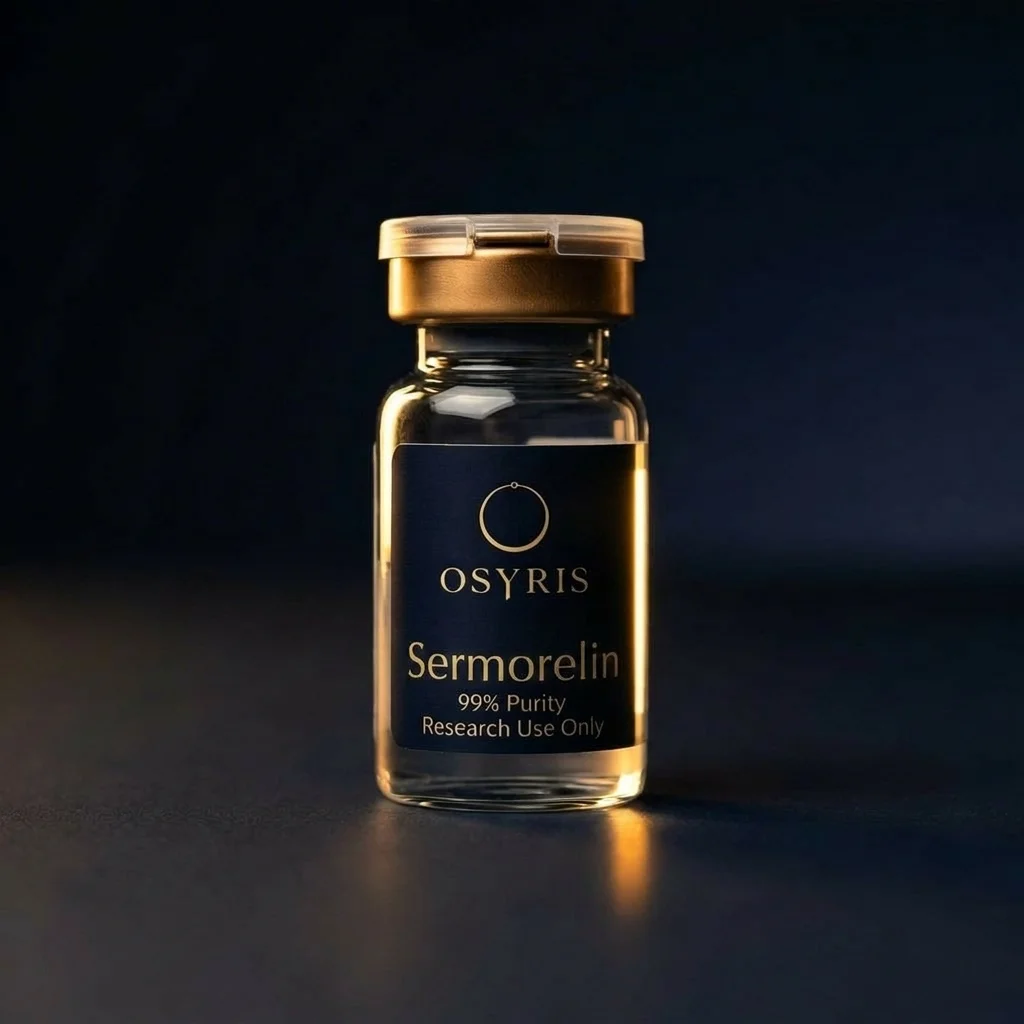
Sermorelin
Research Product
Sermorelin
Sermorelin acetate (10mg) is a synthetic analog of growth hormone–releasing hormone (GHRH), consisting of the first 29 amino acids of the natural peptide. With ≥99% purity, this research peptide is used in laboratory studies exploring neuroendocrine regulation, aging models, and pituitary function. Supplied for research purposes only.
View product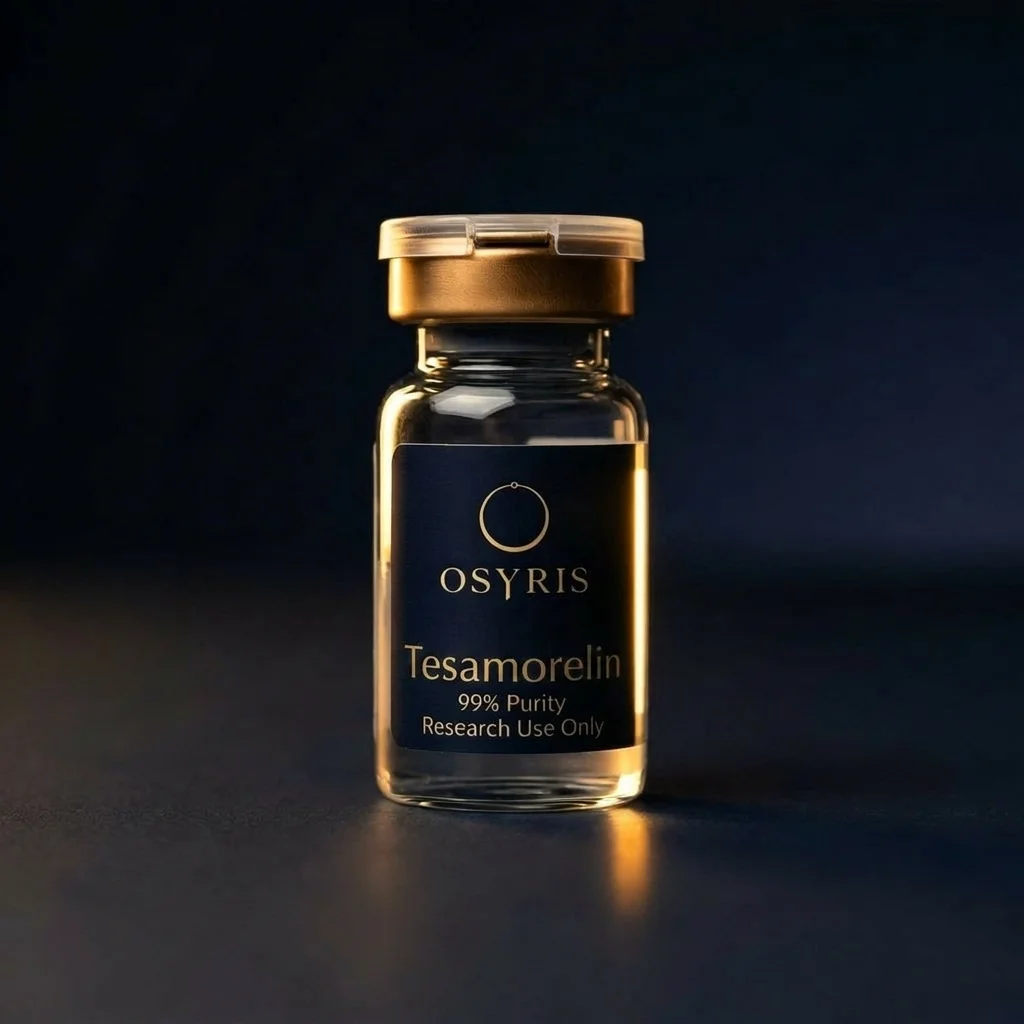 Research Product
Tesamorelin
Research Product
Tesamorelin
Tesamorelin is a synthetic analog of growth hormone-releasing hormone (GHRH) composed of 44 amino acids. It is studied for its role in stimulating endogenous growth hormone (GH) release via pituitary GHRH receptors. Tesamorelin is used exclusively for controlled scientific research and is not approved for therapeutic or diagnostic use.
View product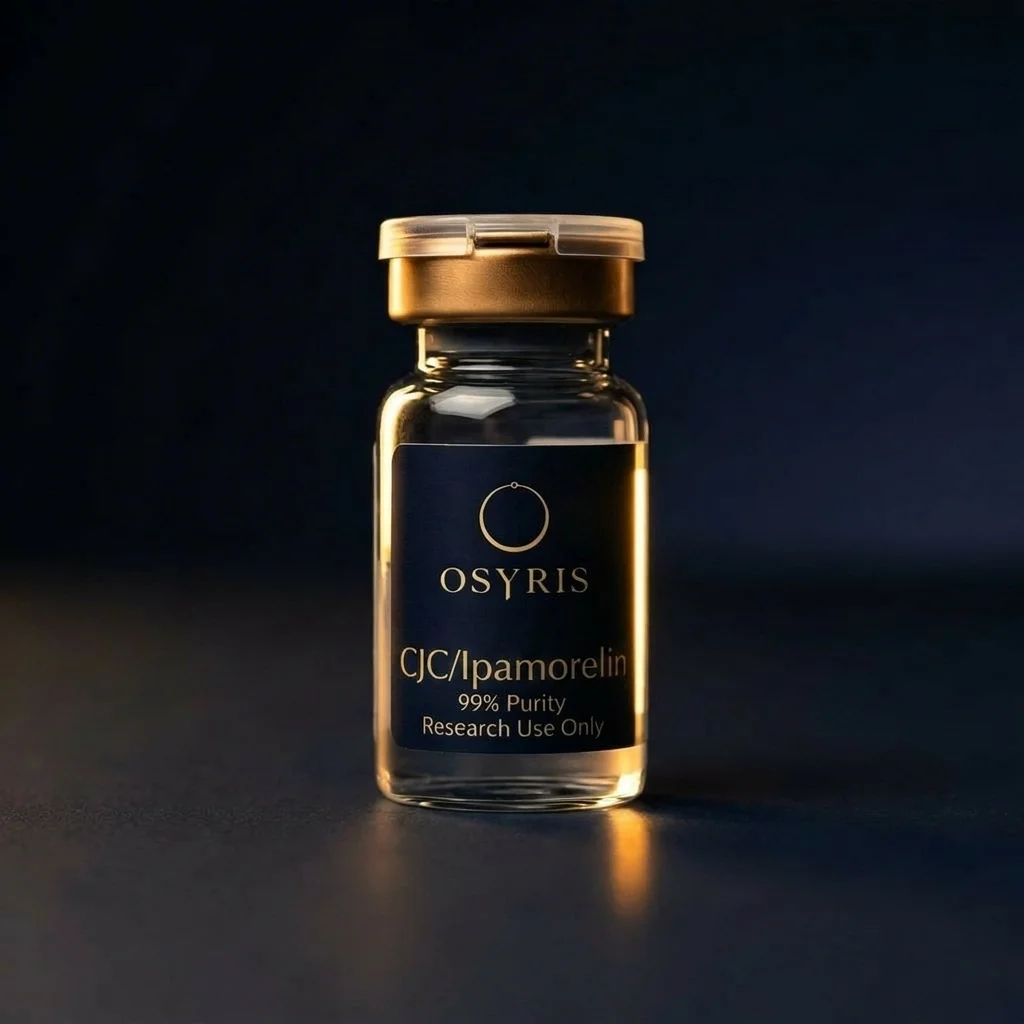 Research Product
CJC/Ipamorelin Blend
Research Product
CJC/Ipamorelin Blend
This blend combines CJC-1295 (No DAC) and Ipamorelin—two research peptides that act synergistically on the growth hormone (GH) axis. CJC-1295 stimulates GH-releasing hormone (GHRH) receptors, while Ipamorelin targets ghrelin receptors. Their combined use supports investigation into pulsatile GH secretion and downstream effects in cellular and endocrine research models.
View productQuestions
Common Questions
What receptor does Sermorelin activate?
Sermorelin activates the GHRH receptor on pituitary somatotrophs, prompting the gland to release endogenous growth hormone.
Why is Sermorelin called the original GHRH analog?
Because it is the minimal active fragment of native GHRH that still fully stimulates the receptor. It serves as the unmodified baseline for later analogs.
Why does Sermorelin have such a short duration?
It is rapidly degraded by DPP-IV and related enzymatic processes, which keeps the signal brief and more physiologically pulsatile.
How does Sermorelin differ from Tesamorelin?
Tesamorelin is chemically stabilized to resist DPP-IV and last longer. Sermorelin stays closer to the native short-pulse GHRH signal.
Why is Sermorelin still useful if it degrades quickly?
Because that short activity window is ideal for protocols focused on natural GH pulsatility rather than sustained receptor stimulation.
Can Sermorelin be studied with Ipamorelin?
Yes. GHRH receptor agonism and ghrelin-receptor agonism are complementary, which is why GHRH + GHRP combinations are a classic GH-axis research design.
References
- Frohman LA, et al. "Enzymatic degradation of GHRH." JCI, 1986. PMID 3100581
- Gelander L, et al. "Assessment of GH secretion using Sermorelin." Hormone Research, 1995.
- Alba-Roth J, et al. "Arginine and GH secretion." JCEM, 1988.