

Aesthetics
Glutathione vs GHK-Cu — Antioxidant vs Gene Expression in Skin Biology
Glutathione vs GHK-Cu compared: antioxidant defense versus regenerative gene expression in skin and aesthetics research.
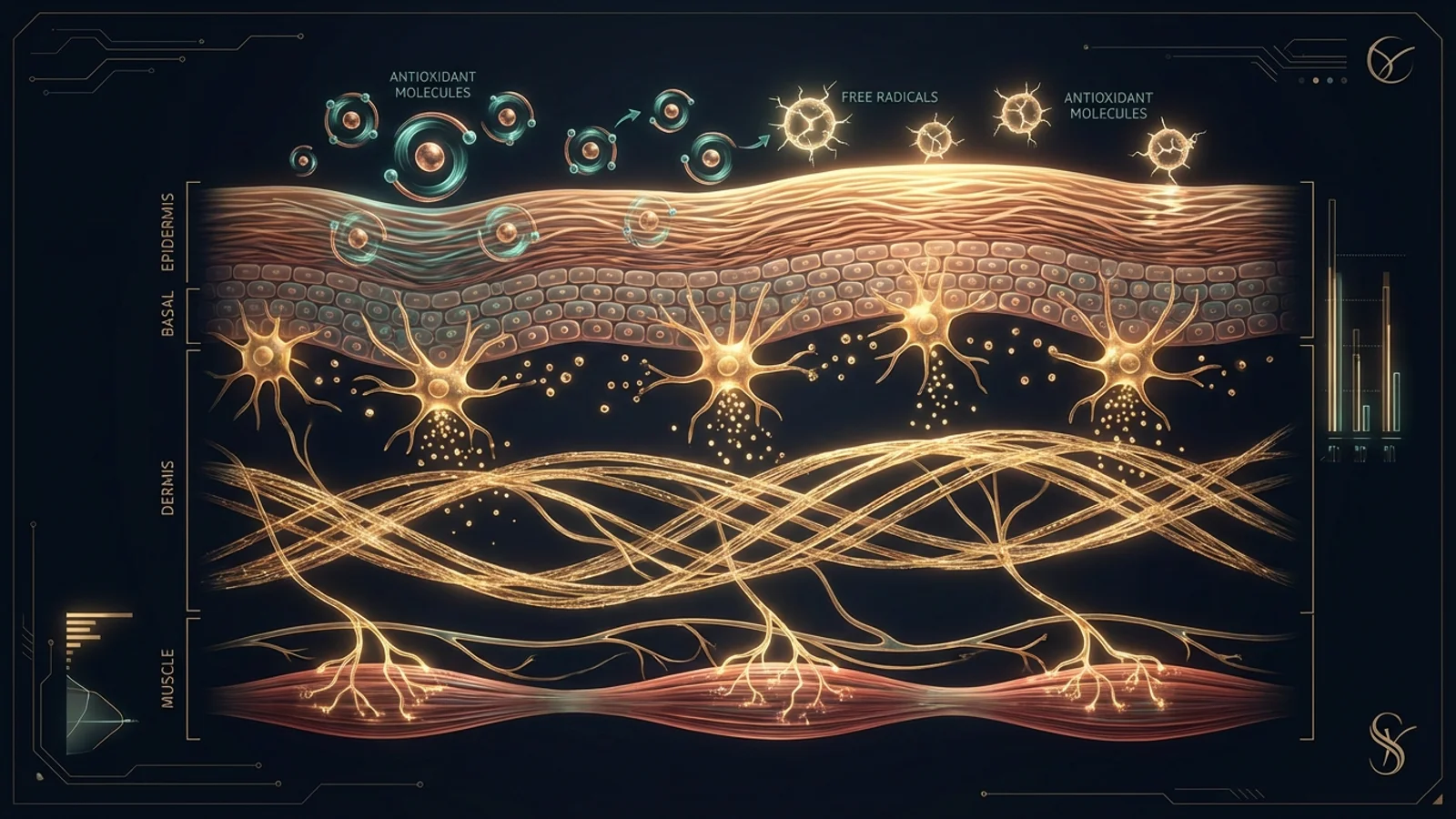
Defense vs Reconstruction
Glutathione and GHK-Cu are both tripeptides in the Aesthetics category, but they represent opposite strategies for skin biology research:
Glutathione is defensive. It neutralizes reactive oxygen species that damage skin cells. It inhibits melanin production. It supports the detoxification machinery. Glutathione protects existing skin from deterioration.
GHK-Cu is reconstructive. It reprograms gene expression toward tissue maintenance and repair. It stimulates collagen synthesis. It delivers copper for enzymatic function. GHK-Cu actively rebuilds and remodels skin tissue.
The defensive approach preserves what's there. The reconstructive approach creates something new. Both are valid research strategies — and they're mechanistically non-overlapping, making combination research rational.
Scope of Biological Effects
The scale difference is striking. Glutathione primarily affects the redox system (GSH/GSSG balance, glutathione peroxidase, glutathione S-transferase) plus tyrosinase inhibition. Important functions, but mechanistically focused.
GHK-Cu modulates 4,048 genes — collagen synthesis, antioxidant defense, DNA repair, anti-inflammatory pathways, stem cell markers, and protein quality control simultaneously. It's operating at a completely different scale of biological intervention.
This doesn't make GHK-Cu "better" — it makes it broader. For research questions about oxidative stress or pigmentation specifically, Glutathione may be the more targeted tool. For research questions about comprehensive skin aging at the gene expression level, GHK-Cu is more relevant.
Choosing for Skin Research
Oxidative stress / UV damage models → Glutathione. It's the direct antioxidant intervention. Pigmentation / melanogenesis → Glutathione. Tyrosinase inhibition is specific and well-documented. Collagen synthesis / ECM remodeling → GHK-Cu. Direct stimulation with copper delivery for cross-linking. Comprehensive skin aging research → GHK-Cu. The 4,000+ gene modulation addresses multiple aging mechanisms simultaneously. Multi-approach skin research → Both. GSH provides antioxidant defense while GHK-Cu drives regenerative gene expression. Multi-compound aesthetics → GLOW stack. Adds BPC-157 and TB500 to GHK-Cu for growth factor signaling and cell migration.
Featured Links
 Research Product
Glutathione
Research Product
Glutathione
Glutathione (GSH) is an endogenous γ-glutamyl-cysteinyl-glycine tripeptide supplied as a research-grade standard. It is central to models of redox homeostasis, detoxification, antioxidant defense, and thiol-based signaling.
View product Research Product
GHK-Cu
Research Product
GHK-Cu
GHK-Cu is the copper(II) complex of glycyl-L-histidyl-L-lysine. It is widely used in vitro to study copper transport, redox balance, extracellular matrix regulation, and gene expression signatures related to tissue remodeling and cellular stress responses.
View product Research Product
GLOW
Research Product
GLOW
GLOW is a proprietary multi-peptide research blend composed of GHK-Cu (50MG), BPC-157 (10MG), and TB-500 (10MG), formulated for synergistic in vitro and in vivo study of cellular signaling, tissue regeneration, angiogenesis, and peptide-receptor interactions. This product is supplied as a lyophilized powder and is intended strictly for research purposes only.
View productQuestions
Common Questions
Which is better for anti-aging skin research?
Depends on the research question. GHK-Cu addresses more aging mechanisms simultaneously (gene expression reprogramming). Glutathione specifically targets oxidative damage and pigmentation.
Do they have overlapping effects?
Partially. Both have antioxidant properties (Glutathione directly; GHK-Cu through gene expression of antioxidant enzymes). But their primary mechanisms are distinct.
Can they be combined?
Yes. Non-overlapping mechanisms. Glutathione (antioxidant defense) + GHK-Cu (gene expression + collagen) address different aspects of skin biology.
Both decline with age — is that related?
Both decline independently. Glutathione synthesis decreases due to enzyme changes. GHK-Cu plasma levels drop due to reduced production. The coincidental parallel decline may compound skin aging effects.
Which is in the GLOW stack?
GHK-Cu (plus BPC-157 and TB500). Glutathione is not in any stack — it's available as an individual compound.
Does Glutathione affect collagen?
Indirectly — by protecting existing collagen from oxidative degradation. GHK-Cu affects collagen directly — stimulating new synthesis and providing copper for cross-linking.